By Vicky Lalwani · Updated 12 November 2026
What marketing actually works for US home services companies?
Google does most of the work. When the AC quits or a water heater floods the garage, homeowners search on a phone, look at the Google Verified badges, the stars and the license details, and call whoever looks safe and answers. When it is a new system, a re-roof or a panel upgrade, they research and get bids.
Good marketing wins both moments in your service area.
That comes down to five things: Local Services Ads for urgent calls, Search ads for high-value replacements and installs, a complete Google Business Profile with steady reviews, service and city pages that rank and get quoted by AI answers, and call handling that turns leads into booked jobs. Meta, email, texts and maintenance plans sit around that core.
Each trade has its own year. HVAC follows the first heat wave in Phoenix or Dallas and the first cold snap in the Midwest. Plumbing spikes when pipes freeze. Roofing follows storm and hail seasons in Texas and Florida and the dry months elsewhere. Electrical has steady service calls plus panel upgrades, EV chargers and generators. The plan follows your trade, your climate and your crew capacity.
How do Local Services Ads work in 2026?
Local Services Ads are pay-per-lead listings above the normal ads on Google Search and Maps. You pay for valid calls and messages, not clicks. Since October 2025 every verified advertiser shows one Google Verified badge, and since August 2026 Google has been moving Local Services Ads into Google Ads as Performance Max campaigns with pay-per-lead goals.
Google Verified replaced Google Guaranteed
Google retired the Google Guaranteed, Google Screened and License Verified badges and moved verified businesses to the Google Verified badge automatically. Its money-back guarantee only covers services booked before December 7, 2025, so any ad copy or agency pitch still promising the guarantee is out of date. Google's screening process still matters: in select US categories it runs background checks on owners and field workers, verifies state licenses where it can, asks you to confirm county and city licenses, and requires insurance where the category needs it.
The move into Google Ads
Google's migration notice says the first phase began in August 2026 for select US home and storefront service advertisers, with broader groups, including service-area businesses without storefronts and accounts with custom bidding or booking, in late 2026. Accounts move one at a time over several months. Ads stay in the same placements, stay keywordless and are still billed per valid lead. What changes:
- No manual bidding. Setting a maximum cost per lead is not supported in Google Ads.
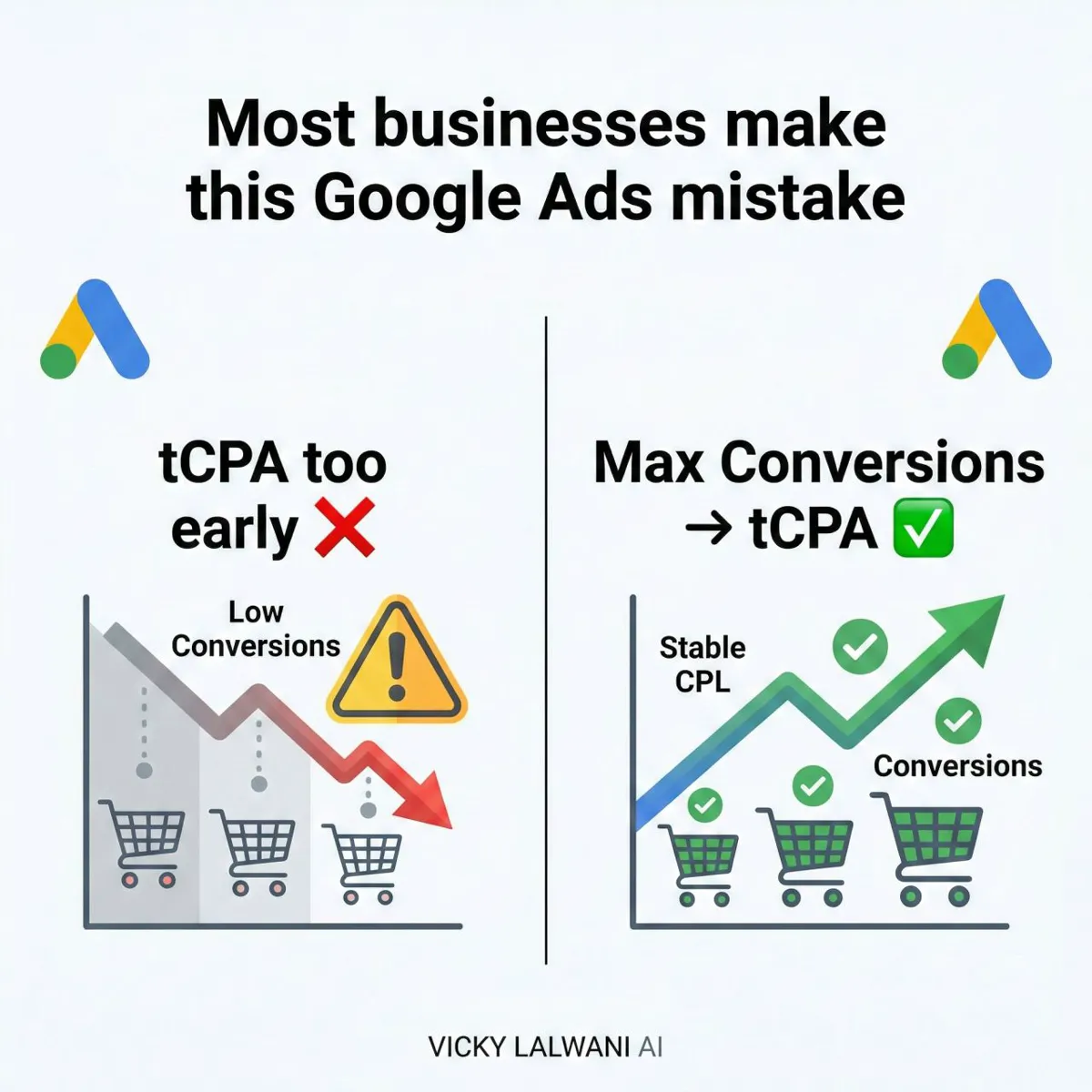
- One target per campaign. The old per-category target is replaced by one campaign-level target CPA. A shop running plumbing, HVAC and electrical together needs separate campaigns to keep separate targets. The target CPA vs maximize conversions guide explains the trade-off.
- Budgets become daily. Weekly budgets convert to a daily average, with monthly spend capped at the daily amount times 30.4.
- Reports don't move. LSA performance reports stay behind, so download them before your account moves. Lead history transfers to a Leads page in Google Ads.
- BBB callouts go. Better Business Bureau callouts are no longer supported.
I have run Local Services Ads alongside Performance Max for service brands, so for most contractors this is a change of interface and bidding control rather than a new channel. What wins leads stays the same: reviews, fast answers, tight service areas and disputing bad leads every week.
Which channels should a home services company use, and for which jobs?
Use Local Services Ads and call-focused Search ads for urgent calls, Search ads with a landing page for replacements and installs, Google Business Profile for near me searches, SEO pages for research and AI answers, and Meta for maintenance plans and seasonal offers. Every channel is judged on cost per booked job, not clicks or impressions.
| Channel | Best for | Typical searches or use |
|---|---|---|
| Local Services Ads | Urgent calls in supported categories | "ac repair near me", "emergency plumber", "electrician near me" |
| Search ads, urgent | Searches LSA misses, after-hours calls you can take | "furnace not working", "water heater leaking Tampa", "no power in half my house" |
| Search ads, planned | High-value replacements and installs | "hvac replacement cost", "tankless water heater installation", "roof replacement Sacramento", "panel upgrade" |
| Performance Max | Extra lead volume, and pay-per-lead LSA campaigns after migration | Planned services with offline conversion data; brand traffic watched closely |
| Google Business Profile | Map pack calls, location by location | "plumber near me", "hvac company Mesa", "roofer Plano" |
| Service and city pages | Research before bigger jobs, and AI answers | "how long does a water heater last", "do I need a permit for a new ac unit" |
| Meta (Facebook and Instagram) | Maintenance plans, tune-ups and seasonal offers to nearby homeowners | Spring AC tune-ups, fall furnace checks, gutter cleaning before storms |
Search ads need call assets, tight ZIP code targeting, ad schedules that match when dispatch can answer, and negatives for DIY and job-seeker searches such as "how to", "jobs", "training" and "salary". Planned-job ads need a landing page with photos of real installs, license and insurance details, reviews, financing if you offer it and a short form. Kept apart, the cheap urgent clicks can't eat the budget for replacements that pay best.
For SEO, one page per service and pages for the cities that matter, answering what homeowners ask: how long it takes, whether it needs a permit, what brands you install, what the warranty covers, what happens on the day. Those pages rank for service plus city searches and are what ChatGPT, Gemini and Google's AI answers quote when someone asks for a local recommendation.
Angi, Thumbtack or your own leads?
Lead marketplaces sell leads that are often shared with other pros, and the platform keeps the relationship. Local Services Ads, Search ads, your profile and your website give you leads nobody else is bidding on, plus customers you can sell maintenance plans to.
Use marketplaces as a top-up while you are new or entering a market, not as the base of the business.
Lead quality claims deserve scrutiny. In 2023 the FTC finalized an order against HomeAdvisor, requiring it to pay up to $7.2 million over how it marketed its leads to service providers, including claims about lead quality and how often leads turned into jobs. Whoever you buy from, ask where the leads come from, whether they are shared, and what the refund rules are.
Compare sources fairly: cost per booked job, not cost per lead. A cheap shared lead you close one time in seven can cost more per job than a pricier exclusive lead you close half the time. Put every source in your field service software with the same definition of a booked job, and the answer usually becomes clear within a couple of months.

What rules apply to home services advertising in the US?
Four sets of rules shape home services ads: state and local contractor licensing, which can require your license number in ads; the TCPA for calling and texting leads; the FTC's rules on reviews and testimonials; and Google's own policies for Local Services Ads and reviews.
The details vary by state and trade, so the ads are written for where you work.
| Rule | What it requires | Source |
|---|---|---|
| California contractor advertising | Licensed contractors include their CSLB license number in all advertising, including websites and online posts that solicit business | CSLB Advertising Guidelines |
| Florida contractor advertising | The certification or registration number appears in each offer of services, bid, contract and advertisement, regardless of medium | Florida Statutes 489.119 |
| TCPA consent | Prior express written consent for marketing calls and texts using an autodialer or prerecorded voice; consent can be revoked by any reasonable means since April 11, 2025 | FCC order DA 25-312 |
| FTC reviews rule | Bans fake reviews, incentives conditioned on positive sentiment, undisclosed insider reviews and suppressing negative reviews, effective October 21, 2024 | FTC rule Q&A |
| Google review policy | No incentives of any kind for reviews, and no selective soliciting of positive reviews | Google Maps contributed content policy |
| Your state and city | Other states and cities have their own license display rules for particular trades | Your state licensing board |
On the TCPA, two practical points. Put consent wording on every form that leads to texts or automated calls, and log when and how each person agreed. And if you buy leads, you are relying on the seller's consent wording: the FCC's one-to-one consent rule was struck down in January 2025, but the consent still has to cover your business. Revocations, such as a customer replying stop, have to be honored promptly across every system that texts or calls.
On reviews, Google is stricter than the FTC. The FTC rule allows incentives that don't depend on the review being positive; Google doesn't allow incentives for Google reviews at all. The safe process is one that asks every customer, the same way, soon after the job.
How I run a US home services account, step by step
I start with your service area, trades and crew capacity, check your license display and LSA status, fix tracking and call handling, then build urgent and planned campaigns separately and move the budget weekly toward the lowest cost per booked job. Month one is clean data and compliant ads; after that it is scaling what books work.
- Agree the jobs and ZIP codes. Which services make money, how far the trucks will go, how many jobs dispatch can handle each week and what a booked job is worth after materials and labor.
- Audit what exists. Ad accounts, LSA profile and lead log, search terms, Business Profiles, reviews, mobile site speed, license display, and how leads reach ServiceTitan, Housecall Pro or Jobber.
- Fix tracking. Calls, forms and LSA leads in GA4 and Google Tag Manager, with booked and completed jobs sent back to Google Ads as offline conversions so bidding learns from real revenue.
- Fix lead capture. Answer rates by hour, missed-call text-back with consent, after-hours cover and short forms. The after-hours lead response guide covers answering services and AI receptionists.
- Prepare Local Services Ads for migration. Clean categories and job types, tight service areas, current documents, downloaded reports, and a plan for separate campaigns by trade if you need separate targets.
- Build the Search campaigns. Urgent and planned jobs split, one campaign per high-value service with its own landing page, then Performance Max once conversion data is reliable.
- Build the owned side. Business Profile overhaul for each location, a review request to every customer, and service and city pages written to rank and to be cited by AI search.
- Run it weekly. Search terms, ZIP codes, bids, disputes and seasonal budget shifts, with a short weekly note in USD.
What does home services marketing cost, and what should you budget?
There are two costs: ad spend, paid to Google or Meta from your own account, and management. Ad spend depends on your trade, how many competitors bid in your metro, how urgent the searches are, what Google charges per lead in your category and how much work you want.
There is no minimum ad budget; I quote management after a free call.
Ask the budget question backward. Start with what a booked job is worth after materials and labor, and how many bids you close. That sets the most you can pay for a lead and still make money, and the budget follows from how many jobs you want each week.
- Affordable cost per booked job = gross profit per job × the share you are willing to spend to win it.
- Affordable cost per lead = affordable cost per booked job × booking rate (booked jobs ÷ leads).
- Weekly budget ≈ jobs wanted per week × affordable cost per booked job, adjusted for the season.
Costs rise with emergency searches in big metros, wide service areas, trades where one job is worth a lot (replacements, re-roofs), missed calls and slow landing pages. They fall with tight ZIP codes, separate urgent and planned campaigns, strong reviews, quick answers, good negatives, and maintenance plan customers who come back every season. Plan budgets by month and hold some back for the weather days that fill the board.
How do you measure home services marketing?
Measure booked jobs and what each one cost, by trade and service area, with revenue from your field service software. Calls and clicks are early signals, but cost per booked job pays the crews, followed by revenue per job and return on ad spend over a few months. Every source is measured the same way.
| Metric | Formula | What good looks like |
|---|---|---|
| Cost per lead | Spend ÷ qualified leads (calls over a set length, real form fills, undisputed LSA leads) | Stable or falling while lead quality holds |
| Booking rate | Booked jobs ÷ qualified leads | Rising as dispatch and follow-up improve |
| Cost per booked job | Spend ÷ booked jobs | Below your affordable figure, for each trade |
| Close rate on estimates | Jobs sold ÷ estimates given | Steady or rising; a drop points to price, speed or follow-up |
| Return on ad spend | Revenue from ad-sourced jobs ÷ ad spend | Above break-even, judged over a quarter for replacements |
| LSA dispute rate | Leads disputed ÷ all LSA leads | Every invalid lead disputed; a rising rate means categories or areas need fixing |
| Missed-call rate | Unanswered calls ÷ calls in business hours | Close to zero, with every miss called or texted back |
| Maintenance plan sign-ups | New plans ÷ completed service calls | Steady, because plan members are the cheapest future jobs |
Define a lead once, for example a call over 60 seconds or a form with a real phone number, and use it for every source. Booked and sold jobs come from ServiceTitan, Housecall Pro, Jobber or your own CRM, matched back to the source. The conversion tracking event map shows how I wire it up.
What mistakes do home services companies make with marketing?
The expensive mistakes are rarely in the ad copy. They are missed calls, no tracking past the form, one campaign for every trade, service areas wider than the trucks will drive, outdated Google Guaranteed promises, texts without consent and dependence on one lead marketplace. Each one quietly raises the cost of every job.
- Paying for calls nobody answers. It loses the lead and drags down your Local Services Ads ranking.
- Not disputing bad LSA leads. Spam, wrong-trade and out-of-area calls left on the bill.
- Counting clicks, not jobs. No link between the ad account and the field service software.
- One campaign for every trade. After the LSA migration, one blended target CPA across plumbing and HVAC can starve the more valuable trade.
- Outdated trust claims. Ads and pages still promising Google Guaranteed or its money-back guarantee.
- Missing license numbers. A breach in states that require them, and a lost call from homeowners who check.
- Texting without consent. TCPA exposure from a missed-call text-back or follow-up sequence with no consent wording.
- Review shortcuts. Discounts for Google reviews, asking only happy customers, or buying reviews.
- Accepting every Google recommendation. Broad match without negatives spends on DIY and job-seeker searches. Finding wasted spend is usually the first win.
What experience do I bring to US home services marketing?
Home services was one of the verticals in the 35+ account book I ran as Head of Digital Marketing for a US agency, across the US, UK and Australia: always-on lead engines for plumbing, construction and gutter businesses, with six service brands on Local Services Ads and Performance Max and 24/7 lead capture.
Those engines turned service-area searches into booked jobs at a predictable cost per lead. Across that book, managing $50K to $80K a month in budgets and more than $1.3 million a year in ad spend, restructured campaigns, targeting and tracking delivered 30 to 40% lead growth, 20 to 30% conversion lift and 25 to 30% organic traffic growth. I have also run Local Services Ads for multi-location law firms, at up to $25K a month per firm across Search, LSA and Meta, and alongside Search and Meta for home builders, so I know how the pay-per-lead side behaves, how disputes work and why responsiveness matters.
I have 8+ years in digital marketing, hold Google Ads and GA4 certifications, and run a 19-agent AI marketing stack on Claude and MCP for reporting, audits and research, which keeps weekly checks thorough. Builders and real estate groups can see real estate marketing USA. I don't have a case study for every trade, so I won't claim one, and client names stay private.