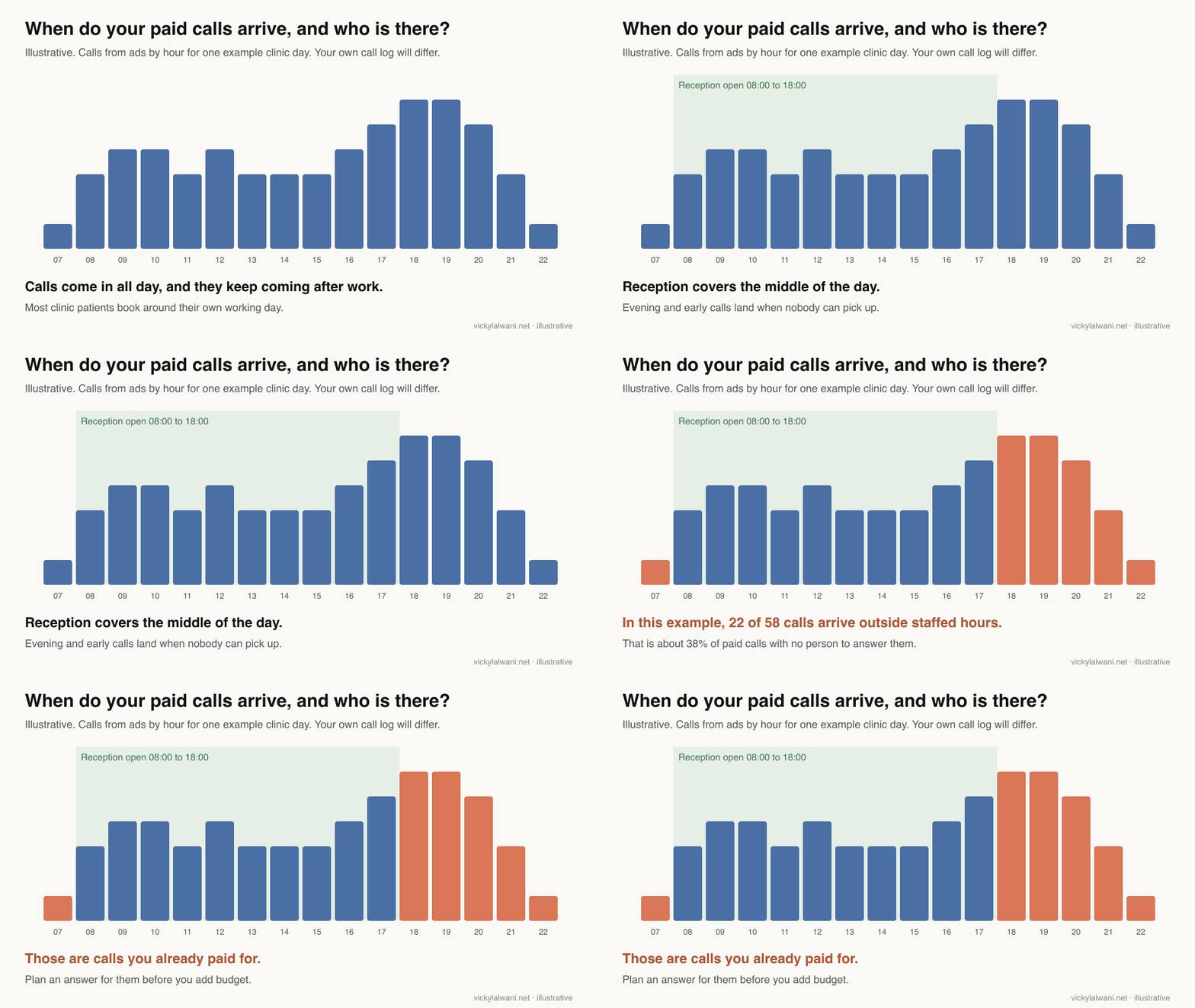
After hours call answering is the plan for what happens when a patient calls, texts or fills in a form while the clinic is closed. Without one, the Google Ads and Meta spend that made the phone ring at 7pm is wasted, because only some callers leave a voicemail and many simply ring the next clinic.
TL;DR
Paid calls do not stop at 6pm. In Invoca data from more than 70 million calls (August 2026), only 54% of healthcare calls reached a live person, and CallRail found healthcare had the highest missed-call rate of the industries it measured, 32% (January 2025).
Measure first: export your Google Ads call details (start time and missed or received status), your call tracking log and your form timestamps, then count how many paid enquiries land outside staffed hours.
Then pick a cover model: a person on call, an answering service, a missed-call text back, a chatbot or an AI voice agent. Whatever you choose must acknowledge, triage, book and hand over, and must never give clinical advice.
Finally, feed booked appointments back to Google Ads and Meta, so bidding stops buying calls that never become patients. If you want help with both halves, see my AI chatbot builds and Google Ads management.
Every pound, dollar or euro a clinic spends on Google Ads, Meta and its Google Business Profile exists to make the phone ring. Then it rings at 7.15pm, or on a Saturday, or during a long appointment, and nobody picks up.
The caller does not always leave a voicemail. Many ring the next clinic on the list. You never see the loss in your ad reports, because a missed call looks like any other call. Three months later it shows up as "the ads stopped working".
This guide is about that gap, with a paid search lens: how to measure it, what to put in place, and how to stop it corrupting your bidding. It is written for clinics and practices of any kind. If you are choosing a voice tool specifically for a dental practice, my AI receptionist guide for dental clinics goes deeper on that. I help clinics with the Google Ads side and with chatbots that answer, qualify and book.
What is after hours call answering, and why does it matter for paid leads?
Short answer: After hours call answering is how your clinic handles calls, texts, chats and forms when reception is closed. It matters most for paid leads because you have already paid for the click or the call, and the first clinic to give a useful answer usually gets the booking.
Think of it as the last step of your ad campaign, not an admin detail. A search ad can only make someone ring. What happens next decides whether that click becomes a patient.
The research on speed is old but consistent. A Harvard Business Review study published in March 2011 audited 2,241 US companies and found that firms that tried to contact a web lead within an hour were nearly seven times as likely to qualify it as those that waited even an hour longer. That study was about web leads, not clinic calls, and it is fifteen years old. The direction has not changed since.
Callers are also less patient than most owners think. In a CallRail survey of 1,000 US consumers (September 2025), 42% said they leave a voicemail when nobody answers and 21% said they immediately call another business.
How many clinic calls go unanswered?
Short answer: Roughly half, depending on whose data you use. Invoca (August 2026) reports 56% of business calls answered by a live person across ten industries and 54% in healthcare. CallRail (January 2025) reports a 32% missed-call rate for healthcare, the highest of the industries it listed.
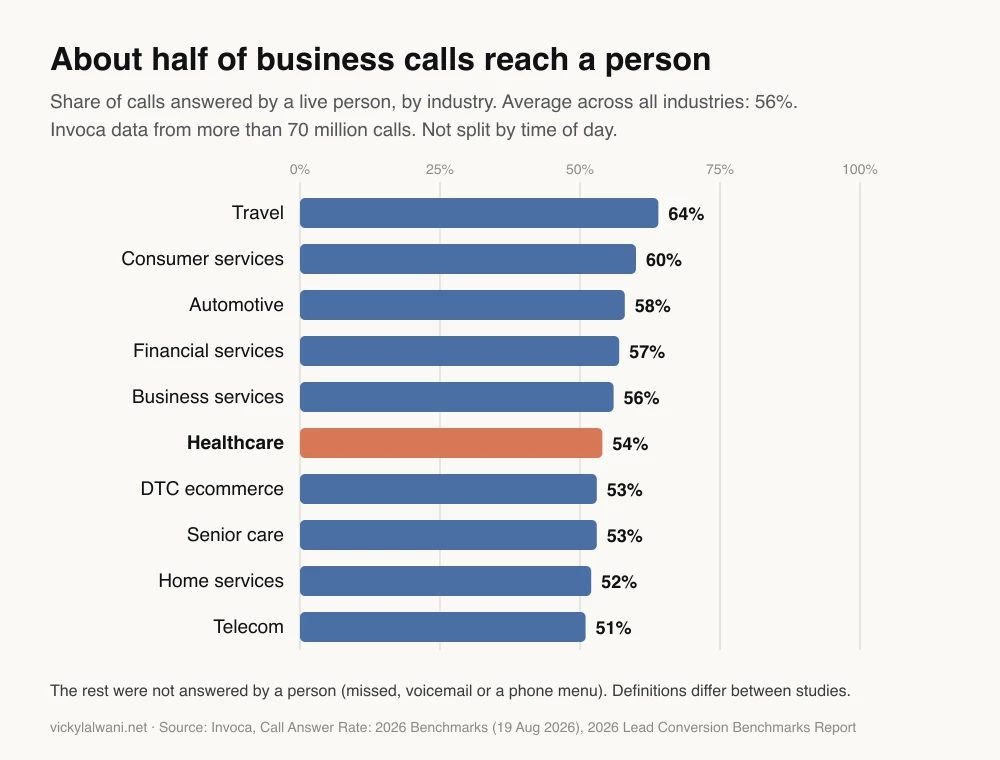
The two numbers are not in conflict. They measure different things. Invoca counts calls a live person answered, so voicemail and phone menus count against the rate. CallRail counts missed calls, and its definitions treat short abandoned calls separately. Neither figure is split by time of day, so neither tells you how much of the gap is after hours.
| Data point | Figure | Source and date |
|---|---|---|
| Calls answered by a person, all industries | 56% | Invoca, Aug 2026 |
| Calls answered by a person, healthcare | 54% | Invoca, Aug 2026 |
| Missed-call rate, healthcare | 32% | CallRail, Jan 2025 |
| Consumers who leave a voicemail | 42% | CallRail survey, Sep 2025 |
| Consumers who call another business straight away | 21% | CallRail survey, Sep 2025 |
| Leads contacted within an hour vs later | Nearly 7x as likely to qualify | HBR, Mar 2011 |
The honest conclusion: the industry numbers prove the problem is common. Only your own call log tells you how big it is for your clinic, and how much of it happens after hours.
Why does a missed evening call cost more when it came from an ad?
Short answer: Because you pay twice. You pay for the click or call, and then your bidding system learns from it. If Google Ads counts any call over a set length as a conversion, it will happily buy more evening calls, including ones that went to voicemail and never became patients.
In Google Ads, a call is usually counted as a conversion when it lasts longer than a threshold you set. Google has started to move beyond that. Its help page on AI-qualified call leads says call recording is now on by default so Google AI can judge whether a call showed real intent, and only qualified calls count.
Two details matter for clinics. The same page says recording stays off if your business was identified as healthcare, unless you switch it on yourself. And recording only works when both phone numbers are in the United States or Canada. So for most clinics, call duration is likely to remain the signal Smart Bidding (Google's automated bidding) learns from.
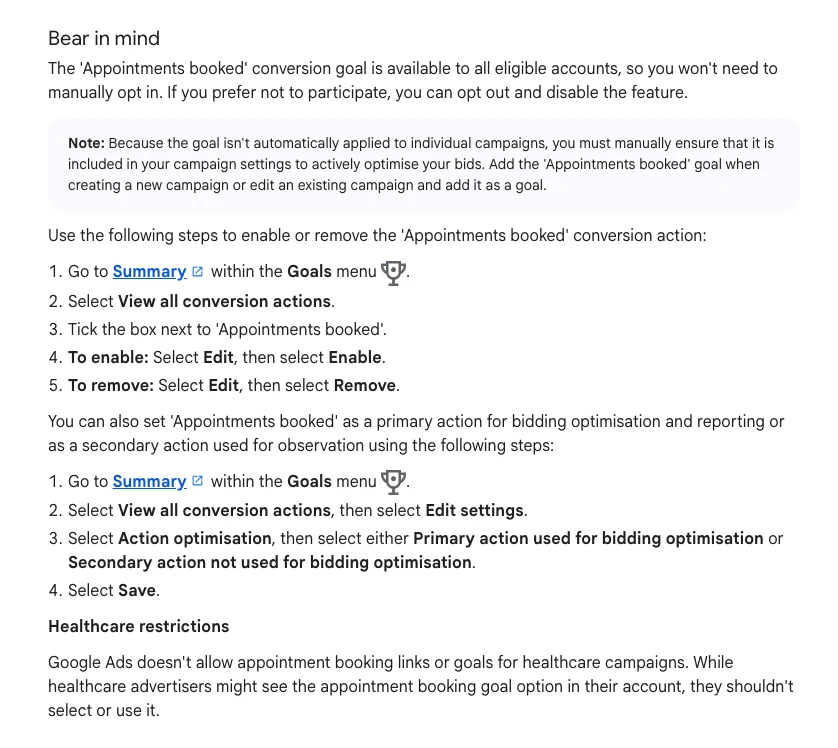
There is a second healthcare limit. Google's Book Appointment conversion goal page says Google Ads does not allow appointment booking links or goals for healthcare campaigns. Clinics cannot lean on that shortcut; they need their own booked-appointment signal, which I cover below.
The practical effect: if your evening calls are counted as conversions but rarely turn into bookings, your cost per conversion looks fine while your cost per booked patient quietly climbs.
How do you measure missed calls after hours?
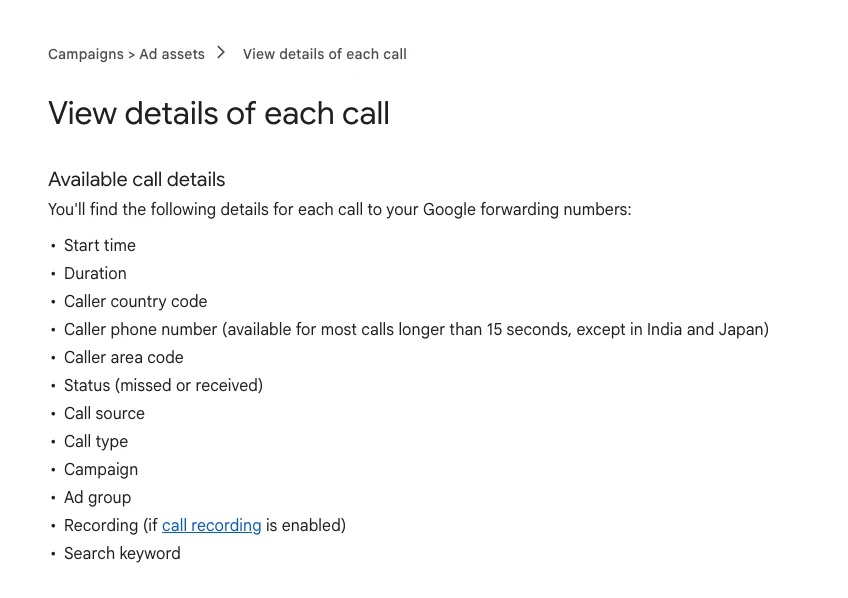
Short answer: Export a full month of call and form data with timestamps, group it by hour and day, mark what was answered, and match it to booked appointments. The Google Ads call details report gives you start time and a missed or received status for calls to Google forwarding numbers.
- Pull the call log. In Google Ads, the call details report lists start time, duration, caller area code, status (missed or received), campaign and, where available, the search keyword. Your call tracking tool and phone system will have their own logs.
- Pull the forms and messages. Website form timestamps, Meta lead form submissions and chat transcripts. Forms that arrive at 9pm and get a reply at 11am the next day belong in the same leak.
- Group by hour and day. Mark each enquiry as answered live, voicemail, abandoned or replied later. Note the gap to first reply for forms.
- Match to bookings. Join answered calls and forms to appointments in your practice system, so you know your real booking rate by hour.
- Split by source. Calls from paid search, Meta and the Business Profile usually carry the highest intent and the highest cost per contact.
Two habits from my own work make this measurement trustworthy. First, tracking before spend: I keep campaigns in draft until every call button and form is measured, because a gap you cannot see cannot be fixed. Second, source-level call tracking: one destination number for the clinic, but a different tracking number for Google Ads, Meta, the Business Profile and organic search, so each channel's calls can be counted on their own.
A practice owner once asked me whether call tracking was the same thing as an AI receptionist. It is not. Call tracking records and attributes calls; it answers nobody. An AI receptionist answers; it does not tell you which ad produced the call. You usually need both. My event map guide shows how to list every call and form before you set up tracking.
| Data | Where to find it | What to look for |
|---|---|---|
| Calls from ads | Google Ads call details report | Missed status by hour |
| All phone calls | Call tracking or phone system | Voicemails and abandoned calls |
| Web forms | Form tool or CRM | Time to first reply |
| Meta lead forms | CRM or Meta Leads Centre | Evening submits, next-day replies |
| Google lead forms | Download or webhook | Leads expire after 60 days |
| Bookings | Practice system | Booking rate by hour of enquiry |
On Google lead form assets, the download leads help page says leads expire after 60 days, so connect a webhook or CRM instead of relying on manual downloads.
Should you switch ads off when nobody can answer?
Short answer: Sometimes, but it is a trade-off, not a rule. Meta itself recommends running lead ads during business hours if you need immediate follow-up. In Google Ads, an ad schedule stops ads at set times, while Smart Bidding ignores manual time-of-day bid adjustments.
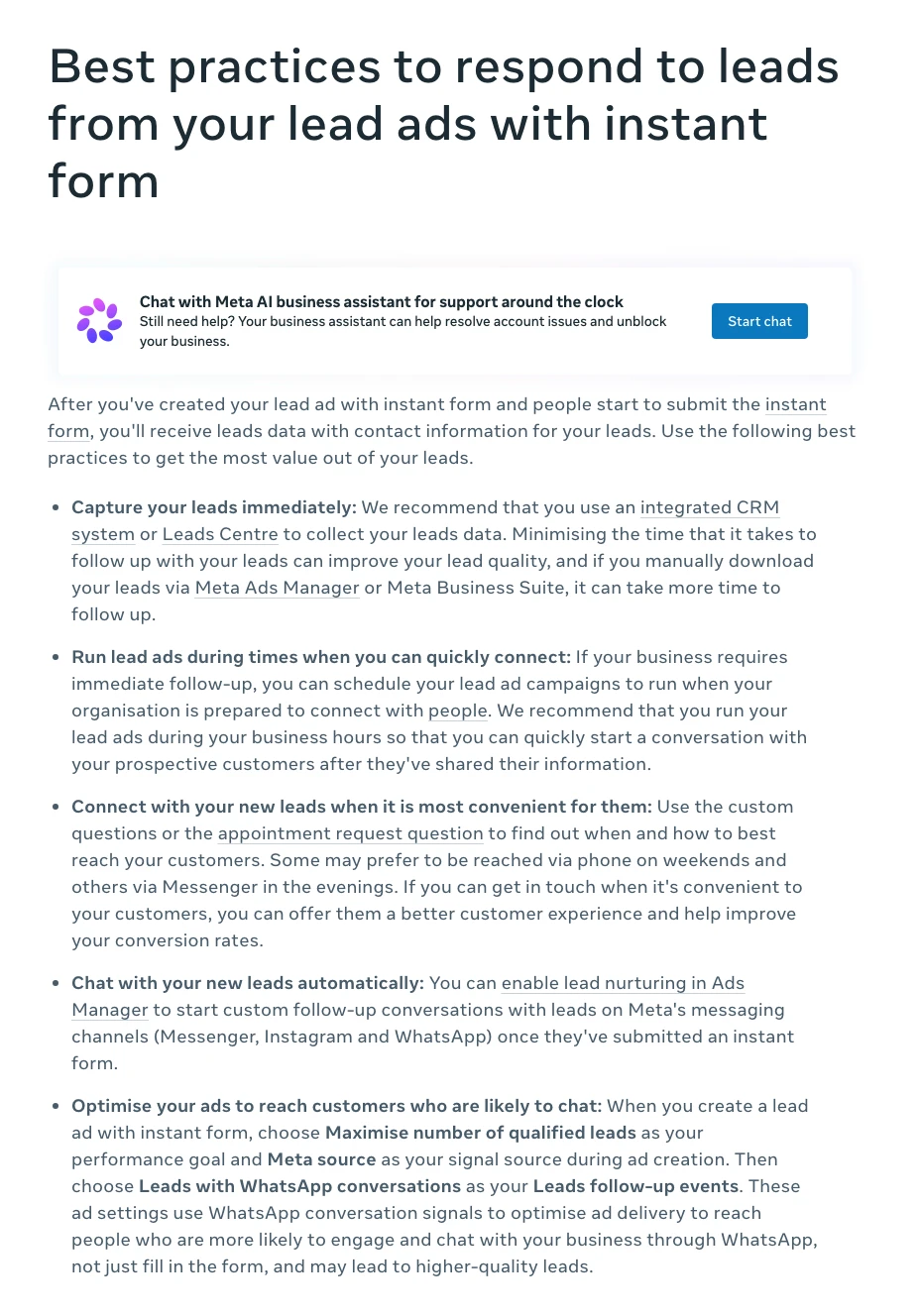
Meta's best practices to respond to leads page is unusually direct. If your business requires immediate follow-up, it says you can schedule lead ad campaigns to run when your team is ready to connect, and it recommends running lead ads during business hours.
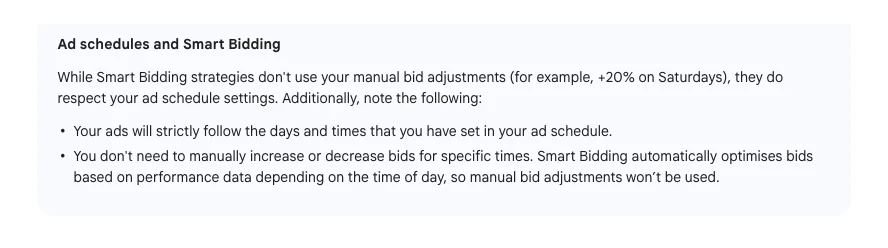
In Google Ads, the bid adjustments help page says Smart Bidding strategies do not use manual bid adjustments such as +20% on Saturdays, but they do respect your ad schedule. So you can stop ads at set hours, but you cannot gently turn them down in the evening while on automated bidding.
A middle path for calls: the call assets help page lets you schedule a call asset to show only on certain days and hours, such as when your business is answering phones. The ad keeps running in the evening and sends people to a page or form instead of a phone that will ring out.
| Option | What happens | Good when | Risk |
|---|---|---|---|
| Run ads 24/7, no cover | Evening calls ring out | Never, for call-led clinics | Paying for lost calls |
| Ad schedule off at close | No ads after hours | Evening leads convert poorly | Missing real demand |
| Schedule the call asset only | Evening clicks go to forms | You can reply by morning | Slow form follow-up |
| Run 24/7 with cover | Every enquiry gets an answer | Evenings carry real demand | Cover cost and quality |
The choice depends on your own hour-by-hour data from the previous section. Evening demand that books well deserves cover. Evening demand that never books may be cheaper to switch off. One more detail if you use Local Services Ads where they are available: Google's how leads work page says a missed call during your business hours, where the caller stays on the line more than 20 seconds, and a voicemail both count as valid leads, which you pay for.
What are the options for answering calls after hours?
Short answer: Five main options: a person on call, a live answering service, a missed-call text back, a chatbot for messages and forms, and an AI voice agent. Only some of them book the appointment, which is the step that turns an expensive click into a patient.
| Option | Books the slot? | Best for | Watch out for |
|---|---|---|---|
| Staff on call | Yes | Urgent and complex calls | Burnout, cost |
| Live answering service | Often no | Taking messages | A message is not a booking |
| Missed-call text back | Via a link | A fast first touch | Repeat texts, consent |
| Chatbot on site or WhatsApp | Yes, if connected | Forms, chats, FAQs | Must hand over sensitive chats |
| AI voice agent | Yes, if connected | Routine evening calls | Testing, scripts, recording rules |
A missed-call text back is the cheapest first step. HighLevel's help article (modified 7 September 2026) describes a feature that texts every missed caller automatically, and warns that it sends a text for every missed call, even repeat attempts from the same person, unless you add a wait step or filters. Many CRMs and phone systems offer something similar.
For messages, Meta Business Suite has Inbox automations for Messenger, Instagram and WhatsApp, including an instant reply, an away message and answers to frequent questions. The same page notes that turning on Meta Business Agent pauses existing automations, so do not run both and assume both are live.
For voice, an AI agent can answer, triage and book if it is connected to your diary. My dental AI receptionist guide covers what to check before you buy one, and the AI voice agent platform comparison covers how to compare platforms. For website and WhatsApp enquiries, a chatbot that answers, qualifies and books usually covers more of the after-hours volume than clinics expect, because many evening enquiries arrive as messages, not calls.
What should an after-hours plan include?
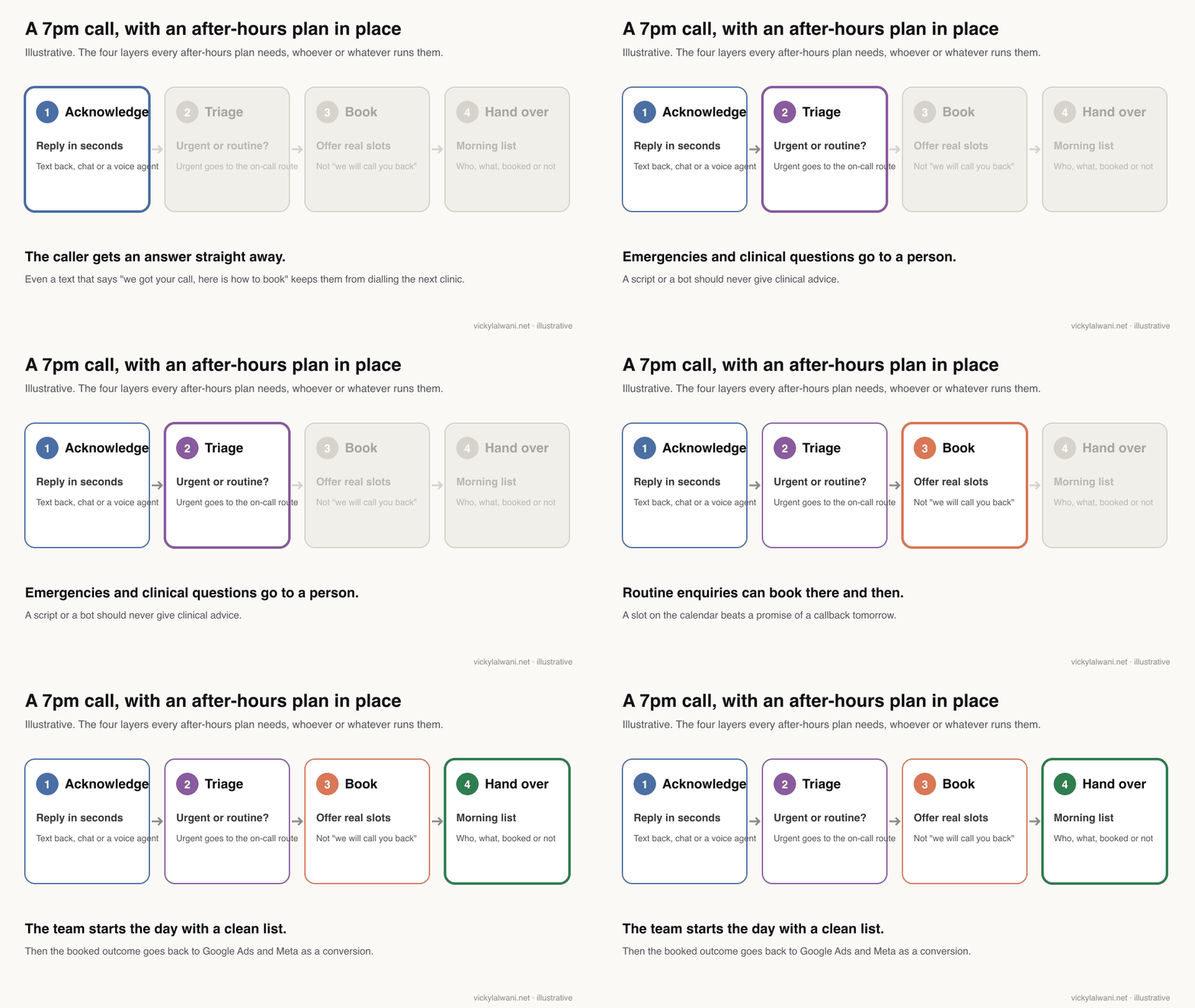
Short answer: Four layers: acknowledge every enquiry within moments, triage urgent from routine, offer a real booking, and hand a clean list to the team in the morning. Each layer can be run by people, software or a mix, as long as clinical questions always reach a person.
- Acknowledge. Every call, form and message gets a reply within moments, even if it is automated: we got your message, here is when a person will reply, here is how to book now.
- Triage. Capture the reason and the urgency. Urgent problems get clear directions to your on-call clinician or local emergency services. No script or bot gives clinical advice.
- Book. Offer real appointment slots, not "we will call you back". A booked slot at 8pm beats a callback promise for 10am.
- Hand over. Staff start the day with a list: who, what they need, the source, and whether they are booked.
A rule I hold to with lead campaigns: if nobody can contact new leads quickly, pause the campaign until someone (or something) can. Emailing leads one by one hours later tends to get silence, and every lead you cannot reach is money spent twice.
One more practical tip: ask your team to record the reason people give when they reach you the next day. If "I called last night" comes up often, you have confirmed the leak with your own evidence.
Use this prompt with Claude or ChatGPT to draft the script. Review every line yourself before it goes live.
You are helping a clinic write its after-hours response script for calls, texts and web chat.

Clinic: [type of clinic, location type, opening hours]
Services people book most: [list]
What counts as urgent for us: [list, and where urgent callers should go]
Booking: [link or tool, appointment types that can be booked without staff]
Things we never handle by script or bot: [clinical advice, test results, payments, complaints]

Write:
1. A missed-call text (under 300 characters) that thanks the caller, says when a person will reply, and gives the booking link.
2. A short triage flow: three questions that separate urgent from routine without giving clinical advice.
3. The exact wording for sending someone to emergency or out-of-hours care when they describe an urgent problem.
4. A morning handover template: name, contact, reason, urgency, booked or not, source (Google Ads, Meta, Business Profile, website).
Use plain words and our spelling. Flag anything that could count as medical advice or that needs consent to record or store.
How do you feed booked appointments back to Google Ads and Meta?
Short answer: Send the outcome, not just the call. In Google Ads, create offline conversion actions for qualified and converted leads and import them with enhanced conversions for leads. In Meta, send lead stages from your CRM through the Conversions API. Then bidding learns from bookings, not rings.
Google's qualified and converted leads page explains the idea: a qualified lead is one your team qualified offline, a converted lead completed a chosen step such as a booked or attended appointment, and choosing the right goal lets Smart Bidding and Performance Max optimise towards those outcomes.
Timing matters. Google's offline conversion imports FAQ says conversions with a GCLID (the click ID Google adds to ad clicks) can be uploaded up to 90 days later, and conversions matched on customer data up to 63 days later. It also notes that since April 2026, enhanced conversions for web and for leads share a single setting.
On Meta, the qualified leads goal needs CRM stages sent back through the Conversions API. My Meta lead ads guide covers the setup. Health businesses face extra limits on what data they can share with ad platforms, so check each platform's policies for your country and get advice before sending anything that reveals a condition or treatment.
| Stage | Example for a clinic | Send to |
|---|---|---|
| Lead | Call over threshold, form submit | Google Ads and Meta |
| Qualified lead | New patient, right service | Google Ads, Meta CRM stage |
| Converted lead | Appointment booked | Google Ads, Meta CRM stage |
| Attended | Patient showed up | Optional, as a later stage |
Where should automation help and where should people stay?
Short answer: Automation is strong at the first reply, routine questions and the booking step. People should stay in charge of anything clinical, urgent, unclear or emotional. Write the handover rules before you switch anything on, and test them with real call scenarios.
Good handover rules are specific: any mention of pain above a set level, bleeding, breathing, a child, medication or a complaint goes straight to a person or to emergency directions. Anything the system is unsure about goes to a person too.
Then review the first weeks of transcripts and recordings, where your terms allow it, and tighten the script. Expect the first version to need changes: the questions people ask after hours are often not the ones the team expected.
Videos worth watching
Short answer: Start with Google's own lead quality discussion, then a short practical walkthrough on scheduling call assets around business hours. Both are free and neither sells a product.
Made by Google Ads, published 16 October 2025. A discussion with three agency leaders on generating higher-quality leads. Official channel, no product sale beyond Google Ads itself.
Made by Creekside Marketing, an agency channel, published 24 March 2025. A short walkthrough of scheduling call assets to business hours; interface details may have moved since.
| Video | Channel | Date | What it covers |
|---|---|---|---|
| The expert playbook for generating high quality leads | Google Ads | Oct 2025 | Lead quality playbook |
| Schedule call assets for business hours | Creekside Marketing | Mar 2025 | Call asset schedule |
| Feed AI better data for better leads | Google Ads | Apr 2026 | Offline outcomes, short |
| Better lead gen with first-party data | Google Ads | Sep 2026 | Enhanced conversions |
| Google Ads call tracking (2026 tutorial) | Tradesman Digital Marketing | Sep 2025 | Tracking calls from ads |
What do people say on X and Reddit?
Short answer: Practitioners agree the leak is real and that the front desk, not the ad account, is often where clinic tracking breaks. They disagree on how much to trust night-time calls, and vendors selling answering tools make the loudest claims.
| Post or thread | Where and when | Type | What it says |
|---|---|---|---|
| A form fill is just a signal | Google Ads on X, Mar 2026 | Vendor | Judge leads by closed sales, not forms |
| Fill in their form at 7pm | Marketing account on X, Nov 2026 | Opinion | Slow replies cost businesses paying for leads |
| Conversions fell after a number swap | PPC practitioner on X, Jun 2024 | First-hand | Call tracking changes broke conversion data |
| Leaving hours off the Business Profile | Local SEO practitioner on X, Mar 2025 | Opinion | May help after-hours visibility, hurts daytime |
| Call and messaging ad terms updated | PPC practitioner on X, Jan 2026 | Opinion | Reads the terms as covering recordings |
| Healthcare tracking looks clean until the front desk | r/PPC, Aug 2026 | First-hand | Missed calls and slow callbacks, not the ads |
| Paying full price for leads at 2am? | r/PPC, Apr 2026 | Opinion | Top reply: Smart Bidding ignores time adjustments |
| Nightly spam calls on Performance Max | r/PPC, Oct 2025 | First-hand | Night calls from bots; schedule and filter |
| Local Services Ads now bill unanswered calls | r/PPC, Oct 2026 | Vendor | Align profile hours with when someone answers |
| After-hours calls without a receptionist | r/smallbusiness, Nov 2026 | First-hand | Text back, sort urgent from routine |
| How do you handle after-hours calls? | r/smallbusiness, Oct 2026 | First-hand | Count missed calls before paying for cover |
Three patterns stand out. In r/PPC, people managing healthcare accounts keep finding that the campaign looks fine while the front desk loses the lead, and the advice is to report missed calls next to campaign numbers rather than blend them in. Owners in r/smallbusiness say most people no longer leave voicemails and that an instant text back gets more replies. And several threads warn that night-time calls can be spam, so check before you buy evening cover.
Treat these as signals, not proof. Single threads describe single accounts, the Local Services Ads thread was written by someone who runs an AI call-answering company, and several repliers sell tools.
Where is this advice weak?
Short answer: The industry data is not split by hour, most of it comes from vendors that sell call tools, and the best speed research is from 2011. Your own call log is the only reliable measure, and clinical, privacy and recording rules vary by country.
- Invoca and CallRail sell call tracking and call AI. Their methods are only partly published, and their definitions of answered and missed differ.
- The Harvard Business Review figures are from 2011 and cover web leads at US companies, not clinic phone calls.
- Google's AI-qualified call leads and call recording only work where both numbers are in the United States or Canada, and are off by default for healthcare.
- Recording calls, storing transcripts and sending patient data to ad platforms all carry legal duties that differ by country. Get professional advice for your market; this article is not legal advice.
- Night-time calls can include spam and bots. Check your call log for patterns before you pay for more evening cover.
Want a second pair of eyes on your after-hours leads?
Short answer: If your ads bring calls you cannot answer, I can map the leak by hour, set up the tracking, build the chatbot or text-back layer and feed booked appointments back into bidding. See Google Ads management, AI chatbot builds or pricing.
Before you spend more on ads, ask one question: what happens when the phone rings at 7pm tonight? If the honest answer is nothing, that matters more than your next campaign. Real estate investors face the same problem with motivated sellers; my speed to lead guide for investors covers how they size it. Get in touch about your clinic ads.
Sources
| Source | What it supports | Date | Link |
|---|---|---|---|
| Invoca | Answer rates by industry | 19 Aug 2026 | Call answer rate |
| Invoca | 70M+ calls, 10 industries | Jul 2026 | 2026 benchmarks report |
| CallRail | Missed-call rate by industry | 15 Jan 2025 | Benchmark release |
| CallRail | Consumer survey, 1,000 people | 25 Sep 2025 | Survey post |
| Harvard Business Review | Response time and lead quality | Mar 2011 | Short life of online leads |
| Google Ads Help | Call details and status | Read 18 Nov 2026 | Call details |
| Google Ads Help | Call asset scheduling | Read 18 Nov 2026 | Call assets |
| Google Ads Help | Ad schedules and Smart Bidding | Read 18 Nov 2026 | Bid adjustments |
| Google Ads Help | AI-qualified calls, recording | Read 18 Nov 2026 | AI-qualified calls |
| Google Ads Help | Healthcare booking restriction | Read 18 Nov 2026 | Book Appointment goal |
| Google Ads Help | Qualified and converted leads | Read 18 Nov 2026 | Lead goals |
| Google Ads Help | Upload windows, April 2026 setting | Read 18 Nov 2026 | Offline imports FAQ |
| Google Ads Help | Lead form leads expire at 60 days | Read 18 Nov 2026 | Download leads |
| Google LSA Help | Missed calls and voicemail charged | Read 18 Nov 2026 | How leads work |
| Meta Help Centre | Respond fast, business hours | Read 18 Nov 2026 | Respond to leads |
| Meta Help Centre | Inbox automations | Read 18 Nov 2026 | Inbox automations |
| HighLevel Help | Missed call text back | 7 Sep 2026 | Text back setup |
| X and Reddit | Practitioner views | Jun 2024 to Nov 2026 | Linked in the table above |
This article expands on my post on LinkedIn ↗.
FAQ
What is after hours call answering for clinics?
After hours call answering is how a clinic handles calls, texts, chats and forms when reception is closed. A good setup acknowledges every enquiry quickly, sends urgent cases to the right place, books routine appointments and gives staff a clear list the next morning.
How many calls to clinics go unanswered?
Invoca's 2026 data from more than 70 million calls found 54% of healthcare calls were answered by a live person, against 56% across all industries. CallRail's January 2025 benchmark put the healthcare missed-call rate at 32%, the highest of the industries it listed.
How do I find out how many Google Ads calls I miss after hours?
Open the call details report in Google Ads, which lists each call's start time and status as missed or received for calls to Google forwarding numbers. Export a month, group it by hour and compare it with your opening hours and booked appointments.
Should I turn off Google Ads when my clinic is closed?
Only if your own data shows evening enquiries rarely book. Smart Bidding ignores manual time-of-day bid adjustments but respects ad schedules, so you can stop ads at set hours or schedule only the call asset to show while someone can answer.
Is an answering service enough for after-hours leads?
Often not, because a service that only takes a message does not book the appointment. The caller still has to wait for a callback, and many will contact another clinic first. Aim for cover that can book or at least send a booking link straight away.
What is a missed-call text back?
It is an automatic text sent to anyone whose call was not answered, usually with an apology, a reply time and a booking link. Tools such as HighLevel offer it, and it should be set up so repeat callers do not get several texts in a row.
Can Google Ads optimise for booked appointments at a clinic?
Yes, by importing booked or attended appointments as qualified or converted lead conversions from your CRM. Google's Book Appointment goal is not allowed for healthcare campaigns, so clinics need their own offline conversion import instead.
Can an AI receptionist give patients medical advice after hours?
It should not. Set it to answer routine questions, book appointments and send anything clinical or urgent to an on-call clinician or emergency services. Write those handover rules first and test them with realistic calls before going live.