An AI receptionist for dental clinics is a voice assistant that answers calls, books routine appointments into the real diary and leaves a summary for the team. It should tell callers it is automated, follow a fixed red-flag list written by a dentist for emergencies, pass clinical questions to people, and have every booking checked against the practice software until errors stop.
TL;DR
An AI receptionist for a dental clinic is a voice assistant that answers the phone, books routine appointments into your diary and passes everything else to your team. The safest place to start is after hours, where the alternative is voicemail.
Booking is the easy part. Routing is where the risk sits. Emergencies should follow a fixed red-flag list written by a dentist, clinical questions should go to a person, and callers should hear in the first sentence that they are speaking with an automated assistant.
Judge it by booked and attended appointments, not by how human it sounds. In the first weeks, check every AI booking against your practice software, because the failures practices report are bookings that never reached the diary.
Jump to: What it is · What it should do · Emergencies · Disclosure and consent · Privacy · Booking · Advertising rules · Measuring · Roll-out
What happens to your clinic after six or seven in the evening? Your receptionist goes home. The phone keeps ringing. A patient with a painful tooth calls the next clinic on the list, and someone who finally decided to book a check-up reaches voicemail and never hears back. An AI receptionist for dental clinics is meant to close exactly that gap.
In conversations with clinic owners the same lines come up again and again: evenings are lost, weekends are quiet, and by Monday the enquiries have gone cold. Some have already tried an answering service and found it disappointing. This guide explains what an AI phone and booking receptionist can safely do, where it needs a person, and the privacy, consent and advertising care a dental clinic owes its patients. Facts were checked against the primary sources on 18 November 2026.
If you want one built and wired into your diary, that is what my AI chatbot and booking assistant service does, and the wider picture for practices is on my dental marketing page.
What is an AI receptionist for a dental clinic?
Short answer: a voice assistant that answers calls in natural speech, works out what the caller needs, books routine appointments into your real diary and leaves a summary for the team. Unlike a phone tree, it understands free speech; unlike an answering service, it can book.
The difference from older tools is that the assistant acts. A phone tree ("press 1 for appointments") fails the moment a caller steps off the menu. An answering service takes a message for the morning. A voice AI receptionist listens, asks follow-up questions, checks the diary and books, all before staff arrive.
| Tool | What it does | What it cannot do |
|---|---|---|
| Voicemail | Records a message | Book, reassure, route |
| Phone tree | Routes by keypress | Understand free speech |
| Answering service | A person takes a message | Usually book into your diary |
| Website chatbot | Answers typed questions | Help people who phone |
| AI receptionist | Talks, books, summarises | Give clinical judgement |
| Call tracking | Shows which ad or listing made a call ring | Answer the call |
That last row matters more than it looks. I have had a practice owner ask me whether call tracking was the AI receptionist. It is not. Call tracking tells you which advert, map listing or page produced a call; the receptionist answers it. A clinic usually needs both, and they are bought and set up separately.
What should it do, and what should stay with people?
Short answer: let it answer every call, collect details, book new routine appointments, confirm and remind. Keep clinical questions, triage judgement, complaints, fee discussions and, at first, changes to existing appointments with your team.
The split below is the one I would start with. It follows what practice owners report in public discussions: the assistant copes well with simple, repeatable requests and causes trouble when it improvises.
| Task | AI receptionist | Your team |
|---|---|---|
| Opening hours, directions, parking | Yes | No need |
| New check-up or hygiene booking | Yes, within rules | Checks next morning |
| Confirmations and reminders | Yes | Handles replies |
| Moving or cancelling a booking | Later, once proven | Yes, at first |
| Pain, swelling, injury | Matches red-flag rules only | Decides what happens |
| "Will it hurt?", "Do I need it?" | No answer, takes a message | Yes |
| Fees and payment plans | Published prices only | Everything else |
| Complaints | Takes details, apologises | Yes |
Starting with new bookings only is deliberate. Moving an existing appointment means finding the right patient record, and that is where duplicate records and wrong appointment lengths creep in. Add it once the assistant has proven itself on the simpler job.
How should an AI receptionist handle dental emergencies?
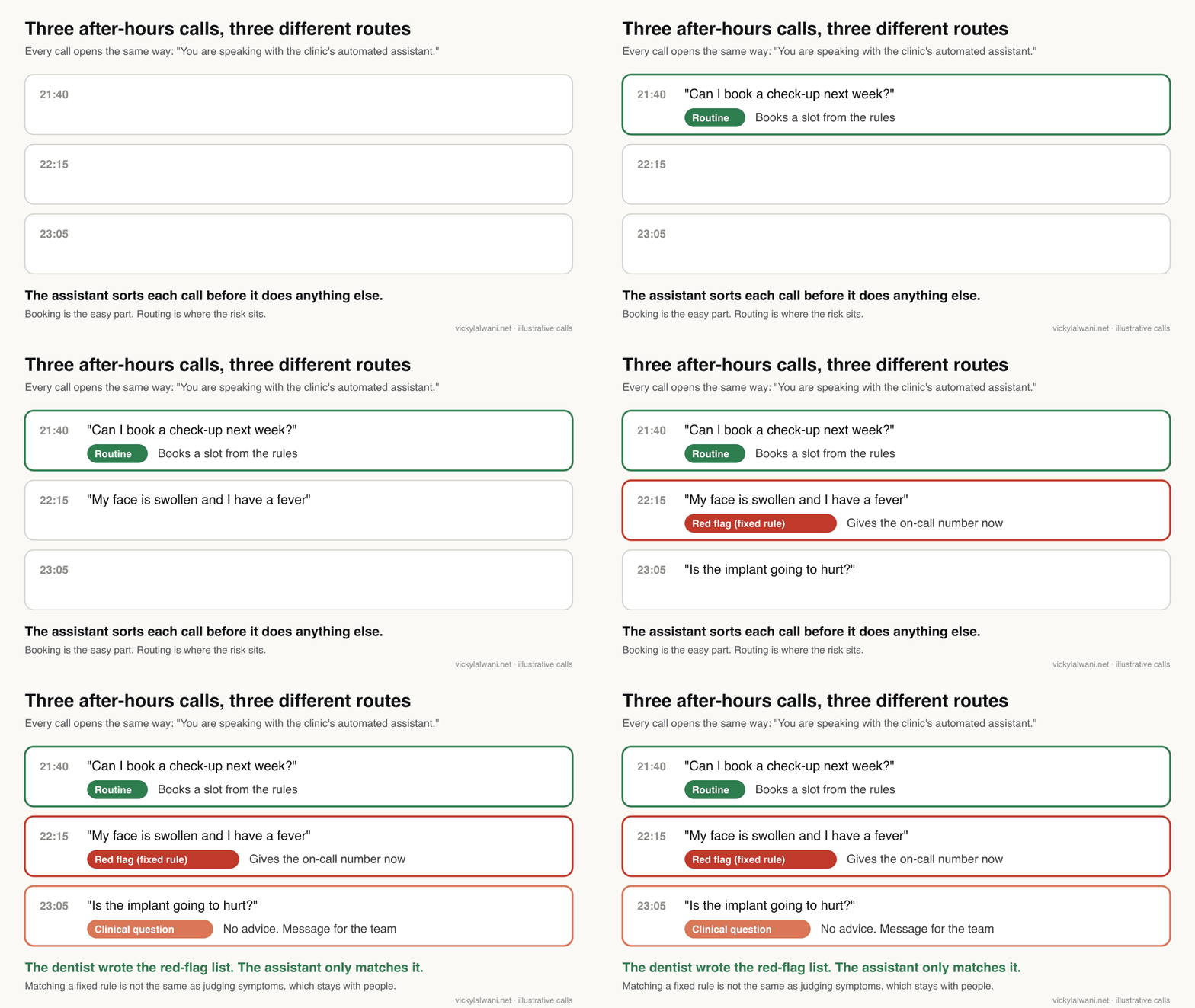
Short answer: with a fixed red-flag list written by a dentist, not with the assistant's own judgement. If the caller describes anything on the list, the assistant gives the emergency route immediately; it never decides how urgent a symptom is.
A caller who says "my face is swollen and I have a fever" needs a different response from one who says "my filling feels rough". The tempting design is to let the AI weigh up symptoms and decide. Do not.
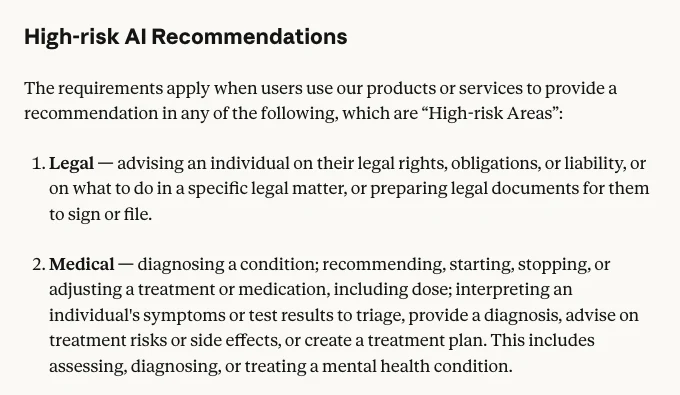
One model provider spells out why. Anthropic's usage policy, in the version effective 12 November 2026, lists "interpreting an individual's symptoms or test results to triage" as a high-risk medical use, and "setting triage or waitlist priority" as a high-risk healthcare access use. For those, a qualified person must review the AI's recommendation before it is used, and the patient must be told AI was involved. The same policy excludes "applying a fixed rule" where the model exercises no judgement about the individual.
Your vendor may run on a different model, with its own terms, but the design lesson holds everywhere: the clinical decision belongs to a qualified person, decided in advance, and the assistant only routes. The red-flag list should come from your dentists, use plain words patients actually say, and name one route for each match: the on-call number, your local emergency service, or a first-slot booking with a call-back.
A starting point for the instructions you hand to the vendor (your dentists must write and approve the final list):
You are the after-hours phone assistant for [clinic name].
Start every call with: "Hello, you are speaking with [clinic name]'s automated assistant. I can book appointments and take messages."

Red-flag rule (fixed, do not interpret):
If the caller mentions any of: [list written by the dentists, e.g. swelling of the face or neck, difficulty breathing or swallowing, heavy bleeding that will not stop, a knocked-out tooth, an injury to the face or jaw]
then say: "[approved emergency wording and number]" and end the booking flow.

Never:
- say whether a symptom is serious or not
- suggest medicines, doses or home treatment
- promise results, prices or appointment outcomes
If the caller asks a clinical question, say a team member will call back, and record their name, number and question.

Booking: new check-up and hygiene appointments only, using [appointment types and lengths]. Do not move or cancel existing appointments; take a message instead.
If the caller asks for a person, offer the next callback time immediately.
Test the list with real phrasing before you go live. Callers rarely say "facial swelling"; they say "my cheek has gone up". Accents and background noise matter too: a news report this year described an AI receptionist at family doctor practices struggling with local accents, leaving some patients unable to book.
Do you have to tell callers they are talking to AI?
Short answer: tell them in the first sentence of every call. Model providers require it for consumer-facing assistants, laws in many places point the same way, and patients trust a clinic less when they feel tricked.
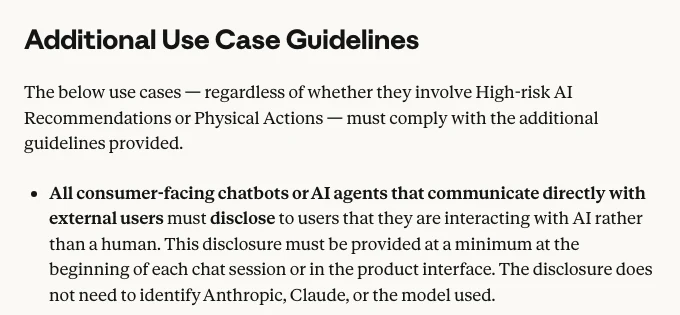
Anthropic's usage policy says all consumer-facing chatbots and AI agents that talk directly with people must disclose that the person is interacting with AI rather than a human, at least at the start of each session. It does not require you to name the model or the vendor.
Two other consent points belong in the same opening line or the line after it:
- Call recording. Most AI receptionists record and transcribe calls. Rules on recording, and on whether every party must agree, differ by location. Say that the call is recorded and why, and check the rule where your clinic operates with a professional adviser.
- A way to a person. Offer it early ("If you would rather speak to the team, I can arrange a call-back"). In patient discussions online, being stuck with a bot is the complaint that makes people say they would switch clinics.
None of this is legal advice. Treat disclosure as the minimum, then ask your indemnity provider or professional body what your local rules add.
What privacy questions should you ask the vendor?
Short answer: where recordings and transcripts are stored, for how long, who can hear them, whether they train any model, which other companies process them, and how the assistant's access to your practice software is limited. Get the answers in the contract, not the sales call.
A phone call about a tooth is health information. Most privacy laws treat health data as a special or sensitive category with stricter rules, so the vendor is handling some of the most protected data your clinic holds.
| Ask the vendor | Why it matters |
|---|---|
| Where are recordings and transcripts stored? | Health data rules can depend on location |
| How long are they kept? | Keep only as long as you need |
| Are calls used to train models? | Patient data should not leave your purpose |
| Which subprocessors hear the audio? | Speech and model providers count too |
| Who in your team can listen back? | Access should match job roles |
| What can it change in our software? | New bookings only, at first |
| How do you tell us about a breach? | You may have reporting duties |
| Can we delete a patient's data? | Patients can ask |
The software access question is the one most often skipped. An assistant that can create, move and cancel any appointment can also move the wrong patient's appointment. Ask for the narrowest permission that does the job.
The World Health Organization's guidance on large multi-modal models in health is a useful reminder of the bigger picture: it notes that it is not yet proven these models can reliably handle a wide range of health tasks. A receptionist that books and routes is a modest task, which is why it can work.
How does it connect to your booking system?
Short answer: through an integration with your practice management software that reads free slots and writes new bookings. Check that your exact software is supported before you sign, and verify every AI booking against the diary until the misses stop.
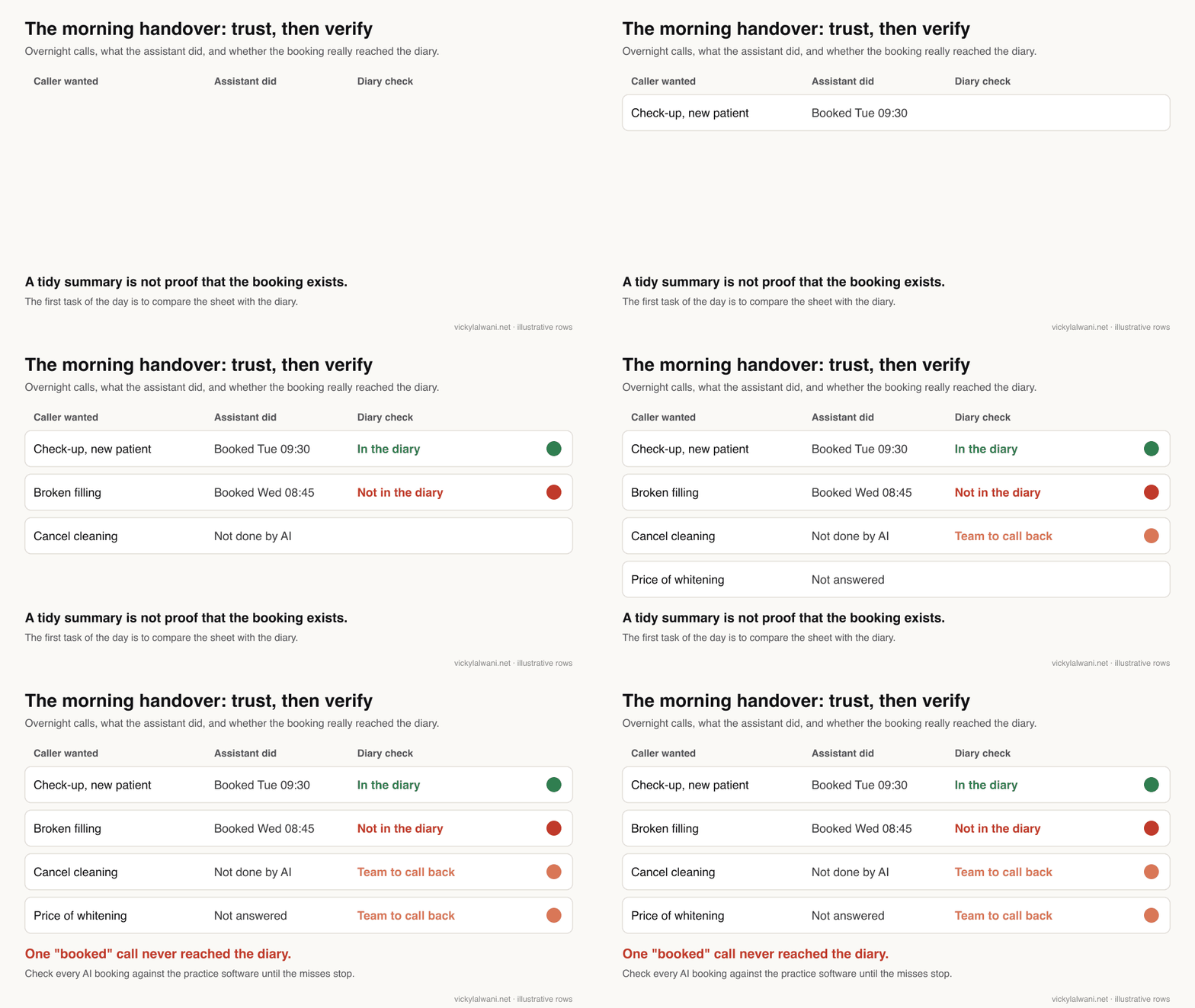
This is where AI receptionists fail in practice, and it is rarely the voice. Practice owners describe bookings on days the clinic was closed, long treatments stacked against emergency slots, and calls the assistant reported as booked that never appeared in the schedule. One owner tracked a promotion and found that calls through the assistant created no appointments at all.
Integrations are usually built for specific practice systems. If yours is not on the vendor's supported list, a "booking" may depend on a manual step or a workaround behind the scenes. Ask for the list in writing, and ask to see a booking land in a test copy of your own diary, not the vendor's demo diary.
Write the rules the assistant books by: appointment types, lengths, which clinician, which rooms, buffer times, and the slots it must never touch (emergency slots, the hygienist's lunch). Vague rules are how a long treatment ends up in a 15-minute gap.
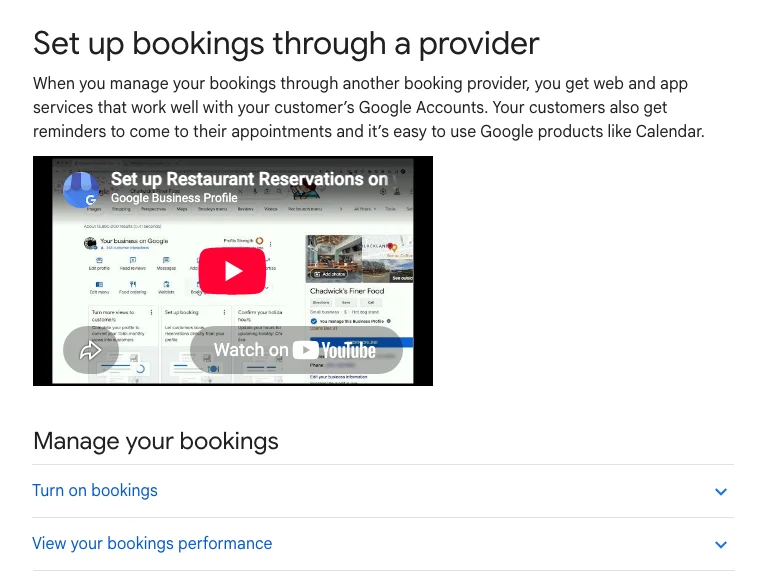
The phone is one door. Your Google Business Profile is another: Google lets a business set up bookings through a provider or add its own booking link, and notes that the provider may charge fees and that performance data is not available for custom links. Make sure both doors lead to the same diary rules.
What health advertising rules apply?
Short answer: the same ones that apply to your ads and website. The assistant must not promise outcomes or invent people, and if you advertise treatments Google treats as health, its audience rules limit how call data can be reused for ads.
The assistant speaks for your clinic, so its script is advertising in the broad sense. Whatever your dental regulator's advertising code says about testimonials, guarantees and comparative claims applies to what the assistant says on the phone. A script line like "you'll be pain-free" is a promise your clinicians would not make.
| Avoid in the script | Use instead |
|---|---|
| "Our dentists are the best in town" | "Our dentists can see you on Tuesday" |
| "It won't hurt" | "The dentist will talk you through it" |
| "You definitely need an implant" | "An assessment will show the options" |
| "Guaranteed results" | Say nothing about results |
Honesty also covers who is speaking. On a dental account I worked on, the practice objected to AI-made creative that might show staff or premises that were not theirs. The fix was a simple promise: never invent staff, patients or premises, and show samples before anything runs. The same promise belongs in an AI receptionist's script: it should not pretend to be a named team member.
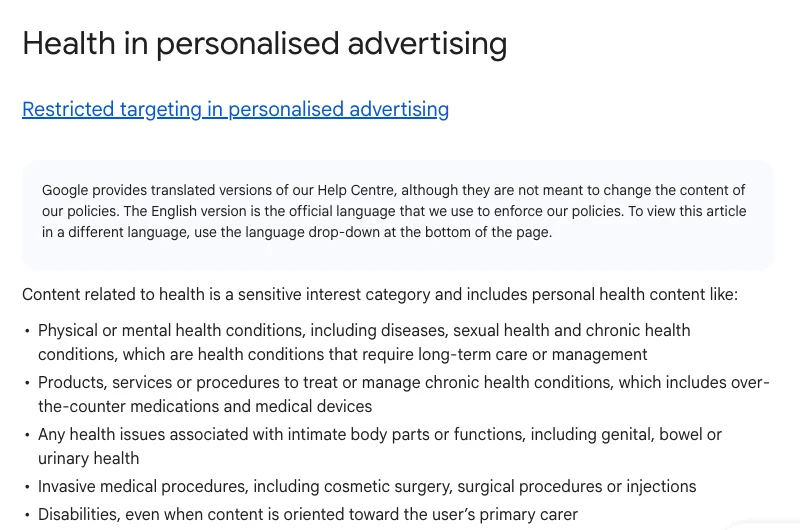
If you advertise on Google, check one more rule before you plan to turn calls into audiences. Google classes health as a sensitive interest category, including invasive medical procedures such as surgical procedures or injections, and for ads in that category Customer Match, your data segments and lookalike segments are not supported. Uploading callers as a remarketing list for implant ads is exactly the kind of use the policy restricts.
Google's separate healthcare and medicines policy restricts prescription drug terms in ads, landing pages and keywords, with requirements that vary by location. Keep medicine names out of any ad that promotes your AI booking line.
How do you measure whether it works?
Short answer: by outcomes: calls answered, appointments booked, appointments attended, handovers to people and booking errors. Record a month of your current numbers first, so you have something to compare against.
Do not judge by how natural the voice sounds. A charming assistant that books into the wrong slot is worse than voicemail. Track these from day one:
| Measure | Where from | What good looks like |
|---|---|---|
| Calls answered after hours | Phone system | Rises from your baseline |
| Bookings made by the assistant | Vendor log | Matches the diary |
| Bookings missing from the diary | Morning check | Falls to zero |
| Attended appointments | Practice software | Most AI bookings turn up |
| Handovers to people | Vendor log | Stable, not climbing |
| Calls from ads and listings | Call tracking | Answered, not missed |
Attendance deserves special attention, because a booking only matters if the patient arrives. A systematic review of 105 studies found an average no-show rate of about 23%, ranging from 13.2% in Oceania to 43.0% in Africa, across all medical specialties. Its strongest predictors were a long gap between booking and appointment, and a history of missed visits.
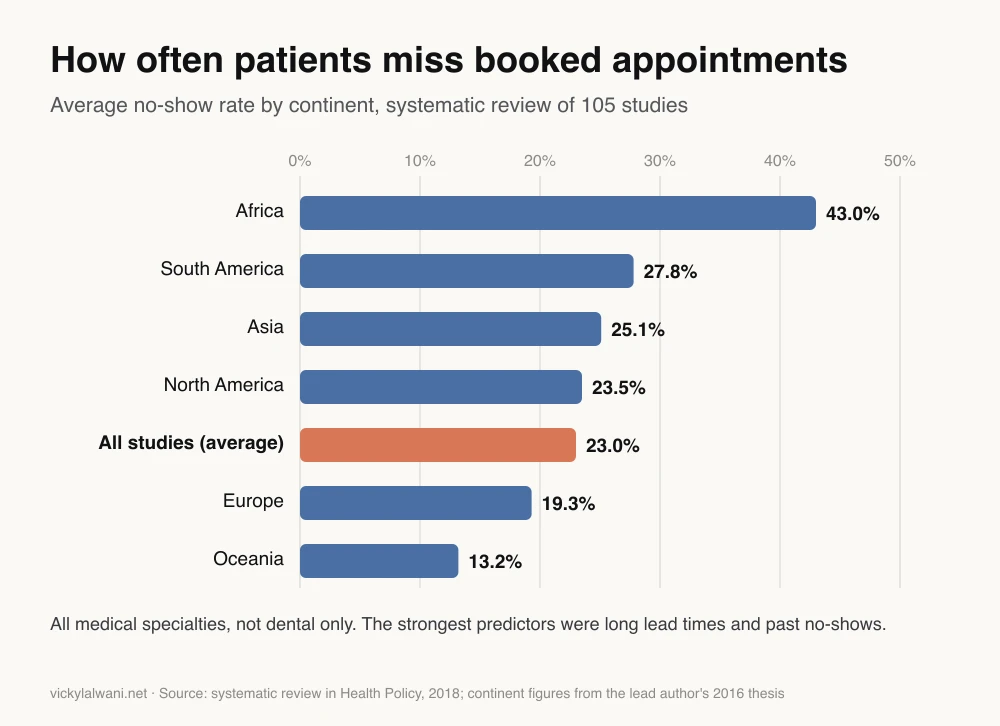
Two practical points follow. First, an AI receptionist that books faster does not fix a long wait for the appointment itself; if your next free slot is weeks away, expect more missed visits. Second, reminders help: a meta-analysis of 14 randomised trials in orthodontic patients found those who received reminders were far less likely to miss appointments (relative risk 0.39). Make sure every AI booking triggers your normal confirmation and reminder messages.
If you pay for ads and local search to make the phone ring, how the phone is answered is part of the return. Google Ads can count calls from ads that last longer than a minimum duration you set, using Google forwarding numbers. Pair that with the assistant's log and you can see which ads produced calls that turned into booked, attended visits. That is the kind of measurement I set up through my Google Ads management work.
How should you roll out an AI receptionist in 2027?
Short answer: after hours first, new bookings only, recordings reviewed every week, and every booking checked against the diary. Extend to daytime overflow only when the error log is quiet.
| Stage | What to do | Move on when |
|---|---|---|
| 1. Baseline | Count missed calls for a month | You know the gap |
| 2. Design | Red flags, booking rules, script | Dentists sign them off |
| 3. Test | Staff ring it with real phrasing | Routes and bookings are right |
| 4. After hours | Replace voicemail only | Weeks with no diary misses |
| 5. Overflow | Busy daytime calls | Team and patients are happy |
Before any software, sit with your reception team. Ask which calls are hardest, what patients ask most often, and which calls they would happily hand over. Their answers become the first rules. Receptionists in online discussions are blunt about the alternative: they expect to clean up the assistant's mistakes and take the callers' frustration. Staff who help design the system are more likely to trust it, and to read the morning summary instead of ignoring it.
A few general habits make the roll-out safer. Nothing should go live until the practice owner has approved the script and rules. Ask the vendor to demonstrate with your clinic's real services and clinician list, not a generic template, because that is where the gaps show. And treat speed as the point of the exercise: an enquiry that waits until the next day for a reply has often already booked elsewhere, which is the whole case for answering after hours at all.
Finally, set the morning handover format: who called, why, what the assistant did, and what still needs a person. A tidy summary turns overnight calls into the first task of the day, which is where the value shows up for the front desk.
What do dentists say after testing an AI receptionist?
Short answer: the most useful videos are from practitioners who tried one, and they land in the same place: worth it for missed calls, risky for anxious new patients, and only as good as its rules and its handover to people.
I Tested an AI Receptionist... Here's What Dentists Should Know, from a dental education podcast, 26 March 2026. Two dentists test an assistant and discuss staff impact, compliance and legal points. Not a product pitch, though the podcast sells its own education.
Why Dental Patients May Hate Your AI Receptionist, from a dental communication consultant's channel, 6 March 2026. Six minutes on the patient side: missed calls against callers who resent bots. The channel sells coaching.
Hippocratic AI powers safe, conversational voice agents for healthcare, from Google Cloud's official channel, 20 October 2026. A customer story about healthcare voice agents designed around safety. It promotes both companies, and the safety claims are theirs.
| Video | Channel | Date | What it covers |
|---|---|---|---|
| I Built an AI Receptionist for My Dental Practice | CloudTalk (vendor) | 6 Aug 2026 | Set-up and test calls for booking |
| Dental Intelligence AI Receptionist | Dental Intelligence (vendor) | 9 Jul 2026 | Product promotion |
| AI Receptionists and the Future of Dental Phone Systems | A dental consultancy podcast | 8 Dec 2025 | Missed calls; vendor guest |
| How to Build a Voice AI Agent | TwilioDevs | 4 Nov 2026 | How phone voice agents are built |
| Build Voice AI Customers Won't Hate | TwilioDevs | 14 Aug 2026 | Turn-taking and phone trees |
What people say on X and Reddit
Short answer: practices that like their AI receptionist use it after hours instead of voicemail. The complaints are about bookings that go wrong and callers who cannot reach a person, not about the voice.
| Where | Date | What they say | Type |
|---|---|---|---|
| A dentist and dental publisher on X | 14 Jun 2026 | The real problem is missed calls, not AI | Opinion |
| A news account on X | 25 Aug 2026 | AI receptionist struggles with local accents | News |
| A national newspaper on X | 26 Jan 2026 | AI answering for a million family doctor patients | News |
| A health reporter on X | 16 Mar 2025 | Hospitals use AI to call and question patients | News |
| A consumer on X | 14 Sep 2026 | A personal AI agent booked a dentist visit | First-hand |
| A healthcare voice AI vendor on X | 18 Jun 2026 | Practices pay for demand, then miss the call | Vendor |
| r/Dentistry | 26 Oct 2026 | After hours only; listen to recordings in week one | First-hand |
| r/Dentistry | 9 Apr 2026 | Better than voicemail, or booked closed days | First-hand |
| r/Dentistry | 7 Jul 2026 | Too slow by day, fine for simple bookings | First-hand |
| r/Dentistry | 26 Jul 2026 | Calls handled, no appointments created | First-hand |
| r/physicaltherapy | 17 Feb 2026 | Patients stuck in long data-collection loops | First-hand |
| r/receptionists | 5 Jul 2026 | Staff expect to clean up AI errors | Opinion |
The most useful thread is the r/Dentistry discussion from October 2026. A commenter who had led an AI receptionist product said it works for simple bookings and after-hours basics but struggles with price-shopping new patients, and advised listening to a batch of recordings in the first week. Another warned that booking errors hide inside calls that sounded fine. The April thread shows the split clearly: one owner called their after-hours assistant far better than voicemail, while others dropped vendors after it booked closed dates and disrupted the schedule. The original post there was removed, but the replies remain in the archive.
Two patterns worth noting. On X, much of the noise is people selling "AI agents for dentists"; the useful voices are dentists and news reports. And the receptionists' community is a reminder that the people who answer the phone today will run the handover tomorrow, so involve them.
Where this advice is weak
- I have not run a controlled comparison of AI receptionist products. The failure patterns above come from practice owners' public reports and conversations with clinic owners, not from a study.
- The no-show figures cover all medical specialties and are several years old; dental attendance can differ, and your own numbers matter more.
- The reminder evidence comes from orthodontic patients and from reminders in general, not from AI phone assistants specifically.
- Privacy, recording and health advertising rules differ by location. This article names questions to ask, not answers for your clinic; take local legal advice.
- Products change quickly. Check the vendor's current integrations and terms on the day you sign.
Want help setting up an AI receptionist for your clinic?
Short answer: I design the rules, script and diary connection with your team, test it with real phrasing, and wire the results into your ad and call tracking so you can see booked and attended visits.
Start with my AI chatbot and booking assistant service, and see how it fits with ads, local search and your Business Profile on the dental marketing page. Rates are on the pricing page. For the wider problem of evening calls, read after hours call answering for clinics; for booking from social ads, see how Meta lead ads appointment booking works; and before you trust any call numbers, run the conversion tracking audit checklist.
The real shift is simple: stop treating a closed clinic as a closed business. Patients do not keep your opening hours, so your response should not either.
Sources
| Source | What it supports | Date |
|---|---|---|
| Anthropic usage policy | AI disclosure; triage is high-risk; fixed-rule exclusion | Effective 12 Nov 2026 |
| Google: health in personalised advertising | Health categories; Customer Match not supported | Read 18 Nov 2026 |
| Google: personalised advertising policies | Sensitive interest categories | Read 18 Nov 2026 |
| Google: healthcare and medicines policy | Prescription drug terms restricted | Read 18 Nov 2026 |
| Google Business Profile: bookings | Booking providers and custom links | Read 18 Nov 2026 |
| Google Ads: measure calls from ads | Minimum call duration you set | Read 18 Nov 2026 |
| WHO: AI ethics guidance on large multi-modal models | Capabilities not yet proven | 25 Mar 2025 |
| No-shows systematic review (Health Policy) | 23% average; 13.2% to 43.0% | 2018 |
| Thesis behind the review | Continent figures for the chart | 2016 |
| Reminders meta-analysis (orthodontics) | Relative risk of missing 0.39 | 2019 |
| X, Reddit and YouTube | Practitioner and patient views | Mar 2025 to Nov 2026, linked above |
This article expands on my post on LinkedIn ↗.
FAQ
Can an AI receptionist book dental appointments?
Yes, when it is connected to your practice management software. It reads free slots and writes new bookings by your rules, then sends the usual confirmation. Check that your exact software is supported and verify each AI booking against the diary in the first weeks.
Is an AI receptionist the same as a chatbot or phone tree?
No. A phone tree routes by keypress and a scripted chatbot follows a fixed path. An AI receptionist understands free speech, asks follow-up questions and books, but it still needs written rules and a clear handover to staff.
How should an AI receptionist handle dental emergencies?
With a fixed red-flag list written by your dentists. If a caller describes anything on it, the assistant gives the approved emergency route straight away; it should never judge how serious a symptom is itself.
Do patients have to be told they are speaking to AI?
They should be told in the first sentence of every call. Anthropic's usage policy requires consumer-facing AI agents to disclose that people are talking to AI, and local laws may add further duties, including rules on call recording.
Is an AI receptionist safe for patient privacy?
It can be, if the contract answers where recordings are stored, how long they are kept, whether they train any model and which other companies process them. Give it the narrowest access to your software, ideally new bookings only at first.
Can I use AI receptionist call data for Google Ads remarketing?
Often not. Google treats health, including invasive procedures such as surgery or injections, as a sensitive category, and Customer Match and your data segments are not supported for those ads. Check the policy before planning it.
What should an AI receptionist never say to a dental patient?
It should not give clinical advice, judge symptoms, suggest medicines, promise results or claim the clinic is the best. Clinical questions become a message for the team, and the script follows the same advertising rules as your ads.
How do I measure whether an AI receptionist works?
Record a month of missed calls first, then track calls answered, bookings made, bookings missing from the diary, attended appointments and handovers to people. Judge it on booked and attended visits, not on how natural it sounds.
Does an AI receptionist reduce no-shows?
Only indirectly. A review of 105 studies found long waits and past no-shows were the strongest predictors of missed visits, and reminders cut missed orthodontic appointments in trials, so make sure every AI booking triggers your normal reminders.
Where should a dental clinic start with an AI receptionist?
After hours, replacing voicemail, with new bookings only and weekly reviews of recordings. Extend to busy daytime overflow once several weeks pass without bookings going missing.