Which Claude model to use is a staffing decision. Use a fast, cheaper model for volume work like drafts and routine passes, a stronger model for audits and judgment calls where mistakes are costly, and a top-tier specialist only for the hardest problems. Brief each one like a new hire.
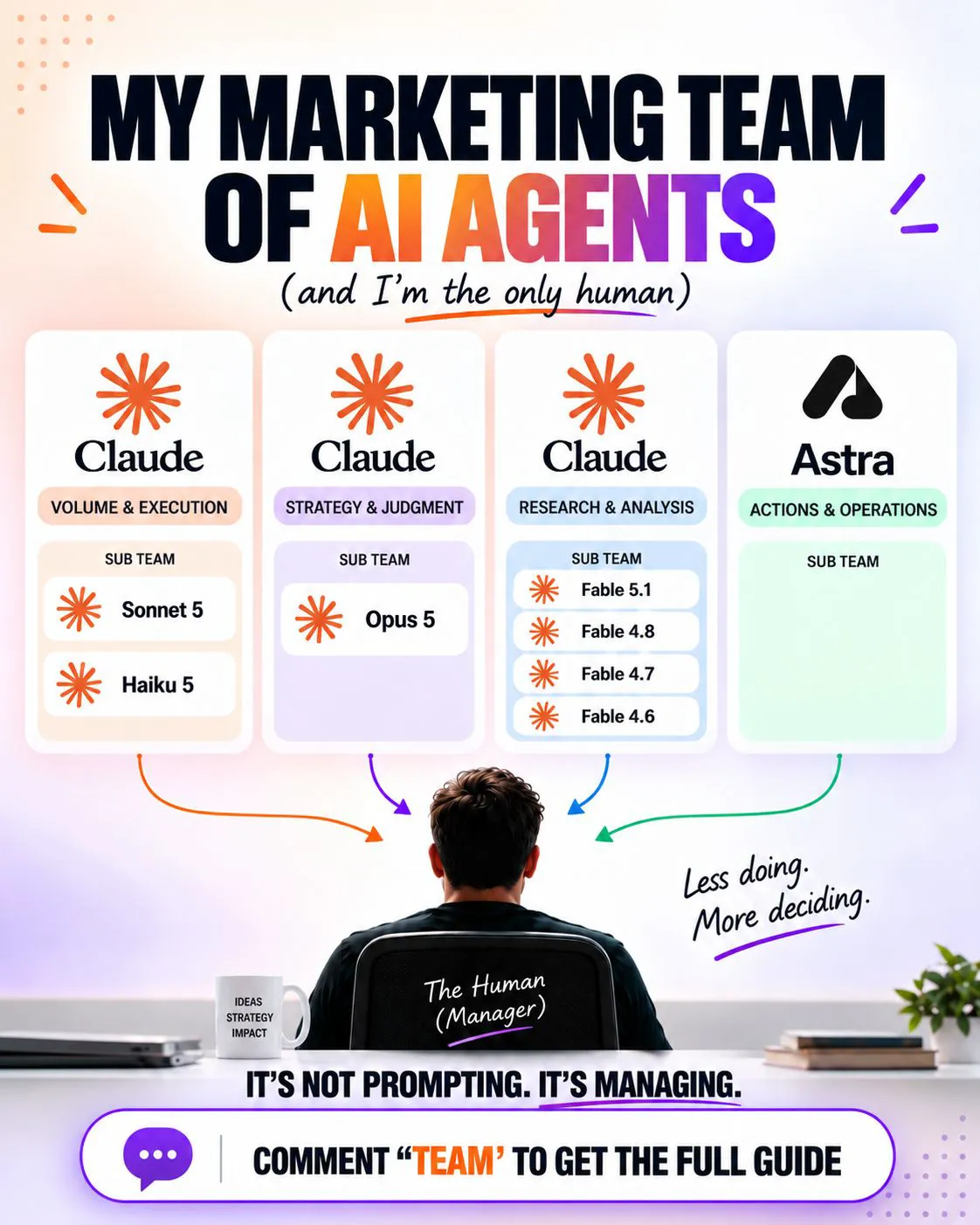
Deciding which Claude model to use is easier if you treat it like hiring. I run my marketing like a small team made of agents, with me as the only human. That changed my job from doing the work to deciding who does it. If you plan to use AI seriously in 2027, the mistake to avoid is picking one model and running everything through it. That is like giving your best strategist the data entry and then wondering where the budget went.
Think of model choice as hiring
Models differ in speed, cost and depth. So the right question is not which model is best, it is who you want on this particular job. This is a staffing decision, not a technical one. Here is how I split the roles, described by type rather than exact names, since model lines change often and you should check Anthropic's current documentation for what is available.
- The volume workhorse: a fast, lower cost model for drafts, routine passes and the hundred small jobs. It is quick and never gets bored.
- The senior on judgment calls: a stronger model for full audits, ranked priorities and anything where being wrong is expensive.
- The specialist: a top-tier model brought in for the hardest problem, not for everyday work. It is for the task nothing else cracks.
- The operator: a computer-use model that handles forms, dashboards and portals, the clicking nobody wants to do.
How to decide which Claude model to use
Run each task through two questions. First, how costly is a mistake? A caption draft is cheap to fix, while a budget recommendation is not. Second, how much reasoning does it need? Sorting terms into categories needs little, while diagnosing why a campaign fell apart needs a lot. Low cost and low reasoning go to the fast model. High on either goes up a level. High on both gets the specialist.
When unsure, test. Run the same task on two models, compare results blind, and pick the cheapest one that you would sign off.
The manager habits that matter more than the model
Once you have staffed the work, you manage it the way you would manage people.
- Brief them like new hires. A vague brief gets vague work. State the goal, the context, the format and the limits.
- Check the output, not every step. Review the one step where being wrong is expensive. A manager who reviews everything becomes the bottleneck.
- Keep what cannot be delegated. The offer, the strategy and the decision on what ships stay with you.
What this looks like in a week
Drafts of ad variations and weekly summaries go to the fast model. A monthly account audit, with ranked priorities, goes to the stronger one. A messy tracking problem that has defeated everyone gets the specialist for an afternoon. Portal chores go to the operator. Total cost stays low because the expensive options only run where they earn their keep.
When to change your staffing
Revisit your model choices regularly. Model lines change, prices move and a fast model today may handle work that needed a stronger one last year. Keep a short log of tasks where the cheaper model fell short, and promote those to a higher level, while also testing whether a stronger model's tasks can move down. Tie each choice to a result you can check, such as the share of drafts you accept without edits or the number of audit findings you confirm by hand. That keeps the decision grounded in evidence instead of habit. And remember that the best model for a task is the cheapest one you would be willing to sign off, which is a business decision as much as a technical one.
Start with an inventory
List the ten tasks you repeat most, label each by cost of error and depth of reasoning, and assign a model to each. If you want help building this routing into your workflow, my Claude consultant service covers it, and the free guides include a simple worksheet. One person with a well-routed team can produce a full team's output, because the skill is no longer prompting, it is managing.
This article expands on my post on LinkedIn ↗.
FAQ
Should I use the most powerful model for everything?
No. It is slower and costs more, and most routine work does not need it. Match the model to the difficulty and the cost of being wrong.
How do I decide between a fast model and a stronger one?
Ask what a mistake would cost. Use the fast model for drafts and routine passes, and the stronger model for audits, ranked priorities and anything expensive to get wrong. Check Anthropic's current docs for model options.
What is a computer-use model?
It is a model designed to operate software like a person, for example filling forms or navigating dashboards and portals, rather than only writing text.