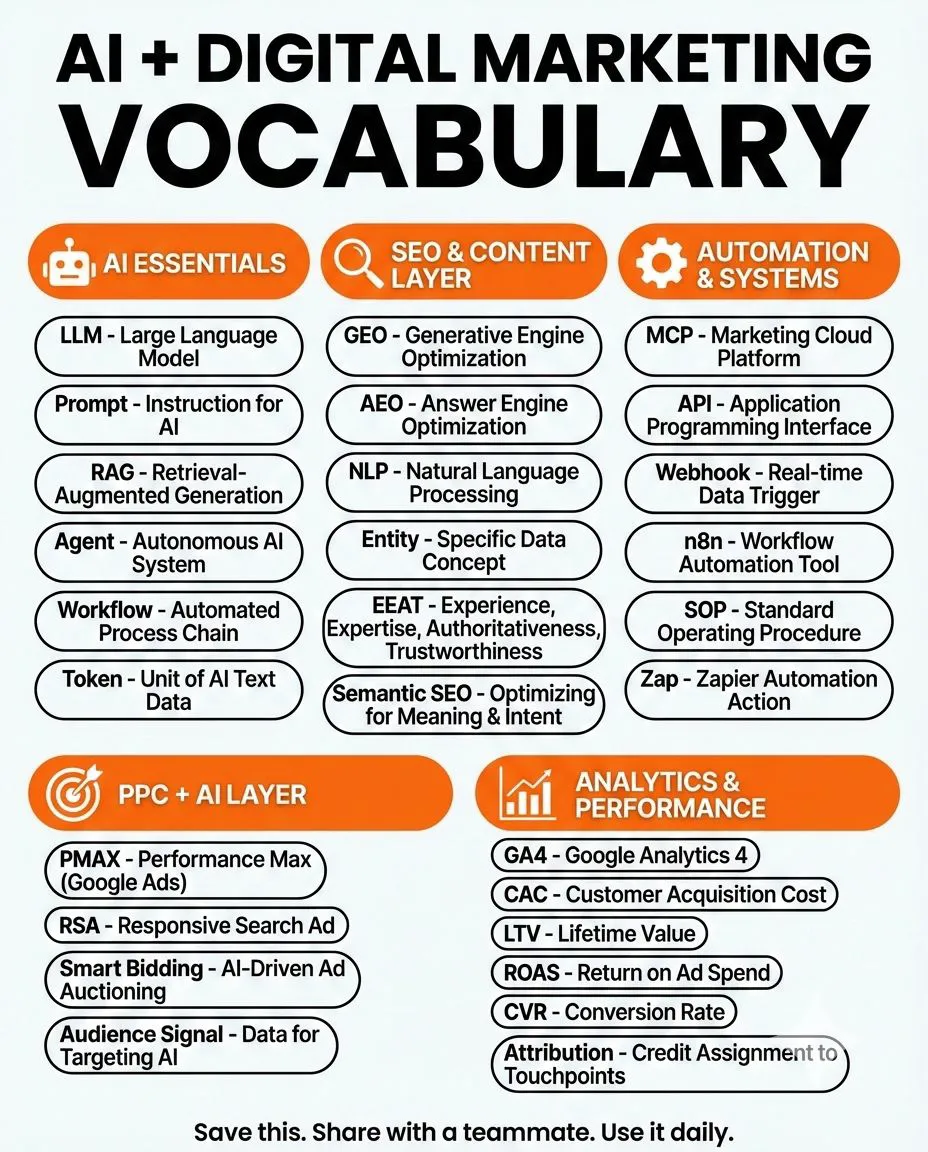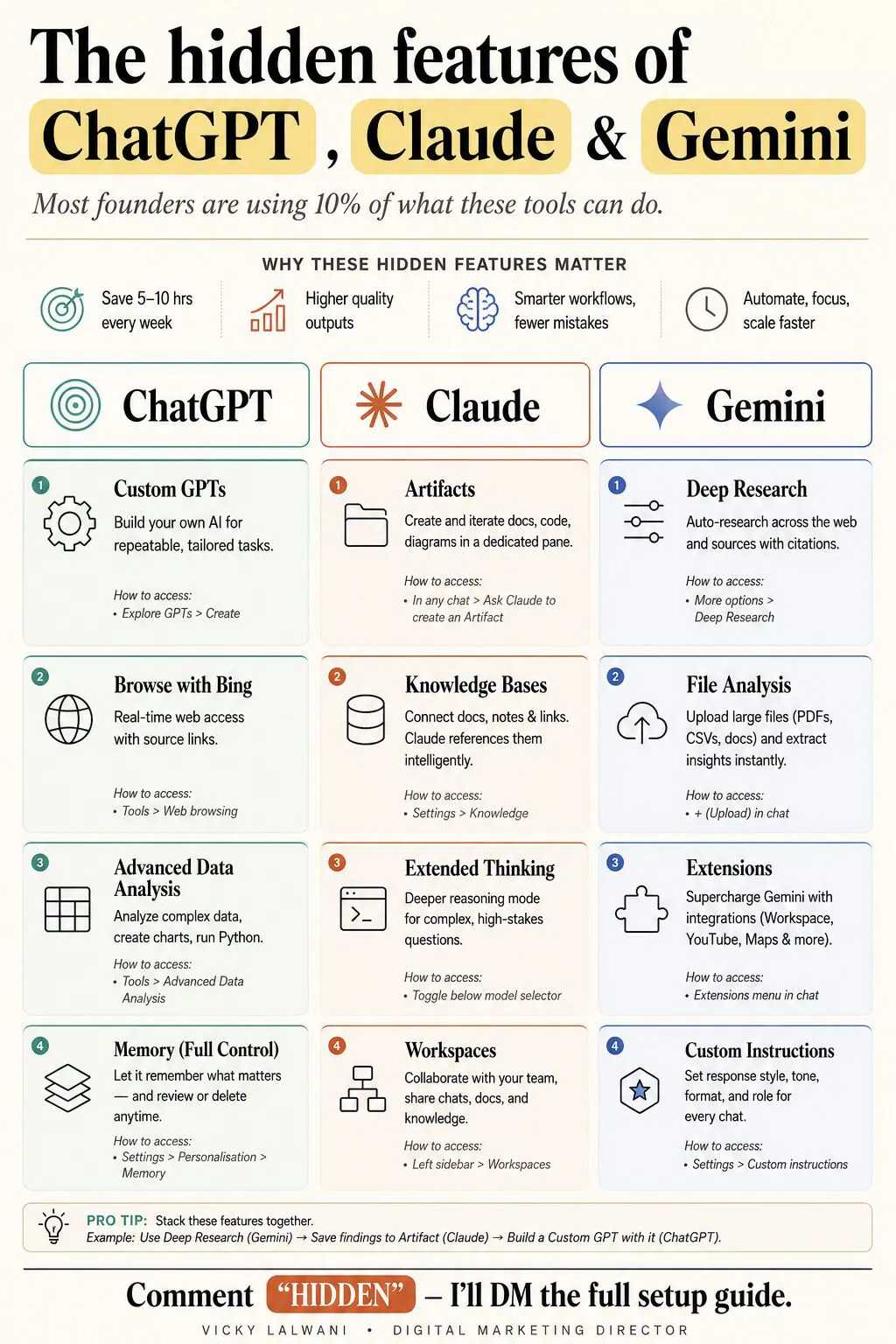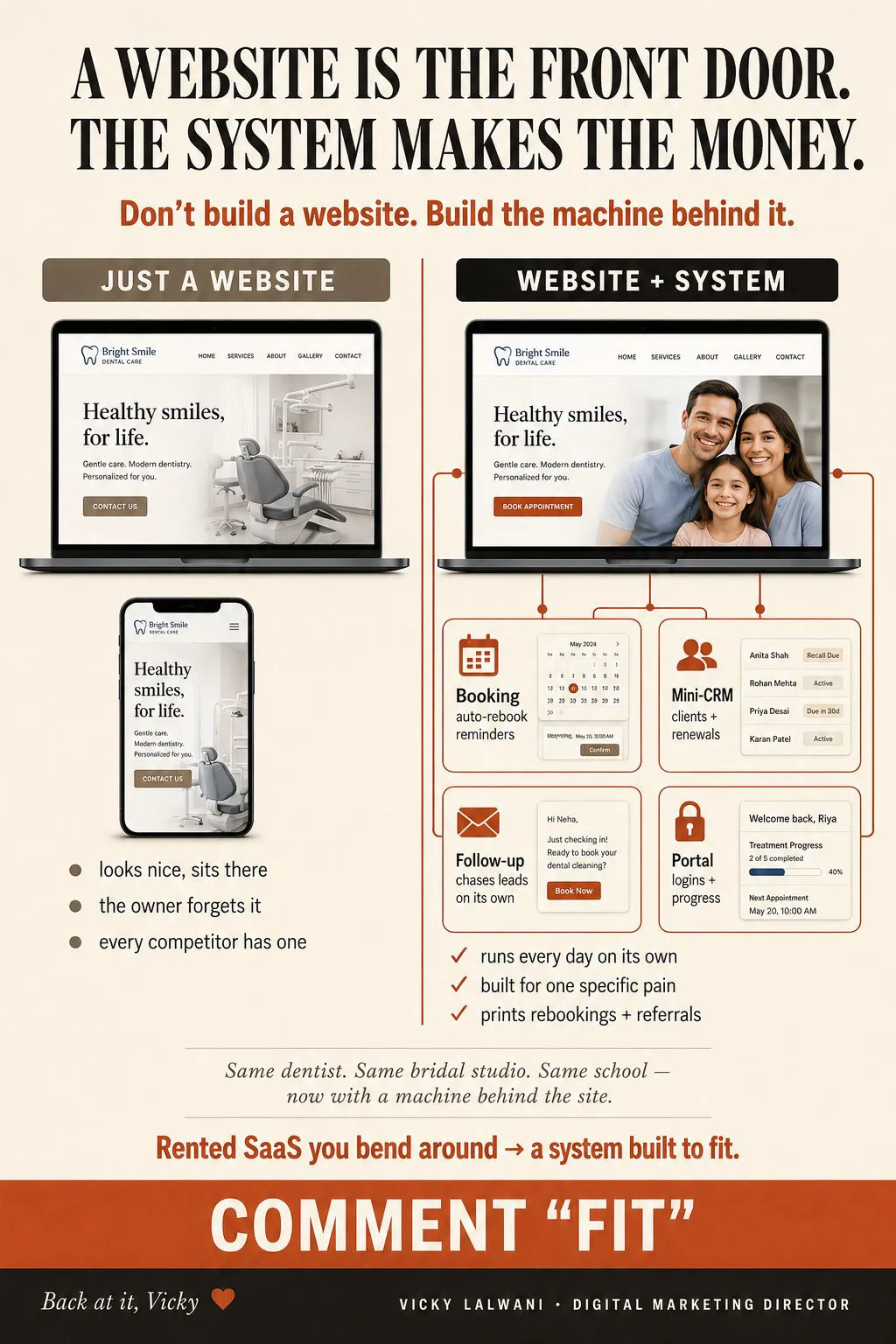
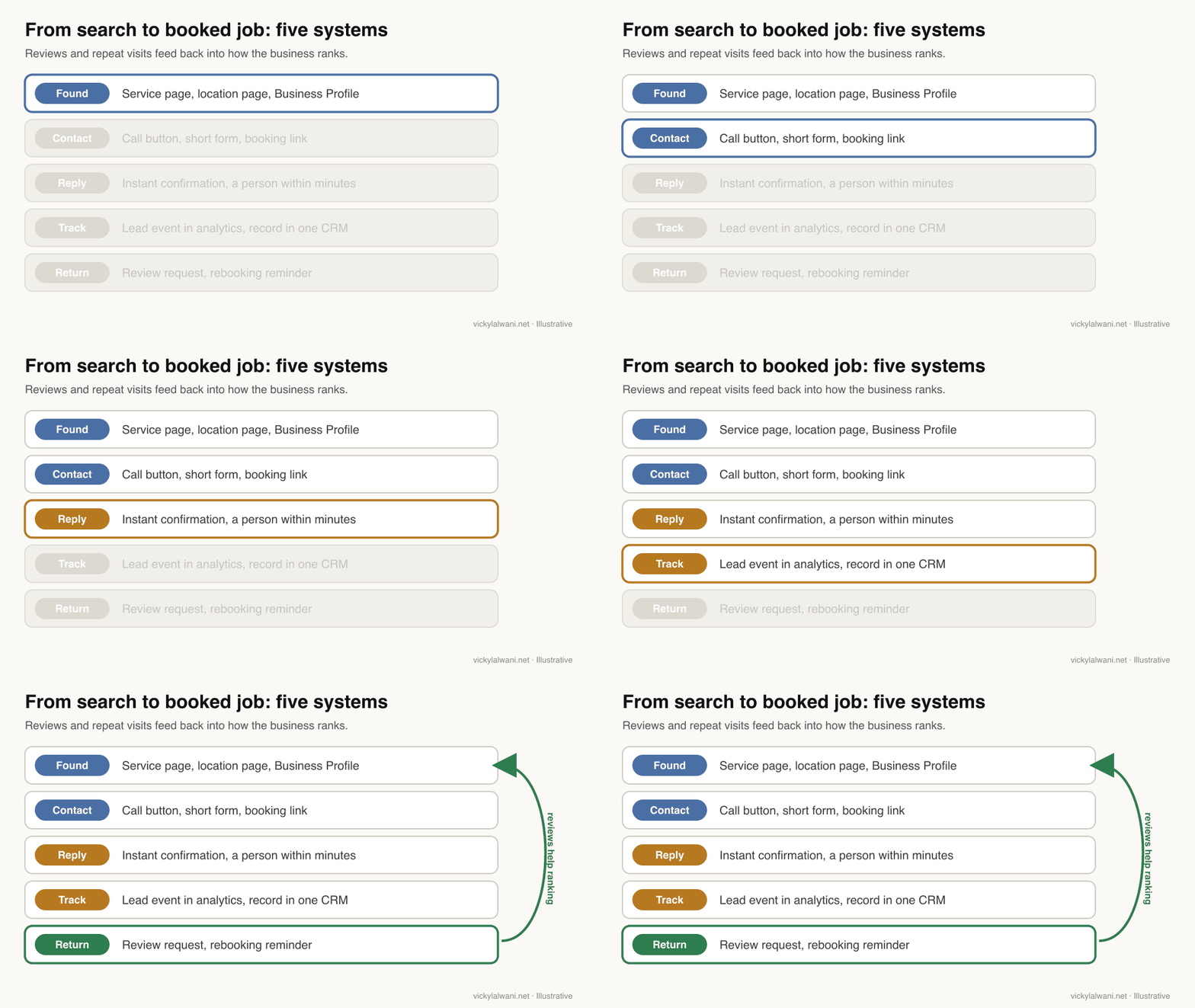
A small business website earns money through the systems behind it, not the design. It needs pages that rank for each service and area, a Business Profile that matches, a tap-to-call button and short form or booking link, a reply within minutes, tracking that records every enquiry, and a review and rebooking loop that helps it rank again.
TL;DR
A small business website now has three jobs: get found in search, turn visits into enquiries, and prove which enquiries came from where. A nice design does none of those on its own. The systems behind the site do.
For SEO, that means one page per service, location pages only where you really work, a complete Google Business Profile, fast mobile pages and a steady flow of reviews. For leads, it means a tap-to-call button, a short form or booking link, a reply within minutes, and every enquiry landing in one place.
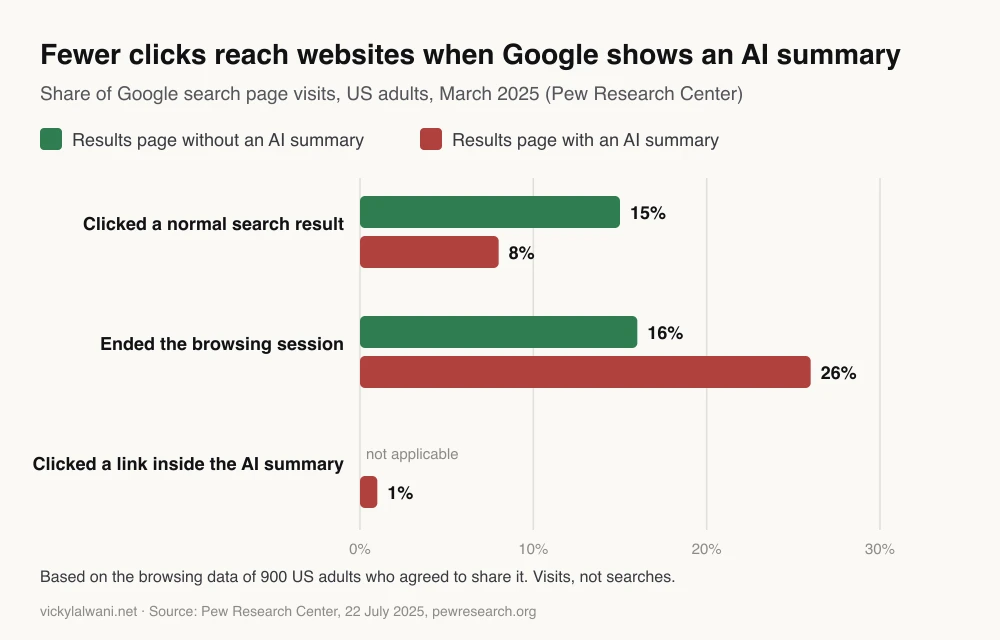
Fewer searchers click through than before (Pew Research found 8% of visits with an AI summary led to a click, against 15% without), so each visit you do get matters more. Build the one system that fixes your biggest leak first, then measure it.
Short answer: a small business website makes money through the systems behind it: pages that rank for the services people search, a Business Profile that matches, an easy way to call or book, a fast reply, tracking that shows which enquiries came from search, and a review and rebooking loop that helps the business rank again.
Picture a local business with a website that looks great. It went live a year ago, the owner paid well for it, and the phone rings about as often as it did before. Nobody can say how many people found the site through Google, how many filled in the form, or how many of those became customers. The site is not broken. It is just a brochure with nothing behind it.
A website alone is no longer an edge. Almost anyone can build one now, and AI has made it cheap. What still separates the businesses that get leads from search is the system around the site: the pages that let Google match it to real searches, and the steps that turn a visit into a booked job. If you want that built and run for you, that is my SEO consulting work.
What should a small business website do in 2027?
Short answer: three things. Get found for the services and places people actually search, turn those visits into calls, forms or bookings, and record each enquiry so you know which pages and channels produce customers. If a site does not do all three, it is a cost, not a lead source.
The first job has become harder. When Google shows an AI summary at the top of the results, fewer people click through to any website. Pew Research Center analysed the browsing of 900 US adults and found that people clicked a normal result on 8% of visits with an AI summary, against 15% without one, and clicked a link inside the summary on just 1%.
That does not make SEO pointless for a local business. People still search for a plumber, a dentist or an accountant near them, and the Business Profile and map results still send calls. It does mean each visit is worth more, and a site that leaks visitors wastes traffic you worked hard to earn.
| Job | What does it | How you know it works |
|---|---|---|
| Get found | Service pages, Business Profile, reviews | Search Console clicks, calls from the profile |
| Turn visits into enquiries | Call button, short form, booking link | Enquiries per 100 visits |
| Reply fast | Instant confirmation, a person within minutes | Time to first reply |
| Prove the source | Lead events in analytics, one CRM | Leads by channel match the CRM |
| Bring them back | Review requests, rebooking reminders | New reviews a month, repeat bookings |
Which pages does a small business website need to rank?
Short answer: one clear page for each service you want to be found for, a page for each area you genuinely serve (not copies with the town name swapped), an about page that shows who does the work, a contact page, and a homepage that links to all of them. A small business needs a handful of strong pages per service and area, not hundreds of thin ones.
Google's own advice is plain. Its SEO Starter Guide asks for useful, unique pages with clear titles and descriptions, and its guidance on helpful, people-first content (updated 5 October 2026) asks who created a page, how and why. For a local business, that means real photos, real prices or price ranges, the actual areas covered and the person or team doing the work.
Write the pages in the words customers type, not the words the business uses internally. I see this often on local sites: a service named after an internal product line, or an area named after an official district nobody searches for. Rename the page to match the search, and the same content suddenly has a chance.
| Page | Its job | Must have |
|---|---|---|
| Service page | Rank for one service | What, price range, area, proof |
| Area page | Rank in a real service area | Local jobs, travel times, reviews |
| About page | Show who does the work | Names or team, years, photos |
| Contact page | Make contact easy | Phone, form, hours, map |
| Homepage | Route people to the right page | Links to every service |
Three technical basics sit under those pages. First, your name, address and phone number should match your Google Business Profile exactly. Second, LocalBusiness structured data tells Google your hours, address and departments in a format it reads directly; Google's page asks you to test it with the Rich Results Test. Third, the pages need to load fast on a phone.
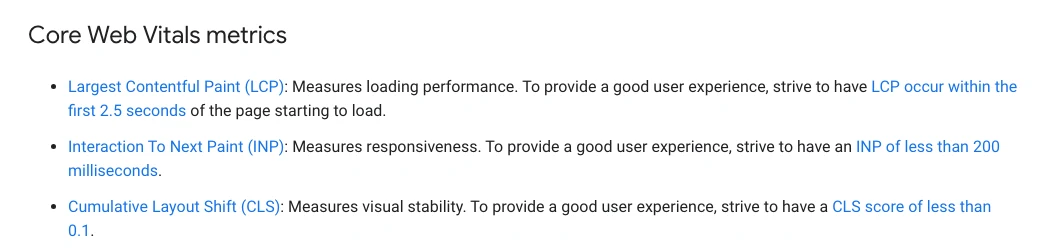
Google's Core Web Vitals targets are the main page to load within 2.5 seconds, a response to taps in under 200 milliseconds, and a layout that does not jump around (a shift score under 0.1). Search Console has a report that shows which pages miss them. If you want the wider picture of structuring a site so AI search can read it too, see how to optimise your website for AI search.
How does Google Business Profile fit with the website?
Short answer: for local searches, the Business Profile often gets the call before the website gets the visit. Google says local results depend on relevance, distance and prominence, and prominence includes how many sites link to you and how many reviews you have. The website supports all three: it explains your services, confirms your location and earns the links.
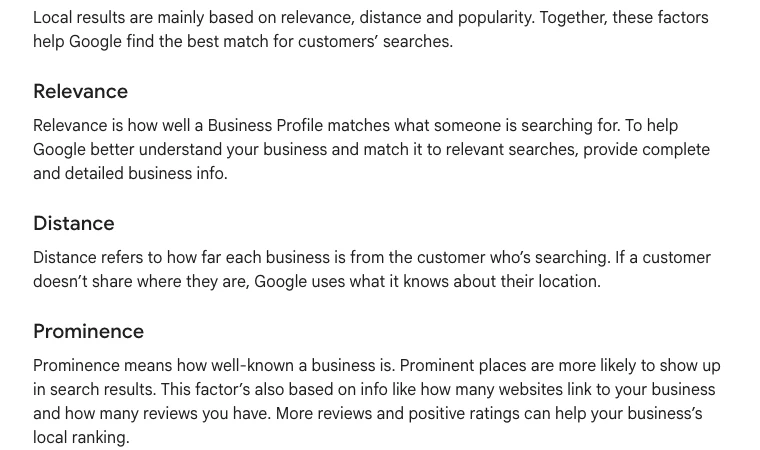
Google's local ranking help page also says businesses with complete and accurate information are more likely to show up. That is why I start with quick wins before slow builds: clean up the Business Profile, fix the categories and hours, make sure the website link goes to the right page, then move on to new content. Profile fixes take days to make; new pages take months to earn rankings.
What systems turn website visitors into leads?
Short answer: a tap-to-call number at the top of every page on mobile, a short form or online booking link, an instant confirmation, a person replying within minutes during working hours, and one place where every enquiry lands. Each step is simple; the value is in having all of them work together.
| System | What it does | Simplest version |
|---|---|---|
| Tap-to-call | Turns a mobile visit into a call | Phone link in the header |
| Short form | Captures people who will not call | Name, phone, what they need |
| Booking link | Lets people pick a time | Booking tool on site and profile |
| Instant reply | Confirms the enquiry arrived | Automatic email or text |
| One CRM | Keeps every lead in one list | Forms, calls and chat in one place |
| Reminders | Cuts no-shows | Text the day before |
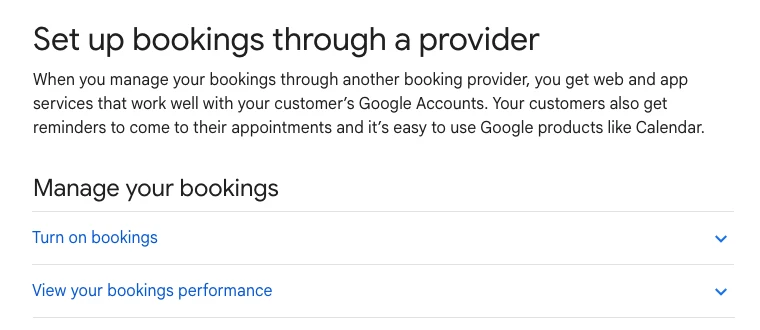
Bookings can also start on Google itself. Google Business Profile lets you connect a booking provider or add your own booking link, though Google notes that providers may charge, and that it shows no performance data for custom links. If you use your own link, tag it so your analytics can tell profile bookings apart from website bookings.
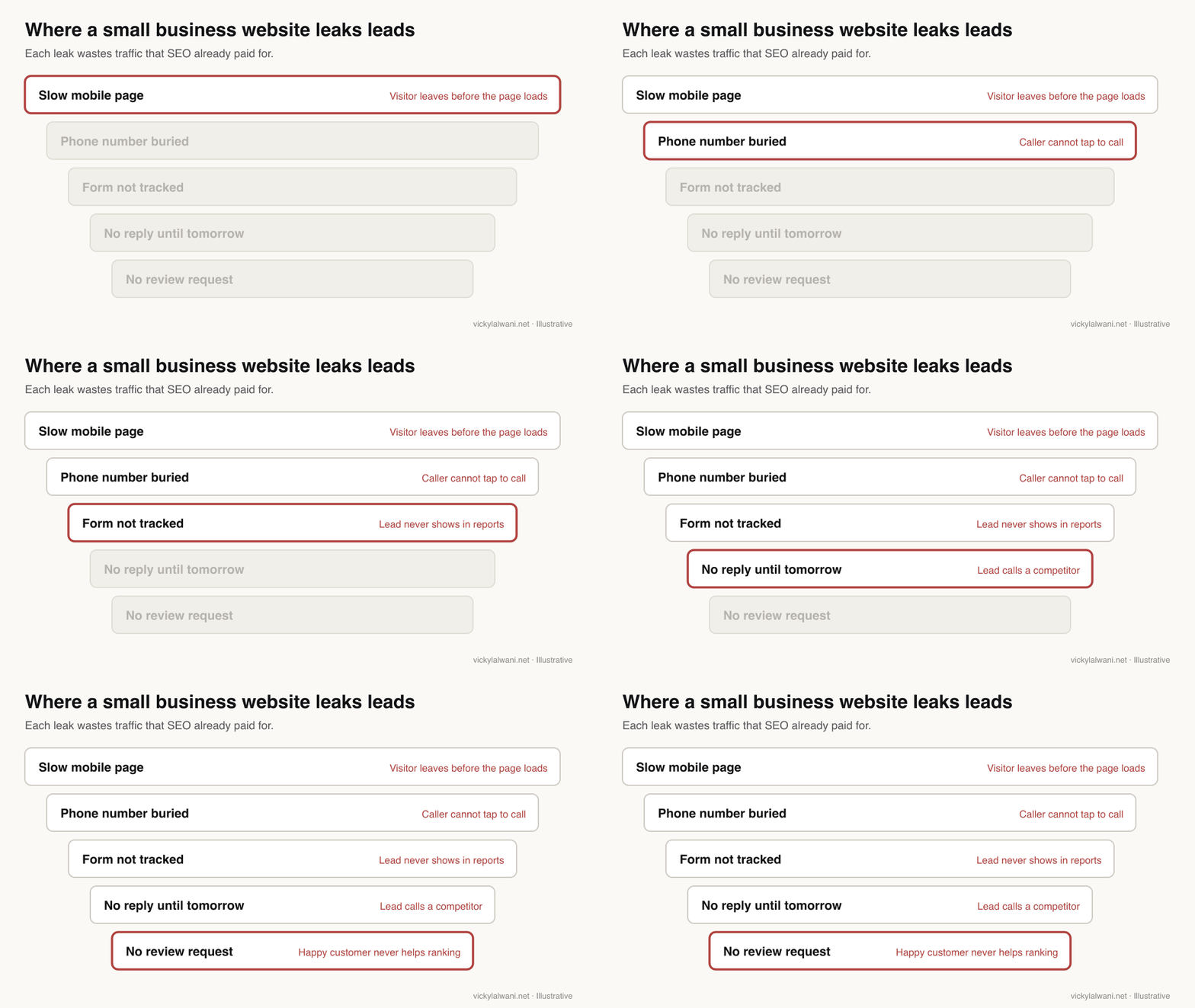
The reply step is where most enquiries die. Someone fills in a form at 7pm, nobody answers until the next afternoon, and by then they have booked whoever called first. I cover the fixes in after-hours call answering and lead response. The rule I work to is one system for leads: forms, chat, calendars and calculators all feed one CRM, so nobody has to check five inboxes.
The systems can be small. A dental practice I worked with rebuilt its acquisition around AI-powered booking and follow-up, and revenue rose 57% and no-shows fell 59%. That came from booking, reminders and rebooking, not from a new homepage. The same idea works for a training school sending rebooking reminders, or a boutique loading a shortlist before a client arrives.
How do you measure which leads came from SEO?
Short answer: record every form, call and booking as a lead event in your analytics, connect Search Console, and once a month compare the leads your analytics shows with the leads in your CRM. If the two numbers disagree badly, fix the tracking before you judge the SEO.
Google's analytics documentation has a recommended event for exactly this: generate_lead, for form submissions and other first enquiries, with separate events for qualifying and closing a lead. Mark it as a key event, and you can see which pages and channels produce enquiries rather than just visits.
A question I hear often is why analytics shows almost no leads when the CRM shows dozens. The usual causes are a form that sends email but fires no event, calls that are never measured, and a booking tool on another domain. My habit is tracking before spend: no campaign goes live until every form and call button is measured. I have also seen a tracking tag break a live form, so after any install, submit a test enquiry yourself and check it arrives. The full setup is in my conversion tracking setup guide, and I do it as part of analytics and tracking work.
| Lead source | How to record it | Common gap |
|---|---|---|
| Website form | generate_lead on the thank-you step | Form emails but fires no event |
| Phone call from site | Click on the phone link | Calls from desktop not counted |
| Booking tool | Event or tagged link | Bookings on another domain |
| Business Profile | Profile insights, tagged link | Custom booking links have no data |
| Chat | Event when a chat starts a lead | Chat leads sit in another inbox |
How do reviews and rebooking help SEO?
Short answer: Google says more reviews and positive ratings can help a business's local ranking, so a system that asks every happy customer for a review is also an SEO system. Rebooking reminders and follow-ups add repeat revenue from customers you already won through search.
The simplest review system is a message sent a day after the job with a direct link to your Business Profile review form, and a reply from the owner to every review, good or bad. Google's help page says replying shows you value feedback. Do not offer rewards for reviews or post reviews yourself; Google's Maps content policy forbids paid or incentivised reviews and says fake engagement is removed.
Retention is the part most small business websites ignore. A reminder to rebook, a birthday note, a check-in after a course or treatment: none of these need a new website, and all of them bring back customers you have already paid to acquire.
Which system should you build first?
Short answer: the one that fixes your biggest leak. If you get visits but no enquiries, fix the contact options. If you get enquiries but few customers, fix the reply. If you cannot tell what works, fix the tracking. If nobody visits, fix the pages and the Business Profile.
| Symptom | Likely leak | Build first |
|---|---|---|
| Hardly any visits | Pages and profile | Service pages, profile clean-up |
| Visits, no enquiries | Contact options | Call button, short form |
| Enquiries, few customers | Slow reply | Instant reply, fast call-back |
| Bookings, many no-shows | No reminders | Reminder texts |
| Cannot tell what works | Tracking | Lead events, one CRM |
| One-off customers | No follow-up | Review and rebooking flow |
Write down what the business does by hand today, then automate the dullest, most frequent step first. Keep the owner involved in testing, because they know the edge cases: the client who reschedules three times, the group booking, the last-minute cancellation. A system that handles the normal case and fails gently on the odd one gets trusted. One that breaks in front of a customer gets switched off.
Should you build custom software or use off-the-shelf tools?
Short answer: start with off-the-shelf booking, form and CRM tools that connect to each other, because they are cheap and quick. Build custom only when a tool forces the business to work around it every day, and when someone will maintain the build and protect the customer data in it.
The old answer to managing clients was a large, general customer platform: pay monthly, learn many features, use a few. AI has made custom builds faster and cheaper, so a small system that does exactly what one business needs is now realistic. That is a real change in what a web professional can sell: not a redesign, but a system tied to one number, such as enquiries per month, reply time or no-show rate.
Custom does not remove the hard parts. Client data is sensitive, so handle consent, storage and access properly, especially in health or financial services. Test the whole flow with real scenarios before launch, and review any AI-written logic yourself, because a small error in a reminder or booking flow is costly. If you want a custom system planned and built, that sits under my AI automation work.
How long does it take a small business website to bring leads from SEO?
Short answer: plan for six to nine months at least before new pages bring steady leads from organic search. Business Profile fixes, contact buttons and faster replies can lift enquiries much sooner, which is why they come first.
I tell owners plainly that SEO is slow, and anyone promising page one in a month is guessing. The months are not wasted, though. While the pages build up, the profile clean-up, the reply system and the tracking make every visit you already get worth more, and they give you the numbers to judge the SEO fairly later. If you are weighing SEO against paid search for faster leads, read SEO vs Google Ads, and if you want to know what the first weeks of SEO work look like, see what an SEO consultant does on day one.
Can you check your own website for lead leaks with AI?
Short answer: yes, as a first pass. Give an AI assistant your homepage, one service page and your contact page, and ask it to list every point where a visitor might give up. Then check each finding yourself on a phone, because the AI cannot see your analytics or how the site loads on a slow connection.
You are reviewing a small business website for lost leads. I will paste the text of three pages: the homepage, one service page and the contact page.

For each page, list:
1. Can a mobile visitor call with one tap from the top of the page? Quote the line that shows it, or say "missing".
2. Is there a short form or booking link? How many fields does it ask for?
3. Does the page say what happens after someone gets in touch, and how fast?
4. Does the page name the service in the words a customer would search for, and the areas served?
5. Is there proof: reviews, photos of real work, who does the job?

Then give me the three fixes most likely to increase enquiries, in order. Do not invent facts about the business. If something is not in the text, say "not visible in the text".

[paste page text here]
What people say on X and Reddit
Short answer: small business owners on Reddit mostly ask the same things: what a website actually needs, why visits do not turn into customers, and how to stop leads slipping through after the first contact. Practitioners on X keep returning to reply speed, tracking and what a lead is worth after the form.
| Post | Date | Point | Type |
|---|---|---|---|
| Google Ads on X | 25 Mar 2026 | "A form fill is just a signal. A closed sale is the goal." | Vendor |
| A marketing account on X | 14 Nov 2026 | Test a local business by filling in its form at 7pm and timing the reply | Opinion |
| A local SEO agency owner on X | 8 Mar 2025 | Leaving hours off a Business Profile can help after hours but hurt daytime visibility | Opinion |
| A PPC practitioner on X | 10 Jun 2024 | Diagnosing a sudden drop in tracked leads from one site change | First-hand |
| Search Engine Roundtable's editor | 31 Aug 2026 | Search Console AI performance reports rolling out globally | Reporting |
| r/smallbusiness thread | 16 Nov 2026 | What makes a site useful: hours, phone, prices visible, one clear next step, a fast reply | Mixed |
| r/smallbusiness thread | 2 Nov 2026 | Is the hard part getting leads, or answering them? | Opinion, vendor |
| r/smallbusiness thread | 6 Nov 2026 | Every lead into one shared sheet with one owner; "the habit beat the tool" | First-hand |
| r/localseo thread | 29 Oct 2026 | The website linked from the Business Profile affects Maps results | First-hand |
| r/SEO thread | 29 Sep 2026 | Seven months of SEO and no change: what should an owner expect? | Question |
Two replies are worth repeating. In the r/smallbusiness thread on useful websites, one owner said what decides usefulness is "what happens after someone acts on it": a quote form filled at 8pm and answered at noon the next day has already lost the job. In the r/SEO thread, the most practical advice was to start from a business goal, such as more bookings a month, and ask the SEO person to show the current conversion rate and what traffic that goal needs.
The X posts are opinions, a vendor announcement and one practitioner's diagnosis, not studies. The Reddit threads are individual owners and practitioners. Read them as signals of what goes wrong, then check your own site.
Videos worth watching
Short answer: start with Google Search Central's own video on SEO for small businesses, then a practical guide to turning service pages into lead pages, and a local SEO company's advice on getting more Google reviews.
Made by Google Search Central, 10 July 2025. Google's own advice, so it covers what Google wants rather than what competitors do. Nothing to buy.
Made by Rank Math SEO, 29 January 2026. Rank Math sells an SEO plugin, but the page structure advice works on any platform.
Made by Whitespark, a local SEO software company, 3 December 2024. It sells local SEO tools; the review-request advice stands on its own.
| Video | Channel | Date | What it covers |
|---|---|---|---|
| SEO for small businesses | Google Search Central | 10 Jul 2025 | Google's basics for small sites |
| Service Page SEO: Transform Any Service Page Into A Lead Magnet | Rank Math SEO | 29 Jan 2026 | Service pages that convert |
| The Google Review Strategy Every Business Owner Needs | Whitespark | 3 Dec 2024 | Asking for reviews |
| How to Create SEO Location Pages That Actually Rank | BKA Content | 11 Nov 2025 | Area pages that are not copies |
| Google Business Profile Optimization: 20 Expert Tips | Ignite Visibility | 3 Dec 2024 | Profile clean-up |
| The Lead Generation Strategy You Need to Implement in 2026 | HubSpot Marketing | 25 Mar 2026 | Lead capture and follow-up |
Where this advice is weak
- Every business is different. A restaurant, a law firm and a plumber need different pages and systems. The tables here are starting points, not a checklist to copy.
- The click data is from 2025. Pew's figures cover US adults in March 2025. AI summaries have spread since, and the effect on your sector may be larger or smaller.
- Six to nine months is a rule of thumb. A new business in a competitive area can take longer; a well-known business fixing basics can see results sooner.
- The dental results are one project. They show what booking and reminders can do, not what every practice will get.
- Tools change. Booking providers, CRMs and Google's profile features change often. Check the current help pages before you build.
Sources
| Source | What it supports | Date | Link |
|---|---|---|---|
| Pew Research Center | Clicks with and without AI summaries | 22 Jul 2025 | Report |
| Google, SEO Starter Guide | Basics of pages, titles, Search Console | Updated 10 Dec 2025 | Guide |
| Google, helpful content | People-first content; who, how and why | Updated 5 Oct 2026 | Guide |
| Google, LocalBusiness structured data | Hours, address, testing | Updated 8 Sep 2026 | Docs |
| Google, Core Web Vitals | 2.5 s, 200 ms, 0.1 targets | Updated 10 Dec 2025 | Docs |
| Google Business Profile Help | Relevance, distance, prominence; reviews | Read 18 Nov 2026 | Article |
| Google Business Profile Help | Bookings through a provider, custom links | Read 18 Nov 2026 | Article |
| Google Analytics, recommended events | generate_lead and lead events | Read 18 Nov 2026 | Docs |
| Google, prohibited content for reviews | Fake and incentivised reviews | Read 18 Nov 2026 | Policy |
| Vicky Lalwani, work | Dental booking project results | Published on this site | Work |
| X posts and Reddit threads | Owner and practitioner views | Jun 2024 to Nov 2026 | Listed in the table above |
Want more leads from your website?
Stop judging a website by how it looks. Judge it by how many enquiries it brings from search, how fast they get a reply and how many become customers. I can audit your site and Business Profile for SEO and lead leaks, fix the pages and tracking, and build the reply and review systems behind them. See my SEO consulting, analytics and tracking and AI automation services, with rates on the pricing page. The CMO Guide 2027 has the wider plan.
Keep reading: after-hours lead response, conversion tracking setup, how to optimise your website for AI search and what an SEO consultant does.
This article expands on my post on LinkedIn ↗.
FAQ
What does a small business website need to get leads?
A small business website needs pages that rank for each service and area, a tap-to-call number and a short form or booking link, a fast reply, and tracking that records every enquiry. Without those systems, a well-designed site rarely brings more calls than a business card.
How many pages does a small business website need for SEO?
A small business website needs one clear page for each service it wants to be found for, a page for each area it genuinely serves, an about page and a contact page. A handful of strong, specific pages beats hundreds of thin copies with only the town name changed.
Do small business websites still get traffic from Google with AI summaries?
Yes, but fewer clicks reach websites when Google shows an AI summary. Pew Research Center found people clicked a normal result on 8% of visits with an AI summary against 15% without, so each visit is worth more and the site has to turn more of them into enquiries.
How do I track leads from my small business website?
Record each form, call and booking as a lead event in Google Analytics, such as the recommended generate_lead event, and mark it as a key event. Then compare those numbers with the leads in your CRM each month, because a gap usually means broken tracking rather than poor SEO.
Should a small business website have online booking?
Yes, if customers book appointments, because online booking captures people who will not call and lets you send reminders that cut no-shows. Google Business Profile can also connect a booking provider or your own booking link, although Google shows no performance data for custom links.
Do Google reviews help a small business website rank?
Google says more reviews and positive ratings can help a business's local ranking, as part of what it calls prominence. Ask every happy customer for a review with a direct link and reply to each one, but never pay or offer rewards for reviews, which Google's policy forbids.
How long does SEO take for a small business website?
Plan for six to nine months at least before new pages bring steady leads from organic search. Fixing the Google Business Profile, contact buttons and reply speed can lift enquiries much sooner, so do those first while the SEO builds.
Should a small business build a custom CRM or use an off-the-shelf one?
Start with off-the-shelf booking, form and CRM tools that connect to each other, because they are cheap and quick to set up. Build custom only when a tool forces daily workarounds and someone will maintain the system and protect the customer data in it.