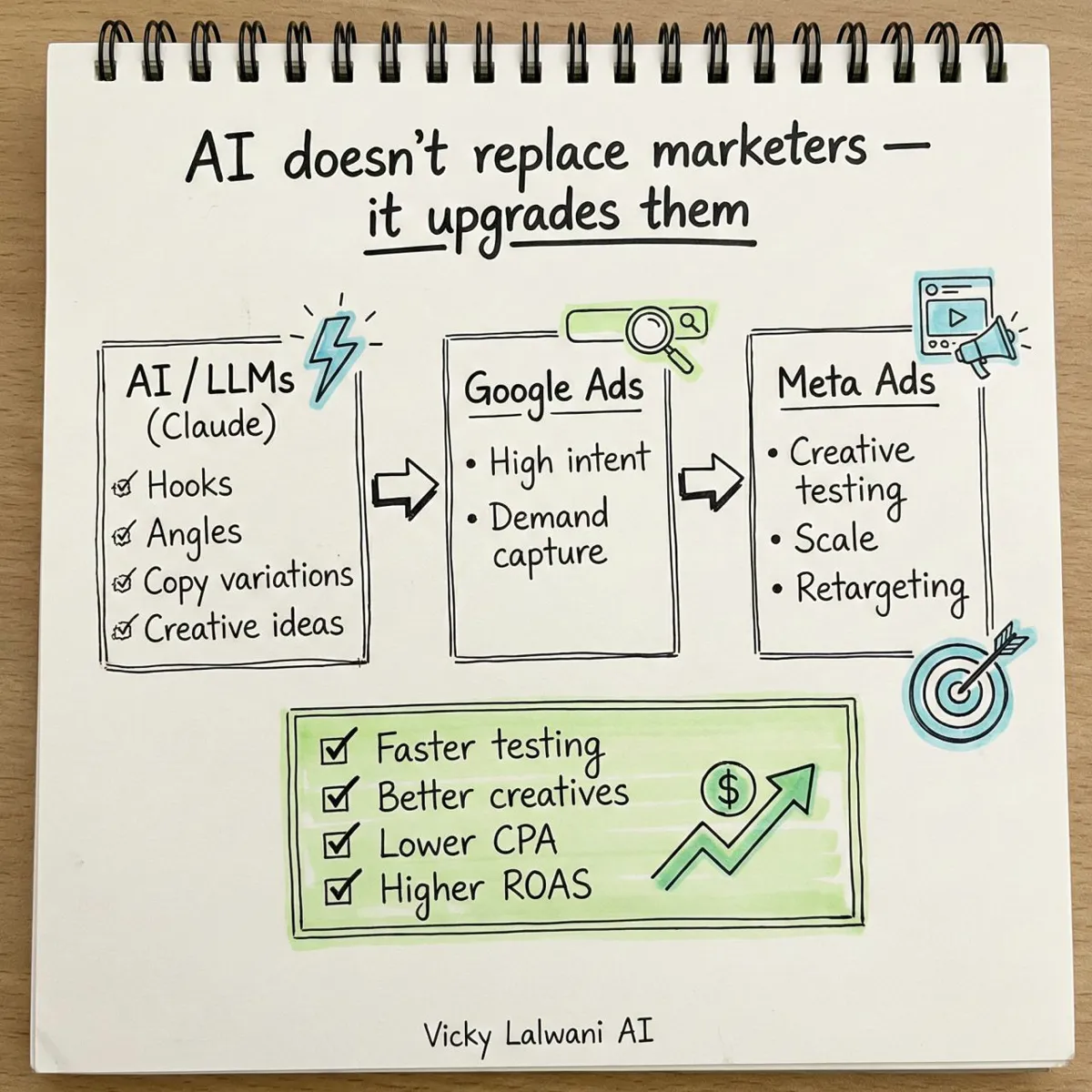
AI for paid media now works in three layers: the AI inside Google Ads and Meta that buys the media, your own AI layer that analyses across platforms, and the human decisions on targets, budget split and approval. The edge is in the inputs, not the features.
Two years ago, "AI for paid media" mostly meant asking a chatbot for twenty headlines. In November 2026 it means something bigger and harder to steer. Google and Meta now run bidding, matching, placements and a growing share of the creative themselves, and both have launched assistants that can change your account when you approve. On top of that sits your own AI: Claude, ChatGPT and the agents you connect to your data.
This is the strategic overview: which layer does what, where the money is decided, what the platforms claim and what independent data shows, and how to tell whether any of it is working. The detailed how-to guides already exist on this site and are linked in each section, so this page stays at the level of the plan. If you want the plan built and run for your accounts, that is what my Google Ads management and Meta ads services cover, and prices are published.
TL;DR
- AI for paid media now has three layers: the platforms' own AI, your own AI layer (Claude, ChatGPT, agents), and the decisions only you can make.
- Google and Meta already automate bidding, matching, placements and much of the creative. Your edge is the inputs: clean conversion data, a real target, a steady supply of distinct creative and firm exclusions.
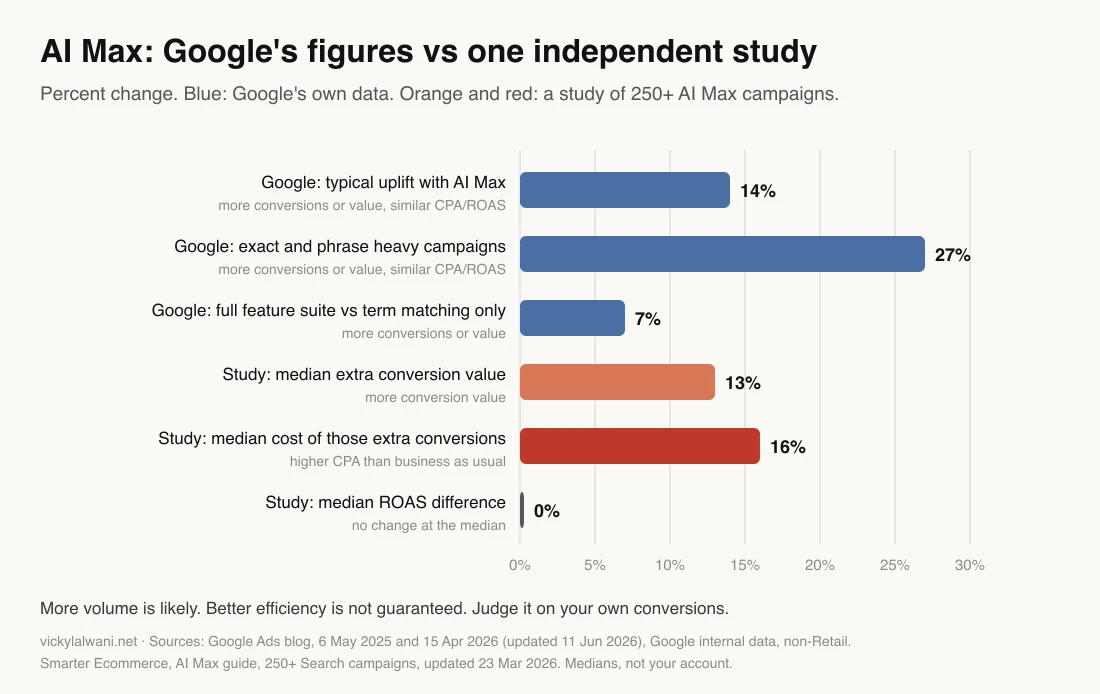
- Platform figures are the seller's figures. Google says AI Max typically adds 14% more conversions or value; one study of 250+ campaigns found a median 13% more value at a 16% higher CPA and no change in ROAS.
- Use your own AI for work the platforms will not do for you: cross-platform analysis, audits, briefs and a check that can tell you to spend less.
- Judge everything on qualified leads or revenue, and on incrementality tests where you can, not on platform-reported totals.
What does AI for paid media mean in 2027?
Short answer: It means three layers working together: the AI inside Google Ads and Meta that buys the media, your own AI layer that works across platforms on your behalf, and the human decisions that set the goal and approve what goes live. Most problems start when one layer is asked to do another layer's job.
The first layer is not optional any more. When you build a new Search campaign, Google switches on AI Max by default, and Meta counts a campaign as Advantage+ when budget, audience and placement automation are all on. You can still restrict them, but you cannot opt out of AI altogether.
The second layer is where most marketers now spend their AI time: language models that read exports, draft briefs and copy, and, through connectors, read live account data. The third layer is the part that does not automate well: what a customer is worth, which conversions count, how the budget splits between channels, and who signs off.
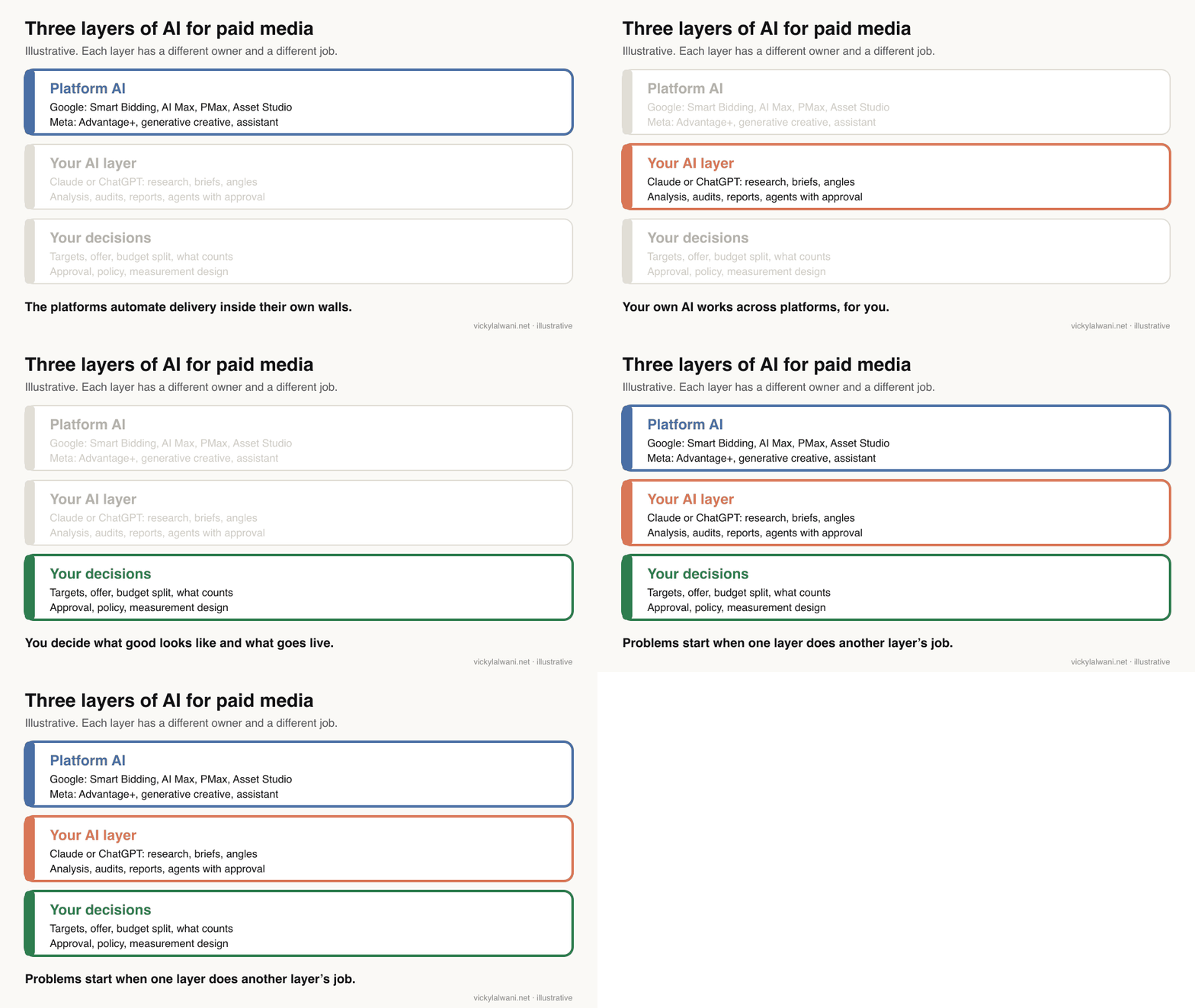
| Layer | Who owns it | Its job | Its blind spot |
|---|---|---|---|
| Platform AI | Google, Meta | Bids, matching, placements, assets | Optimises to the signal you send |
| Your AI layer | You | Analysis, briefs, audits, agents | Only as good as the data it reads |
| Your decisions | You | Targets, budget split, approval | Time and attention |
What do Google Ads and Meta already automate?
Short answer: Almost all of the buying. Google automates bids, query matching, landing page choice and asset creation through Smart Bidding, AI Max and Performance Max. Meta automates audiences, placements, budget and creative variations through Advantage+. Both now have assistants that propose and, with approval, make changes.
The table maps the main jobs. Each name links to the platform's own page, and the deeper guides on this site are linked underneath.
| Job | Google Ads | Meta |
|---|---|---|
| Bidding | Smart Bidding | Advantage+ campaign budget |
| Who sees the ad | AI Max search term matching, broad match | Advantage+ audience |
| Where it shows | Performance Max, channel controls | Advantage+ placements |
| Creative | Asset Studio, text customisation | Advantage+ creative, Ads Creative Studio |
| Assistant | Ask Advisor (beta) | Business AI assistant |
| Agent access | Google Ads MCP server | Meta ads MCP server |
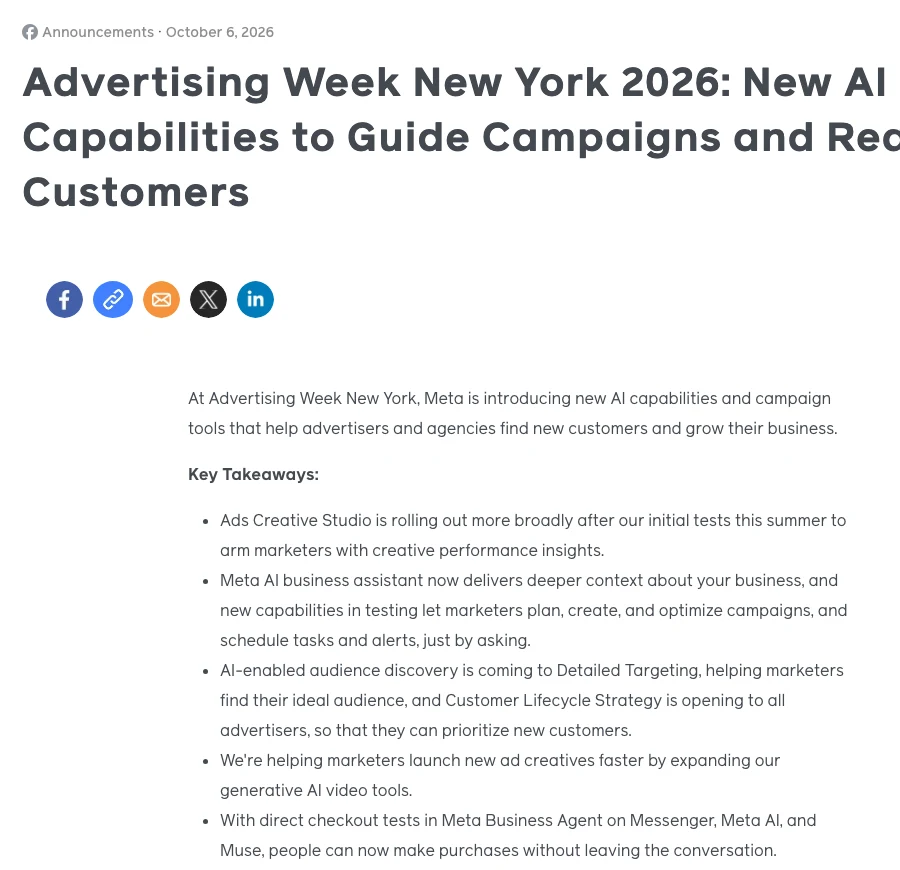
Three changes in 2026 matter most for strategy. Google is folding Dynamic Search Ads into AI Max, with the sunset and auto-upgrade moved to February 2027, and says the new ad formats in AI search need a foundation of AI Max and Performance Max. Meta announced at Advertising Week in October 2026 that its assistant will soon plan and create campaigns, generate creative and change budgets through conversation, with previews and approvals. And both platforms now let outside agents in through MCP servers, so your own AI can read, and in limited ways change, the same accounts.
For the hands-on side, see how to build a Google Ads campaign with AI (including which AI Max settings to check before you post) and what Meta's AI reporting can and cannot tell you.
Made by the Google Ads channel (April 2026). It is Google's own tutorial, so it explains the settings well and says little about the risks.
How far should you trust the platforms' AI claims?
Short answer: Treat them as the seller's best case. Google's own data says AI Max typically adds 14% more conversions or value at a similar CPA or ROAS. An independent study of more than 250 AI Max campaigns found a median 13% more conversion value, but those extra conversions cost 16% more, and median ROAS did not move.
The numbers are not contradictory. Google's 14% figure (May 2025) and its 7% figure for the full feature suite (April 2026) come from internal data across non-retail advertisers. The Smarter Ecommerce study, updated March 2026, looked at the extra conversions and what they cost. Both can be true: you get more volume, and that volume is usually more expensive than the conversions you already had.
Meta publishes the same kind of figures. In October 2026 it said advertisers who adopt its assistant's recommendations "are typically seeing 5% more conversions at the same cost per conversion". In January it reported a 3.5% lift in ad clicks on Facebook from its GEM ranking model in the last quarter of 2025. These are averages across many accounts, measured by the platform that sells the media.
The strategic point is simple. The platform AI is good at finding more conversions of the kind you tell it to find. Whether those conversions are worth what you pay is a question only your own data can answer, which is why the next two sections matter more than any setting.
Which inputs decide how well platform AI performs?
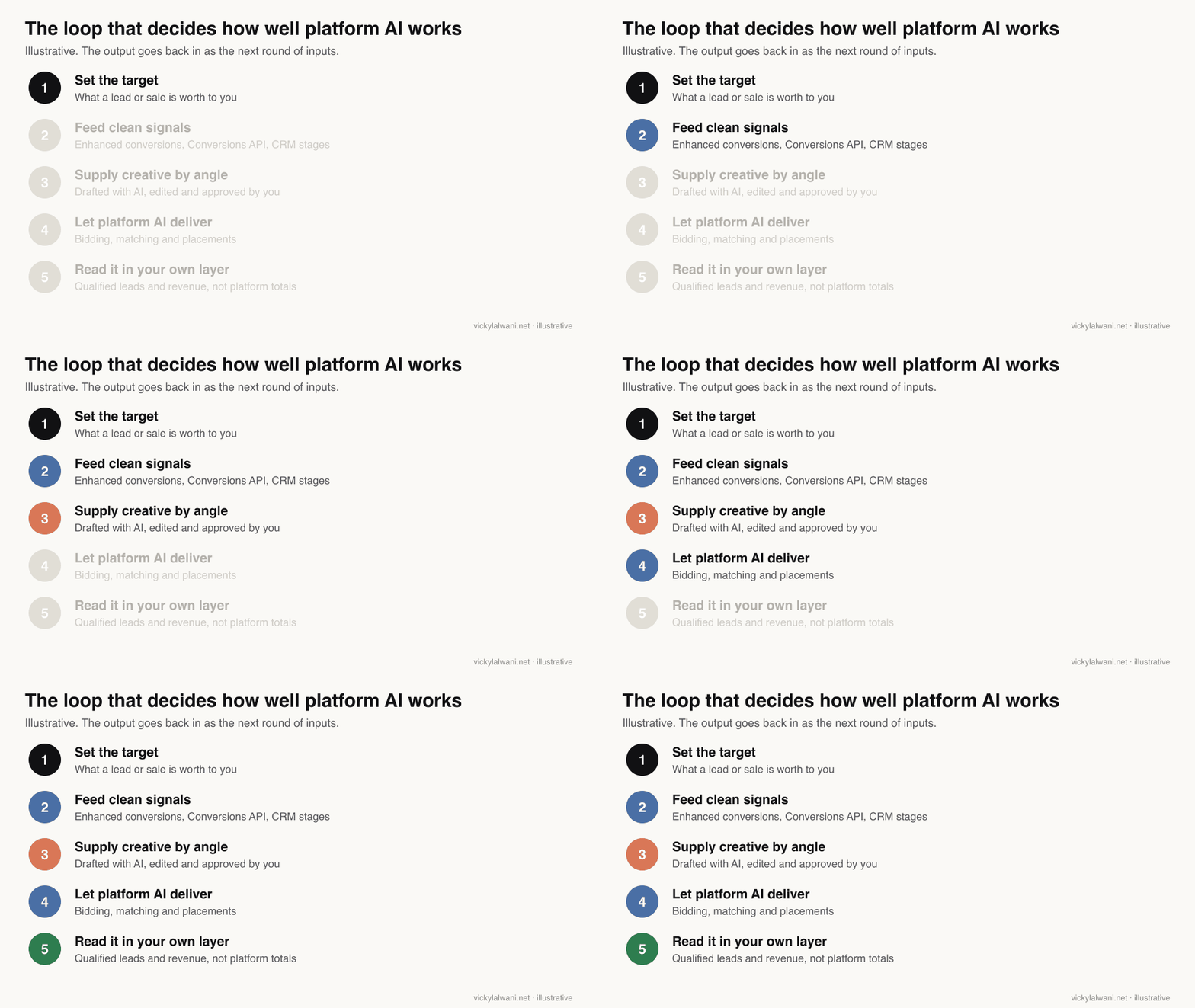
Short answer: Four inputs: the conversion you optimise for, the value or target you give it, the creative you supply, and the exclusions you set. Platform AI learns from all four, so a weak input is amplified at scale. Fixing inputs usually moves results more than switching a feature on or off.
| Input | What good looks like | Common failure |
|---|---|---|
| Conversion signal | Qualified lead or sale | Form fills of any quality |
| Data quality | Enhanced conversions, Conversions API | Browser pixel only |
| Target | CPA or ROAS from real margins | A number nobody can explain |
| Creative supply | Distinct angles, refreshed | Ten versions of one idea |
| Exclusions | Brand, URLs, existing customers | Defaults left as they were |
The conversion signal is the one that bites hardest. A practitioner on r/FacebookAds saw cost per lead fall from about 4 to 5 euros to 1.50 with much worse lead quality in November 2026. The replies were consistent: Meta had found the people who fill in forms most easily, and the fix was higher intent forms and sending CRM lead stages back so the system learns which leads qualified.
Google's side works the same way. On r/PPC, advertisers testing AI Max describe "volume up, CPA up" and warn that broader campaign types often pick up softer conversions that were not firing before. On client accounts I keep campaigns in draft until every form and call button is measured, because tracking before spend is the cheapest fix there is. The full checklist is in my conversion tracking event map.
Where should your own AI layer sit?
Short answer: Put your own AI where the platforms will not work for you: across platforms, before launch and after the report. That means research and briefs, creative angles, analysis that joins Google, Meta and CRM data, audits on a schedule, and agents that propose changes for you to approve.
The platform assistants are useful, but each one sees only its own platform and works for the company selling the media. A Google Ads practitioner on X noticed this from the other direction when Google, unusually, suggested reducing a budget and the suggestion still did not make sense to them. Your own layer is the place for a view that can say "spend less here, more there".
| Job | Platform AI | Your AI layer | Guide |
|---|---|---|---|
| Creative angles | Variations of your assets | Research led briefs | Creative brief |
| Campaign builds | Settings and assets | Brief, structure, checks | AI build |
| Reporting | One platform | Google, Meta and CRM | Cross-channel |
| Audits | Recommendations | Scheduled, independent | Paid media audit |
| Changes | With approval | Proposals, then approval | AI agents |
Keep the model's job narrow and its inputs real. A model given your offer, your customers' words and past winning ads writes useful drafts; a model given "write Facebook ads for a dentist" writes the same ads as everyone else. I keep one project per client, so context never leaks between accounts, and I split the work between a model that plans and reviews and a separate agent that does one narrow task. For frameworks to feed it, see ad copywriting frameworks.
Here is a prompt that keeps the model at the strategic level rather than asking it for copy:
You are reviewing paid media strategy, not writing ads.
Inputs attached: last 90 days of Google Ads and Meta campaign data, CRM export of leads with stage (new, qualified, won, lost) and source.

1. For each platform and campaign, compare platform-reported conversions with qualified leads and won deals from the CRM.
2. Flag any campaign where platform conversions rose but qualified leads did not.
3. List which automated features are on (AI Max, Performance Max, Advantage+ audience, placements, creative enhancements) and what conversion each one optimises for.
4. Propose at most three changes, each with: the evidence, the expected effect, the risk, and how we would know in 30 days.
Do not recommend spending more unless the CRM data supports it. Say "unknown" where the data is missing.
What should stay human?
Short answer: The goal, the economics and the approval. A person should decide what a lead or sale is worth, which conversions count, how the budget splits between Google and Meta, what claims the ads can make, and what goes live. Both platforms' own assistants ask for approval before changing anything, and your own agents should too.
The platforms agree with this, at least on paper. Google says Ask Advisor will implement suggested changes with your approval and is not available in manager accounts. Meta says actions through its ads MCP server are gated behind advertiser-set permissions and explicit approval. The risk is the settings that apply without asking: auto-applied recommendations in Google Ads, and new automated assets that arrive switched on. A US agency founder on X complained in September 2026 that automated promotions were pre-opted for everyone, pulling deals from the website into ads.
| Decision | Why it stays human | Where it goes wrong |
|---|---|---|
| Target CPA or ROAS | Needs margins and lifetime value | Copied from a benchmark |
| What counts | Business definition of a lead | Every form fill counts |
| Budget split | Platforms each want more | Last month plus 10% |
| Claims and policy | Legal and brand risk | AI copy approved unread |
| Go live | Accountability | Auto-apply left on |
Every ad still has to meet each platform's rules, including Google's misrepresentation policy, however it was written. Approval before anything goes live is the one rule I do not bend on client accounts. For a fuller split of Google Ads tasks, see what to automate in Google Ads with Claude and human in the loop AI for Google Ads.
Made by the Google Ads channel (May 2026). The launch video for Ask Advisor; it shows the approval step but is promotional.
How should Google and Meta split the work?
Short answer: Let each platform do what its AI is built for. Google captures demand that already exists, when someone searches. Meta creates demand and is the better place to test creative at volume. Decide the split from qualified results in your own data, test changes side by side with a fixed end date, and never add the two platforms' conversion totals together.
The platforms count conversions differently, and both take credit for some of the same customers. Meta announced in March 2026 that click-through attribution will count only link clicks, and Google uses its own model. That is why one combined "total conversions" number overstates results. My Meta attribution guide covers the details and the cross-platform audit shows how to review both together.
| Question | Google Ads | Meta |
|---|---|---|
| Best at | Existing demand | New demand, creative |
| AI needs most | Intent and conversions | Creative and signal |
| Main AI risk | Broad queries, brand terms | Cheap, low quality results |
| Check first | Search terms, brand | Lead quality, placements |
When I test a new channel or a big automated feature, I run it side by side with what is already working and set the date to judge it before launch, then cut the loser on that date. It stops a test from running for months because nobody wants to make the call.
Made by Meta for Business (February 2026). Meta's own walkthrough of Advantage+ sales campaigns; useful for the settings, and it is selling the product.
How do you know if AI is actually helping?
Short answer: Compare against a baseline you set before the change, using your own qualified leads or revenue rather than platform conversions. Where spend allows, use a controlled test: Meta calls incrementality experiments such as Conversion Lift the gold standard, and Google publishes Meridian for marketing mix modelling.
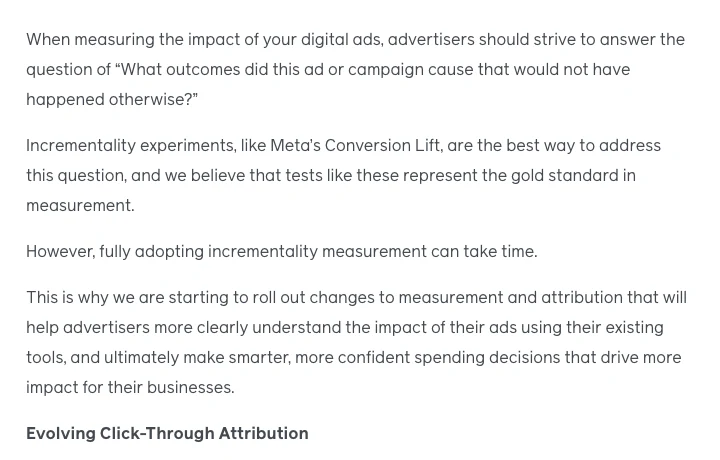
Meta's own wording is useful here: the question is what an ad caused that would not have happened otherwise. A DTC practitioner on X argued that Meta's incremental attribution setting avoids bad decisions on days when email sends inflate standard attribution. For larger budgets, Google's open source Meridian models how each channel contributes over time.
| Measure | Good for | Limit |
|---|---|---|
| Before and after | Small accounts | Seasonality muddies it |
| Side by side test | Feature or channel tests | Needs enough volume |
| Conversion Lift | Meta incrementality | Spend and time |
| Mix modelling | Larger budgets | Needs long history |
For a small account, the honest version is a written baseline: cost per qualified lead or revenue for the last 90 days, taken from the CRM, and the same number 60 to 90 days after the change. It is crude, and it is still better than a platform dashboard grading its own homework.
What does a 90-day plan for AI in paid media look like?
Short answer: Fix measurement in the first month, tighten inputs and controls in the second, and add your own AI layer in the third. Start with one account, one loop and one metric, and expand only when the metric moves in your own data.
| Weeks | Focus | Done when |
|---|---|---|
| 1 to 4 | Tracking, conversion signal, baseline | CRM and platforms reconcile |
| 5 to 8 | Targets, exclusions, creative angles | Defaults reviewed, briefs ready |
| 9 to 12 | Your AI layer: weekly analysis | One report, one decision a week |
| After 12 | Agents that propose changes | Approval list in place |
The order matters. Agents and assistants make whatever you already have faster, including the mistakes. If you want a structured starting point, the paid media audit covers the first month and AI agents for PPC covers the last step.
What do people say on X and Reddit?
Short answer: Practitioners report more volume and less control. AI Max and Advantage+ tend to raise conversions and costs together, results vary sharply by account, and the most common advice is to fix the conversion signal and check lead quality before scaling anything.
| Source | Date | What it says | Type |
|---|---|---|---|
| Google Ads on X | 7 May 2026 | Journey-aware bidding, wider Smart Bidding Exploration, demand-led pacing | Official |
| Google Ads Liaison on X | 14 Oct 2026 | Optional channel prioritisation and budget allocation controls | Official |
| A US agency founder on X | 23 Sep 2026 | Automated promotions pre-opted for everyone | Opinion |
| A PPC practitioner on X | 7 Aug 2026 | Google suggested a budget cut, oddly reasoned | First-hand |
| A DTC practitioner on X | 31 Jan 2026 | Incremental attribution beats 7-day click, 1-day view | Opinion |
| A paid social practitioner on X | 30 Apr 2026 | Meta ads MCP not on every account at launch | First-hand |
| r/PPC | 30 Sep 2026 | AI Max: more conversions, higher CPA | First-hand |
| r/PPC | 15 Nov 2026 | AI Max strong on one account, poor on another | First-hand |
| r/PPC | 1 Oct 2026 | Google taking controls away, a long list | Opinion |
| r/FacebookAds | 4 Nov 2026 | CPL down, lead quality down | First-hand |
The r/PPC thread from November is the most useful. One account selling everyday products did well on AI Max while a high-ticket account did badly, and replies pointed to two causes: slower buying cycles that make early weeks look worse, and the conversion that AI Max is chasing. One reply on B2B accounts said AI Max stays on only where qualified leads flow back as conversions. That is the inputs argument in one sentence.
Which videos are worth watching?
Short answer: Start with the platforms' own tutorials for the settings, then watch an independent practitioner for the risks. The official videos explain how features work; the independent ones show what to switch off.
| Video | Channel | Date | What it covers |
|---|---|---|---|
| How to Use AI Max for Search Campaigns | Google Ads | Apr 2026 | AI Max settings |
| Introducing Ask Advisor | Google Ads | May 2026 | Google's agent |
| Meta Advantage+ sales campaigns | Meta for Business | Feb 2026 | Advantage+ set-up |
| Watch Out For This Sneaky AI Max Setting | A Google Ads educator | Feb 2026 | Default to check |
| AI Max Explained: $20K Test Results | A Google Ads channel | Nov 2025 | A spend test |
| Google Ads Advisor: Awesome or Awful? | A Google Ads coach | Nov 2025 | Critical review |
Where is this advice weak?
Short answer: These products change monthly, the independent evidence is thin, and some of it is early. Treat every figure here as a direction, not a forecast, and recheck the platform pages before acting.
- The independent AI Max data is one study of 250+ campaigns, mostly from a retail-focused vendor. Lead generation accounts may behave differently.
- Meta's agentic campaign actions were announced as "coming soon" in October 2026; I have not seen them in an account, so the article describes Meta's announcement only.
- Ask Advisor is in beta, and its availability depends on the account.
- Reddit and X posts are individual experiences, some from people who sell services. They show patterns, not proof.
- Some Meta pages cited here load only in a full browser; I read them in Chrome on 18 November 2026.
Want a strategy for AI across your Google and Meta accounts?
Short answer: I can review how your accounts use platform AI, fix the inputs and set up your own analysis layer, with nothing changed before you approve it.
I work on Google Ads and Meta accounts as an independent consultant: tracking first, then inputs and settings, then a weekly routine with Claude that you can keep using. See Google Ads management, Meta ads management and pricing.
Sources
| Source | What it supports | Date |
|---|---|---|
| Google Ads Help: AI Max | On by default, features, controls | Read 18 Nov 2026 |
| Google Ads blog: AI Max launch | 14% and 27% figures | 6 May 2025 |
| Google Ads blog: DSA to AI Max | Feb 2027 sunset, 7% figure | 15 Apr 2026, upd. 11 Jun 2026 |
| Google Ads blog: AI Max features | AI Brief, Shopping, Travel | 30 Apr 2026 |
| Google Ads blog: Asset Studio | Creative generation, testing | 20 May 2026 |
| Google Ads blog: ads for AI Search | AI Max and PMax foundation | 20 May 2026 |
| Google Ads Help: Ask Advisor | Approval, beta, no MCC | Read 18 Nov 2026 |
| Google Ads Help: Smart Bidding | Bidding automation | Read 18 Nov 2026 |
| Google Ads Help: enhanced conversions | Conversion data quality | Read 18 Nov 2026 |
| Google Ads Help: channel controls | Channel prioritisation | Read 18 Nov 2026 |
| Google Ads Help: auto-apply | Changes without review | Read 18 Nov 2026 |
| Google Ads policy | Misrepresentation | Read 18 Nov 2026 |
| Google Meridian | Marketing mix modelling | Read 18 Nov 2026 |
| Google Ads MCP server | Agent access | Read 18 Nov 2026 |
| Smarter Ecommerce AI Max study | 13%, 16%, 0% medians | Upd. 23 Mar 2026 |
| Meta for Developers: Advantage+ | Three automation levers | Read 18 Nov 2026 |
| Meta: Advertising Week 2026 | Assistant, 5% claim, MCP approval | 6 Oct 2026 |
| Meta newsroom: 2026 AI | GEM 3.5% clicks | 28 Jan 2026 |
| Meta: click attribution | Link clicks, Conversion Lift | 3 Mar 2026 |
| Meta ads MCP server | Agent access | Read 18 Nov 2026 |
| Meta Conversions API | Server-side signal | Read 18 Nov 2026 |
| X and Reddit posts above | Practitioner views | Jan to Nov 2026 |
This article expands on my post on LinkedIn ↗.
FAQ
What is AI for paid media?
AI for paid media is the use of machine learning and language models across advertising: the platforms' own AI for bidding, targeting and creative, plus your own AI tools such as Claude or ChatGPT for research, analysis and drafting. In 2027 the platforms automate most of the buying, so the human job is setting goals, inputs and approvals.
Will AI replace PPC and paid social managers?
Not the judgement part of the job. Google and Meta already automate bids, matching and placements, but someone still has to decide what a lead is worth, which conversions count, how budget splits between platforms and what goes live. Those decisions matter more as automation grows.
Is AI Max worth turning on in Google Ads?
It depends on your conversion data. Google says AI Max typically adds 14% more conversions or value at a similar CPA, while an independent study of 250+ campaigns found a median 13% more value at a 16% higher CPA and no change in ROAS. Test it side by side with a set end date and judge it on qualified leads or revenue.
Should I use Meta Advantage+ campaigns?
Most Meta advertisers now work inside Advantage+ in some form, since Meta counts a campaign as Advantage+ when budget, audience and placement automation are all on. It works best with a strong conversion signal, such as CRM lead stages sent back through the Conversions API, and plenty of distinct creative.
Can Claude or ChatGPT manage my Google Ads or Meta ads?
They can read data, draft briefs and copy, run audits and, through Google's and Meta's MCP servers, propose some changes. Both platforms gate changes behind approval, and you should too. Use them for analysis across platforms, which the platform assistants do not do.
How do I stop AI ad copy sounding generic?
Give the model real inputs: your offer, customer language from reviews and calls, objections and past winning ads. Ask for drafts grouped by angle rather than volume, then edit and approve every ad by hand against the platform's policies.
How do I measure whether AI is improving my ads?
Set a baseline before the change using qualified leads or revenue from your CRM, not platform conversions. For larger budgets, use incrementality tests such as Meta Conversion Lift, which Meta calls the gold standard, or a marketing mix model such as Google's Meridian.
Where should I start with AI in paid media?
Start with measurement: make sure every form and call is tracked and that platform conversions match your CRM. Then review the automated settings that are on by default, and only then add your own AI layer for weekly analysis and agents that propose changes.