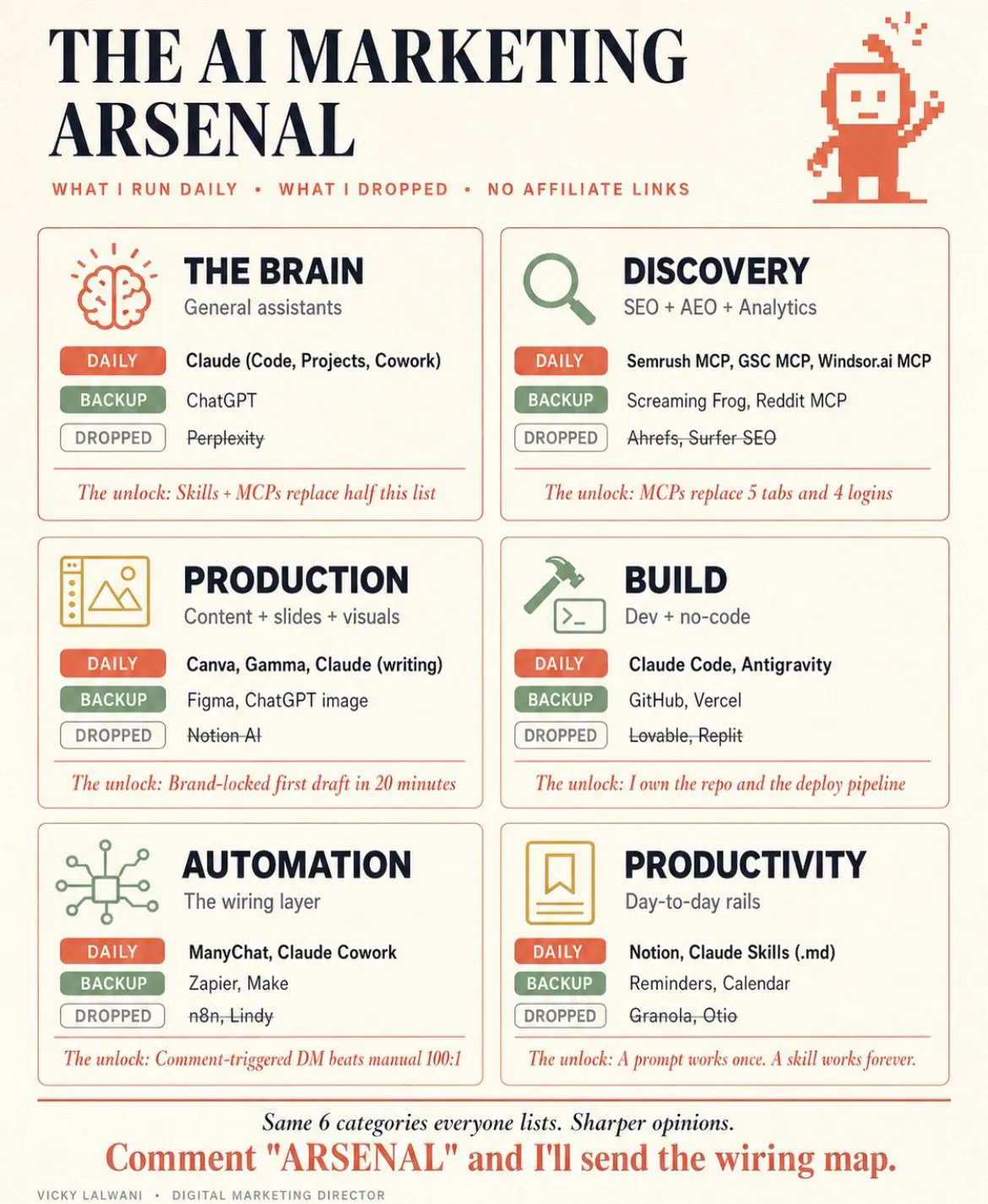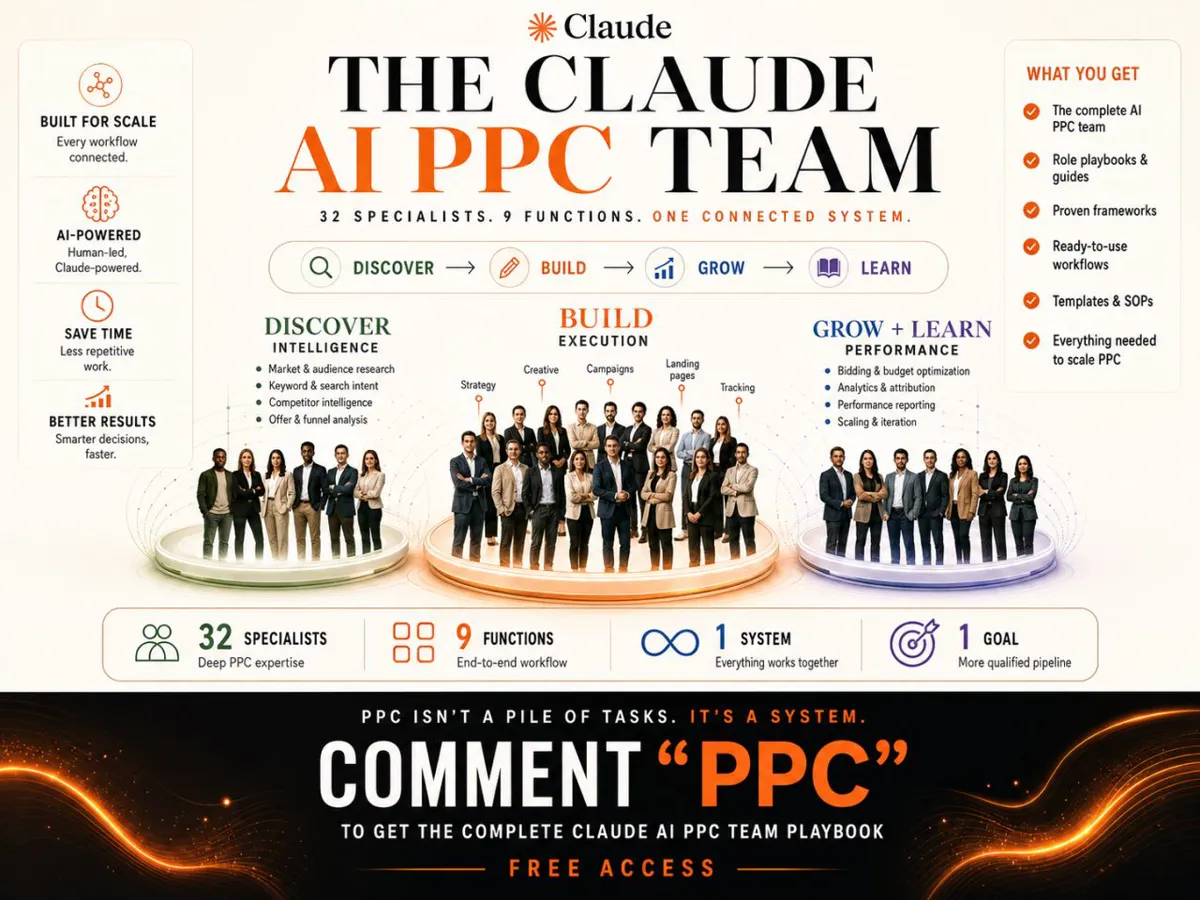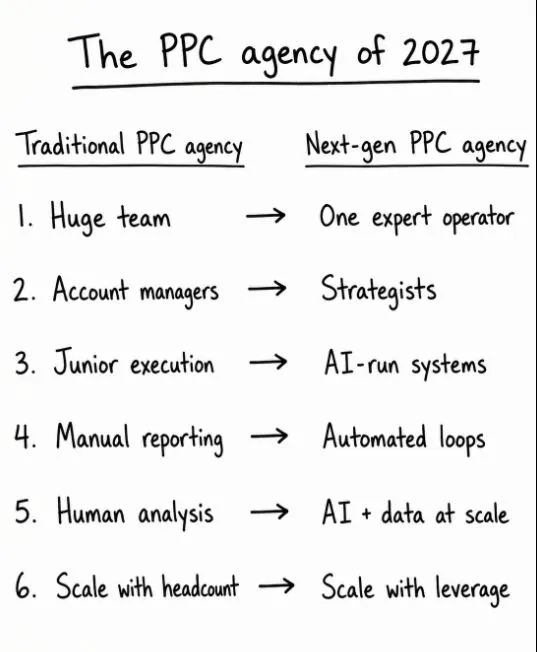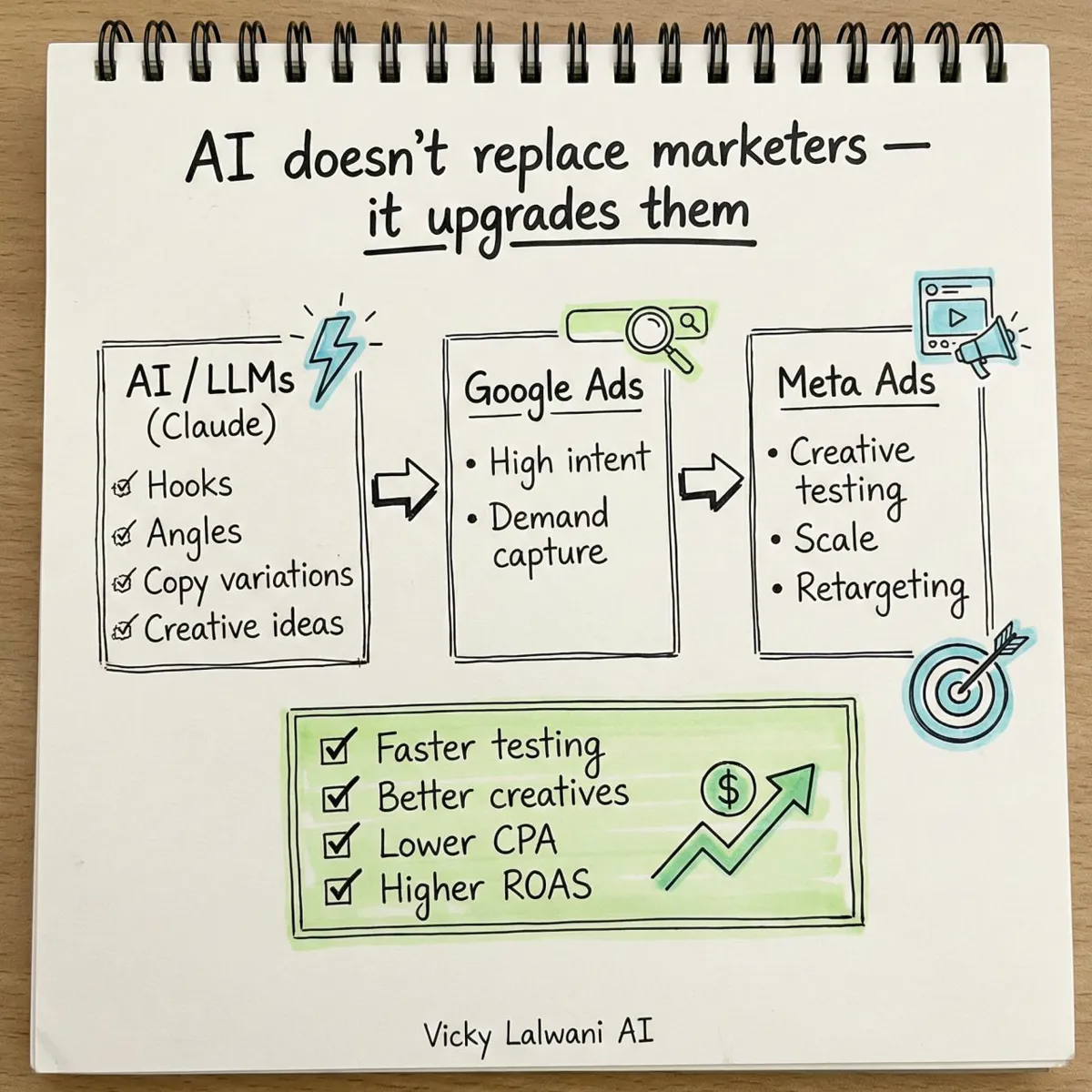
AI marketing systems for a CMO should sit on top of the automation Google already runs (Smart Bidding, Performance Max, AI Max and AI Overviews), not copy it. Build a weekly Google Ads oversight system, a conversion data check against the CRM, an SEO decay and AI visibility check, and a board report in pipeline terms. Give each system one owner and one checker, and keep strategy, brand, budget and sign-off human.
TL;DR
In search marketing, Google already automates most of the doing: Smart Bidding sets bids, Performance Max picks channels, AI Max widens matching and writes text, and AI Overviews answer questions above your organic listing. A CMO's AI marketing systems should not copy that work. They should sit on top of it: watching what the automation chose, feeding it better conversion data, checking brand and claims, and reporting the result in pipeline and revenue.
Pick the first system with a simple score: how often the work happens, how easy it is to check, and how much a mistake costs. Give every system one owner and one checker, and keep positioning, budget calls and sign-off with people.
Short answer: a CMO should build AI marketing systems for the work around Google's automation, not inside it: a weekly Google Ads oversight system, a conversion data quality check, an SEO system that tracks content decay and AI search visibility, and a board report built on pipeline. Strategy, brand judgment, budget and the final call on what ships stay human.
Picture a Monday leadership meeting. Paid search spend is flat, conversions are up, and the cost per qualified lead has crept higher. Organic clicks are down while rankings look fine. Nobody in the room can say whether AI Max, a channel shift inside Performance Max, or AI Overviews explain the change, because nobody's job is to watch the automation week by week.
That gap is where AI marketing systems earn their place. Not another tool that writes posts faster, but a small set of repeatable workflows your team runs every week, which anyone can operate and anyone can check. This article is about which systems to build on top of Google's automation, who should own them, and how to report them to a board. If you would rather have the paid search side set up for you, that is my Google Ads management work; the wider build is AI automation.
Checked 18 November 2026 against Google Ads Help, the Google Ads and Commerce blog, Google Search Central and Gartner. Google changes these products often, so check the linked pages before you rely on a detail.
What is an AI marketing system for a CMO?
Short answer: an AI marketing system is a documented, repeatable workflow that runs on a schedule or on demand, gives a consistent result, and can be run and checked by someone other than the person who built it. A prompt helps one person once; a system keeps working when its builder is on holiday.
For a marketing leader running search, it helps to see the function as three layers. The bottom layer is what the ad and search platforms already automate. The middle layer is what your team builds on top. The top layer is the judgment that stays with people.
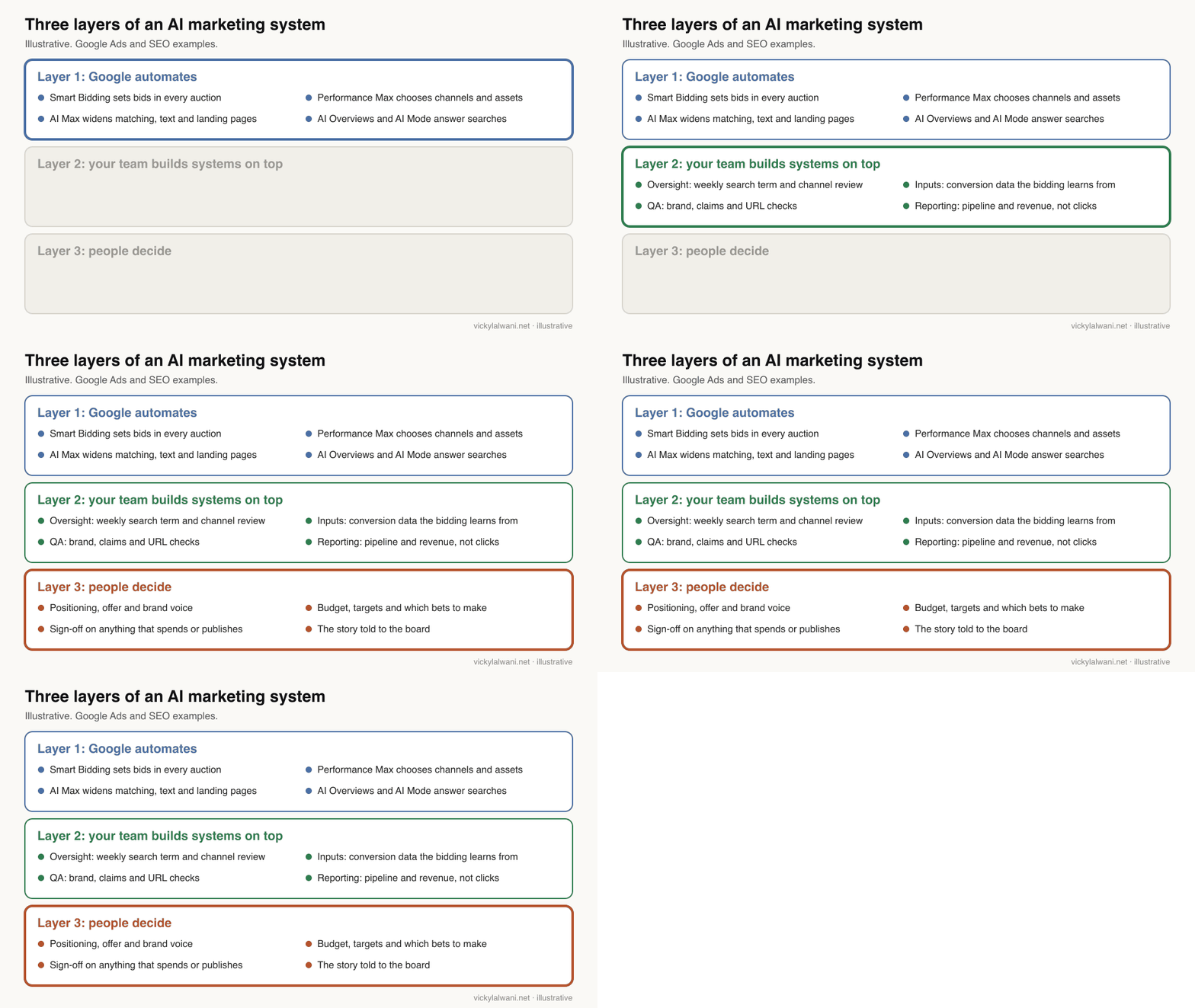
| Layer | Who runs it | Search examples | The CMO's job |
|---|---|---|---|
| 1. Platform automation | Smart Bidding, Performance Max, AI Max, AI Overviews | Set goals and limits | |
| 2. Your systems | Your team, with AI | Oversight, data inputs, QA, reporting | Choose, fund, assign owners |
| 3. Human judgment | People | Offer, brand, budget, bets | Decide and sign off |
Most AI marketing advice skips layer one. That is a costly omission in search, because the platform has already taken over the jobs that agents are often pitched for, such as bidding and keyword expansion. Building your own system to do the same job means two machines competing for one decision.
If you want the full library of prompts, skills and scheduled loops behind a function like this, the free CMO Operating System guide covers it, and the Growth Systems Stack sets out folders by team. This article stays on one question: where your systems should sit.
What does Google already automate in search?
Short answer: in November 2026 Google automates bidding (Smart Bidding), channel and asset choice (Performance Max), query matching, ad text and landing pages (AI Max for Search, on by default in new Search campaigns), and the AI answers at the top of results (AI Overviews and AI Mode). Your systems should watch these, not redo them.
| Google feature | What it decides | Status, Nov 2026 | Control you keep |
|---|---|---|---|
| Smart Bidding | Bid in each auction | Needs conversion tracking | Targets, conversion goals |
| Performance Max | Channels, assets, queries | Search terms and channel reports | Negatives, brand exclusions |
| AI Max for Search | Matching, text, landing pages | Out of beta; default on new Search | Brand and URL rules, text guidelines |
| Channel prioritisation | Which channels get budget first | Rolling out from Oct 2026 | Priority tiers, spend caps |
| Ask Advisor | Suggests and applies changes | Beta; not in manager accounts | Your approval |
| AI Overviews, AI Mode | Answer above organic results | No extra requirements to appear | Snippet controls, content |
A few details matter for anyone planning systems around these:
- New Search campaigns have AI Max turned on by default. Google describes it as an optimisation layer, not a campaign type, with three features: search term matching, text customisation and final URL expansion. Google notes these need conversion-based Smart Bidding to work well.
- AI Max moved out of beta in April 2026. Campaigns using automatically created assets or the campaign-level broad match setting began upgrading automatically in September 2026, and Dynamic Search Ads will upgrade from February 2027 after Google extended the date.
- Google's own claim is that advertisers who turn on AI Max typically see 14% more conversions or conversion value at a similar CPA or ROAS. That is Google's internal 2025 data for non-retail advertisers, not an independent test.
- Smart Bidding needs conversion tracking, and Google advises judging it over periods with at least 30 conversions, such as a month or longer. The bid strategy names also changed from June 2026, with the same bidding behaviour.
- Google announced channel prioritisation and budget allocation on 14 October 2026: you can mark channels such as Search partners or the Display Network as low priority and cap their share of daily budget, rolling out across Search, Shopping, Performance Max and Demand Gen.
- Ask Advisor, Google's agent inside Google Ads, is in beta, implements suggested changes with your approval, and is not available in manager (MCC) accounts.
The pattern is clear: the platform increasingly decides, and it gives you reports and limits in return. Those reports are what your oversight system reads. For a deeper look at the paid side, see AI for paid media.
Why build AI systems on top of Google's automation?
Short answer: because Google's automation optimises to whatever conversion signals you give it and reports on its own choices. Without a system that checks those choices weekly against your CRM and brand rules, more conversions can quietly mean more low-quality leads, and nobody notices until the board asks.
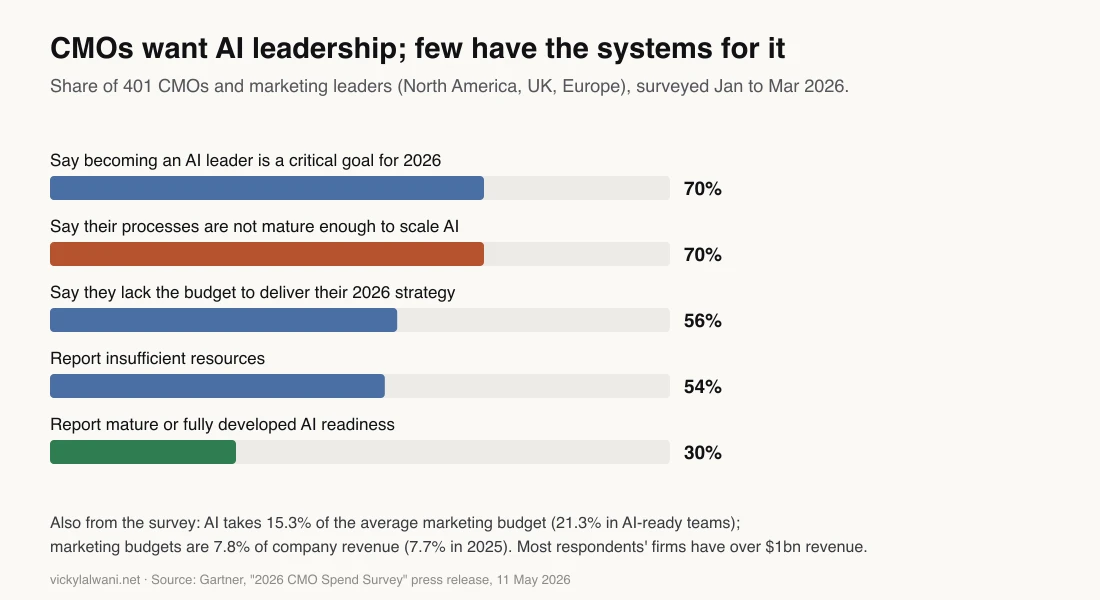
Gartner's 2026 CMO Spend Survey puts numbers on the gap. CMOs now give AI an average of 15.3% of the marketing budget, yet 70% say their processes are not mature enough to implement and scale AI, and only 30% report mature AI readiness. Budgets are effectively flat at 7.8% of company revenue.
Process is what a system fixes. Practitioners describe the same problem from inside the account. On r/PPC, advertisers testing AI Max report more conversions at a higher cost per acquisition, and the most useful replies say to check how much is new demand versus traffic your existing keywords already covered, and whether qualified or offline conversions match the front-end numbers.
My own client work points the same way. When I audit a Google Ads account with Claude, the rule never changes: audit first, findings in a sheet, I check each line by hand against the live account, and nothing changes before approval. In one audit, some AI recommendations did not survive that check: a keyword that was bringing conversions was flagged for pausing, and broad terms that brought real business were marked as waste. The analysis was fast. The check is what made it safe.
Which AI marketing system should a CMO build first?
Short answer: score each candidate on three things, from 1 to 3: how often the work happens, how easy the output is to check, and how cheap a mistake is. Then strike out anything Google already does. Build the highest scorer first, give it one owner, and only start the next once someone else can run the first.
This is a portfolio decision, not a task list. For deciding which individual tasks to hand to an agent, use the five-question test in tasks to delegate to AI agents. The scorecard below works one level up: which systems deserve budget and an owner.
| Candidate system | Frequency | Easy to check | Cheap if wrong |
|---|---|---|---|
| Weekly Google Ads oversight | 3 | 3 | 2 (person approves) |
| Conversion data quality check | 3 | 3 | 3 |
| SEO content decay check | 2 | 3 | 3 |
| Leadership report | 2 | 2 | 2 |
| Automated bid changes | 3 | 1 | 1 |
| Ad copy at scale | 2 | 2 | 1 (brand, claims) |
Scores are my illustrative judgement for a typical lead-generation business, not measured. Two rows deserve a comment. Automated bid changes score well on frequency but badly on the rest, and Smart Bidding already does the job, so it drops out. Ad copy at scale is tempting, but AI Max text customisation already generates headlines, so the better system is the QA layer that reviews what Google wrote.
What does a weekly Google Ads oversight system look like?
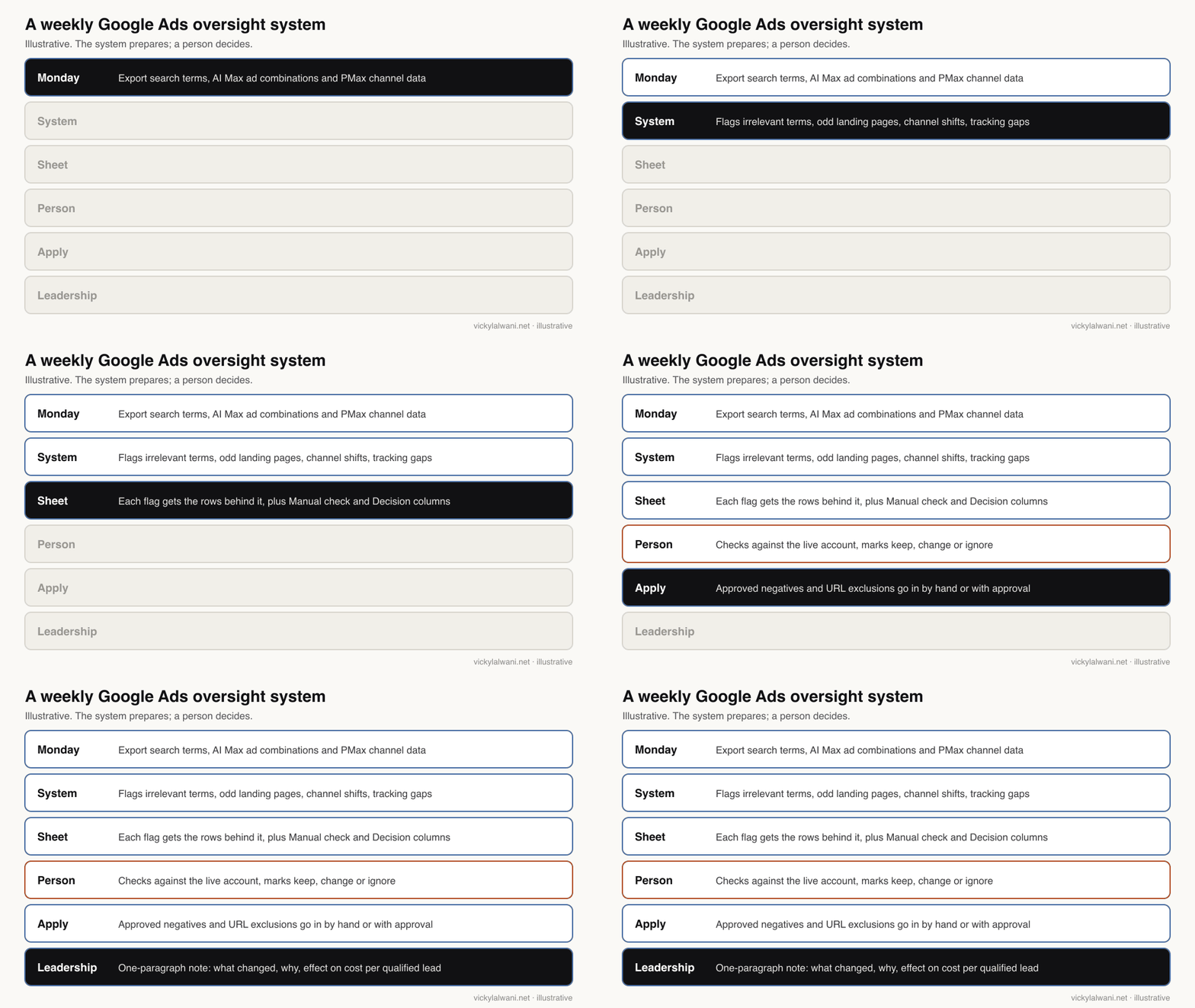
Short answer: every Monday the system reads the search terms report, the AI Max ad combinations view and the Performance Max channel report, flags irrelevant queries, odd landing pages, channel shifts and tracking gaps, and writes them to a sheet with the evidence. A person checks each flag against the live account and approves what changes.
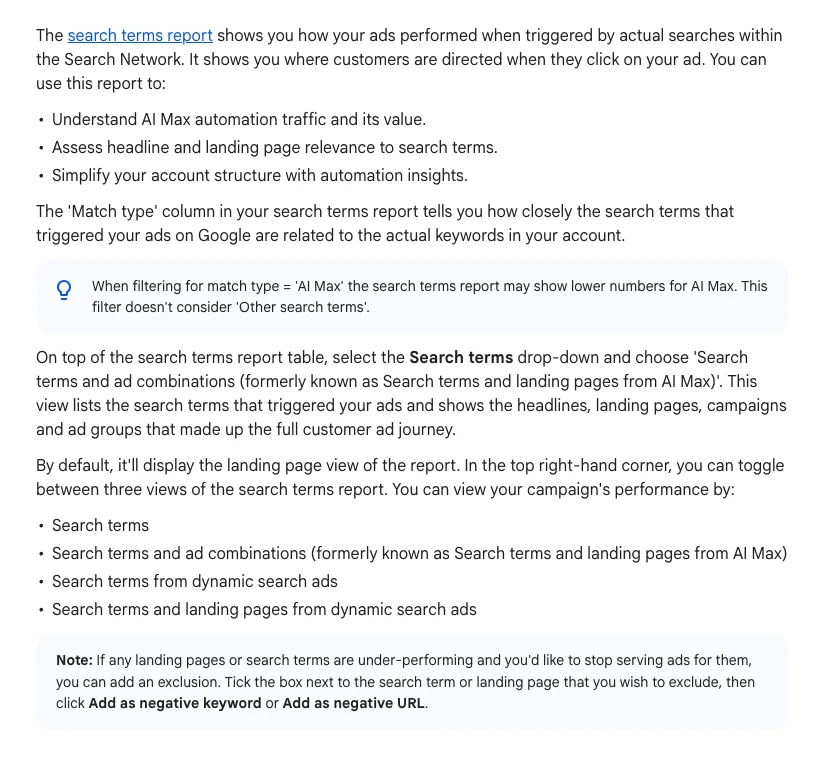
Google's own reports make this possible. In the search terms report you can switch to "Search terms and ad combinations", which shows each query with the headline, landing page, campaign and ad group that served. Google warns that filtering the match type column to "AI Max" undercounts, because it leaves out "Other search terms", and it asks you to wait at least two weeks after turning AI Max on before making changes such as adding negatives.
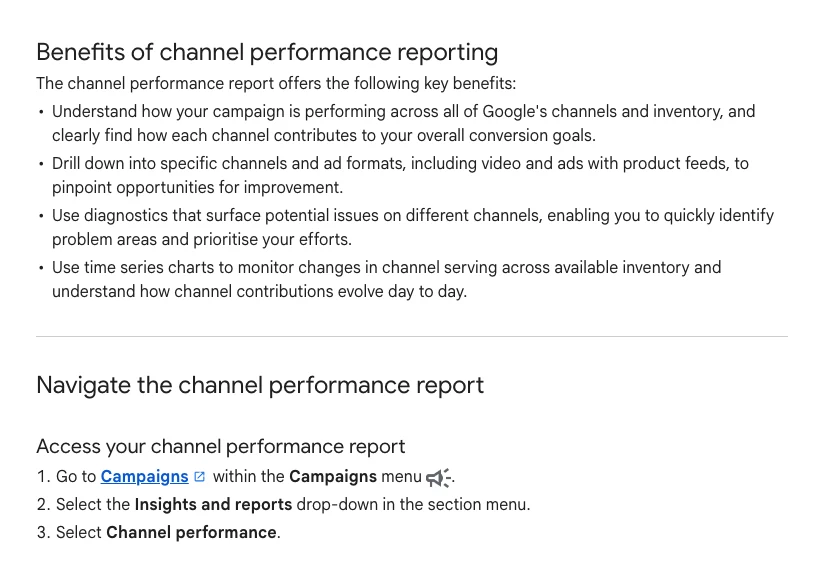
For Performance Max, the channel performance report sits under Campaigns, then Insights and reports, then Channel performance. It splits results across Search, Display, YouTube, Discover, Maps, Gmail and Search partners, with data from 6 June 2025. The Performance Max search terms report goes back to March 2023, and negatives added at account or campaign level apply to Search and Shopping inventory only.
| What the system flags | Google report | Typical decision |
|---|---|---|
| Irrelevant or brand-adjacent queries | Search terms, ad combinations | Negative keyword |
| Ads sending clicks to the wrong page | Ad combinations, expanded URLs | URL exclusion |
| Spend moving to Display or YouTube | PMax channel performance | Review goals or channel priority |
| Google-written text off-brand | Asset report, "Google AI" | Remove asset, add text guideline |
| Conversions up, CRM leads flat | Conversions vs CRM export | Fix tracking before scaling |
The output format matters as much as the analysis. In my own audit work, a too-generic report was fixed by asking for what is wrong, in what order, and what happens from tomorrow, with a "Manual check" column and a "Decision" column beside every row. That turns an AI report into something a manager can act on in ten minutes.
You review last week's Google Ads exports for [business]. Do not change the account.
Inputs: search_terms.csv (including the "Search terms and ad combinations" view), pmax_channels.csv, crm_leads.csv.
1. List search terms with spend and no qualified lead in the CRM. Mark brand-adjacent ones separately.
2. List landing pages AI Max sent traffic to that are not in our approved page list.
3. Show any channel whose share of Performance Max spend moved more than [X] points week on week.
4. Compare Google Ads conversions with CRM leads by day. Flag any gap over [Y]%.
For every flag give the rows behind it. Add empty "Manual check" and "Decision" columns.
Then write three sentences for leadership: what changed, why it probably changed, what we propose.
If an AI tool will touch the account at all, start read-only. Google's Google Ads MCP server reads reports and can only create assets and labels, through a propose-and-confirm step; it cannot change campaigns, budgets or bids. For the wider list of what to automate in an account, see PPC automation, and for the waste review itself, reducing wasted ad spend.
Why is conversion data the system that matters most?
Short answer: because Smart Bidding, Performance Max and AI Max all learn from the conversions you send them. If tracking counts junk leads or misses real ones, every automated layer optimises towards the wrong outcome, faster. A weekly check that reconciles platform conversions with CRM leads protects everything above it.
Google offers the tools: enhanced conversions send hashed first-party data from your site, and enhanced conversions for leads let you import offline outcomes, such as a qualified lead or a sale, back against the original click. Practitioners on r/PPC make the same point about AI Max on lead-generation and software accounts: it tends to break down unless qualified or offline conversions flow back, because it finds cheap, low-intent traffic quickly.
Two lessons from my own client calls shaped how I set this up. First, before building any reporting, agree the one number that matters and its source of truth, usually the CRM, and set a tolerance within which tracked conversions must match it. Second, expect the two to disagree for boring reasons. On one account, analytics showed no leads in a week when the CRM showed plenty: the leads came through ad-platform lead forms that never touched the website, and a website form event had stopped firing. A conversion check finds that in a week, not a quarter. The conversion tracking audit has the full checklist, and analytics and tracking is the service if you want it done for you.
What should an SEO system watch now that AI answers sit above the results?
Short answer: a monthly content decay check in Search Console, grouped by topic, plus a small manual sample of priority questions in AI Overviews, AI Mode and other assistants. Search Console counts AI Overviews and AI Mode inside the normal Web search data, with no separate filter, so the system has to infer their effect.
Google Search Central says there are no extra requirements to appear in AI Overviews or AI Mode: a page must be indexed and eligible for a snippet. It also says traffic from these features is included in the Performance report under the "Web" search type.
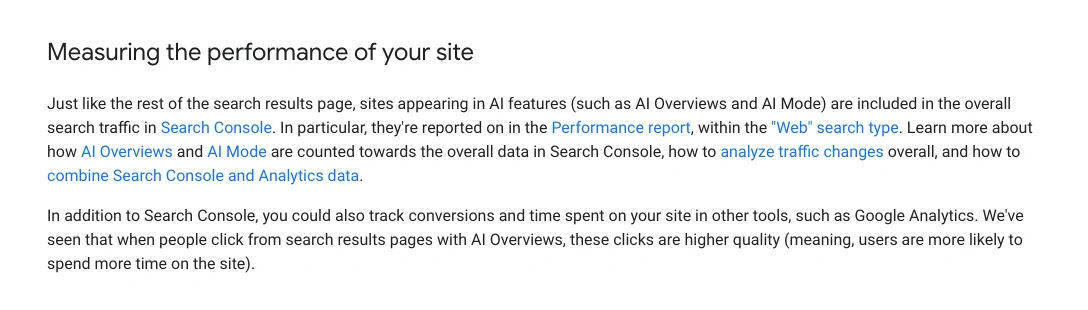
Search Console's data methodology adds two details worth building into the system: an AI Overview takes a single position, and every link inside it gets that position; and a follow-up question in AI Mode counts as a new query. So a page can hold its ranking and lose clicks.
| Signal | Where it comes from | What it suggests |
|---|---|---|
| Clicks down, position steady | Search Console | Answer shown above you |
| Clicks and position down | Search Console | Ranking or content problem |
| Fewer visits, leads steady | GA4 and CRM | Lost early-stage readers |
| Not named for key questions | Monthly manual sample | Content or authority gap |
One r/SEO reply describes a clean way to prove the cause to a client: split informational queries into those that show an AI Overview and those that do not. If only the first group lost clicks, the Overview is the story; if both fell, it is a ranking problem. That comparison is exactly the kind of work a system should do monthly. For the build, see a Claude Code SEO workflow and optimising a website for AI search, or talk to me about SEO consulting.
Who should own each AI marketing system?
Short answer: one named person owns each system and keeps it running, a different person checks its output, and a manager signs off on anything that spends money or publishes. If a system only works when its builder is in the room, it is still a clever prompt, not infrastructure.
| System | Owner | Checker | Signs off |
|---|---|---|---|
| Google Ads oversight | Paid search lead | Second marketer | Head of growth |
| Conversion data check | Analytics owner | Sales operations | Head of growth |
| SEO decay and AI visibility | SEO lead | Content editor | Head of content |
| Leadership report | Marketing ops | Finance partner | CMO |
Titles are examples; in a small team one person holds several. The rule that matters is that owner and checker are different people. I run a stack of 19 AI agents alongside three people, and the same applies there: agents prepare, people check and approve.
Test hand-over early. In my own setup, scheduled daily runs kept stalling on permission prompts when nobody was at the computer. The workaround was a self-contained brief that any session could pick up. That is the test for every system: give it to a colleague with the written brief and see whether they get the same result. For how systems run across a whole team, see Claude for marketing operations.
How should a CMO report AI marketing systems to the board?
Short answer: report each system against a number the board already follows: pipeline, revenue, cost per qualified lead or hours released. Keep impressions, clicks and "content produced" in working files. Say which numbers come from Google and which from the CRM, because they will not match.
| Board question | Report this | Source of truth | Not this |
|---|---|---|---|
| Is search growing the business? | Qualified pipeline from search | CRM | Platform conversions |
| Is spend efficient? | Cost per qualified lead | CRM plus ad spend | CPC, CTR |
| Is AI Max worth it? | Experiment result vs control | Google Ads experiment | "More conversions" |
| Is organic at risk? | Leads from organic, by topic | GA4 and CRM | Average position |
| Are the systems paying off? | Hours released, errors caught | Owner's log | Number of AI tools |
On AI Max, the fair test is the one Google provides: a campaign experiment against your existing setup, run long enough to cover your conversion lag. Comparing two different accounts, or this month against last, mixes up AI Max with everything else that changed.
Two habits from client reporting work help. Keep a new dashboard internal until the data reconciles, because short-term swings on a live dashboard invite daily questions. And describe change with date ranges rather than opinion. For the dashboard build itself, see executive marketing dashboards; for a board-level AI plan beyond marketing, see AI strategy for business leaders.
What should stay human?
Short answer: positioning and the offer, brand voice, budget and target decisions, which bets to make, relationships with the board, customers and team, and the final sign-off on anything that spends money or publishes. Use AI to pressure-test these decisions, not to make them.
A useful habit is to give a model your real numbers, competitors and constraints, ask for options with trade-offs rather than one answer, and then make it argue against its own recommendation. You still make the call, having seen more of the risks earlier. Google's automation is built the same way: it gives you targets, priorities and exclusions because the goal is yours to set.
Where exactly approval should sit for each kind of action is covered in tasks to delegate to AI agents and human in the loop for Google Ads.
What do people say on X and Reddit?
Short answer: Google's official accounts keep adding automation and the reports to watch it; practitioners say AI Max and AI audits need checking against real lead quality, and agency leaders say the manager's job is knowing what good looks like and owning tracking, not running every setting.
| Source | Date | Point | Type |
|---|---|---|---|
| Google Ads Liaison on X | 15 Apr 2026 | AI Max out of beta; DSA transition timeline | Official |
| Google Ads Liaison on X | 30 Apr 2025 | PMax reporting: channels, search terms, assets | Official |
| Google Ads Liaison on X | 14 Oct 2026 | Optional channel priority and budget allocation controls | Official |
| Google Ads on X | 12 Nov 2025 | Ads Advisor, an agent that acts in campaigns | Vendor |
| Gartner on X | 11 May 2026 | 15.3% of budgets to AI; 30% ready to scale | Analyst |
| A PPC agency owner on X | 7 Aug 2026 | Google suggested cutting budget; it made no sense | First-hand |
| An enterprise software CEO on X | 8 Jul 2026 | AI gains need an operating model fix, not just tools | First-hand |
| r/PPC | 30 Sep 2026 | AI Max: more conversions, higher CPA; check incrementality | First-hand |
| r/PPC | 15 Nov 2026 | AI Max weak on high-ticket; feed back qualified leads | First-hand |
| r/SEO | 5 Oct 2026 | Explaining AI Overview drops; split queries to prove it | Mixed |
| r/PPC | 13 Jul 2026 | Leading a PPC team: know what good looks like, own tracking | Opinion |
| r/PPC | 30 Oct 2026 | AI fine for repeatable checks, weak on judgement; scripts flag weekly changes | First-hand |
The thread that matters most for a CMO is the agency owner on r/PPC who manages paid search staff without running accounts. The top replies say the leader's job is knowing what a good conversion is, asking sharp questions, and investing in tracking. That is the middle layer of this article in one sentence.
Videos worth watching
Short answer: Google's own short explainer on AI Max, then Google Search Central's quarterly update on AI features in Search, to see what the platform automates before you design anything around it.
Made by Google Ads, 21 April 2026. A walkthrough of AI Max settings and controls. It is Google promoting its own product, so pair it with the reporting caveats above.
Made by Google Search Central, 26 October 2026. The quarterly news round-up, including AI features in Search. It sells nothing.
| Video | Channel | Date | What it covers |
|---|---|---|---|
| AI Max for Search Campaigns | Google Ads | 12 Jun 2025 | The original AI Max launch explainer |
| Introducing Ask Advisor | Google Ads | 21 May 2026 | Google's agent inside Google Ads |
| Analyzing performance on Google Search | Google Search Central | 4 Dec 2025 | Reading Search Console data |
| Google Search Gen AI Reports, Search Profiles and more | Google Search Central | 18 Jun 2026 | Q2 2026 Search updates |
| The CEO's Agenda for Thriving in the Agentic Age | McKinsey & Company | 27 Oct 2026 | Operating model, not just tools |
Where this advice is weak
Short answer: the scorecard is a judgement, Google's performance figures are its own, the survey data leans to very large firms, and the experience behind this article is mostly lead generation, not large retail.
- The scorecard is illustrative. The scores reflect a typical lead-generation business. A retailer with a large product feed would score Shopping and feed quality systems far higher.
- Google's numbers are Google's. The 14% AI Max figure is internal, non-retail data. Practitioner threads report mixed results, and none of them is a controlled study either.
- Gartner's sample is big companies. Most respondents' firms have over $1bn revenue, so the readiness gap may look different in a small team.
- Products move fast. AI Max upgrades, channel prioritisation and Ask Advisor were all rolling out or in beta when this was checked. Menus and limits may differ in your account.
- Search Console cannot isolate AI Overviews. The SEO system infers their effect; it does not measure it directly.
Want a second pair of eyes on your search systems?
Short answer: I set up the oversight, conversion and reporting systems described here for Google Ads and SEO, with a person approving every change. Prices are on the pricing page.
If your team runs Google Ads and SEO and you want the middle layer built properly, start with Google Ads management or SEO consulting, and see AI automation for the wider system. The free CMO Guide 2027 adds starter prompts for the strategy test, the weekly report and content repurposing.
Sources
| Source | What it supports | Date |
|---|---|---|
| Google Ads Help: set up AI Max | On by default, features, brand and URL controls | Read 18 Nov 2026 |
| Google Ads Help: about AI Max | 14% claim, internal non-retail data | Read 18 Nov 2026 |
| Google Ads Help: AI Max reporting | Ad combinations view, two-week wait, undercount | Read 18 Nov 2026 |
| Google Ads blog: DSA to AI Max | Out of beta; Sep 2026 and Feb 2027 upgrades | 15 Apr 2026, upd. 11 Jun 2026 |
| Google Ads blog: channel priority | Priority tiers, budget caps | 14 Oct 2026 |
| Google Ads Help: PMax channel report | Path, channels, data from 6 Jun 2025 | Read 18 Nov 2026 |
| Google Ads Help: PMax search terms | Data from Mar 2023; negatives scope | Read 18 Nov 2026 |
| Google Ads Help: Smart Bidding | Needs tracking; 30 conversions; name change | Read 18 Nov 2026 |
| Google Ads Help: enhanced conversions | Hashed first-party data, leads | Read 18 Nov 2026 |
| Google Ads Help: Ask Advisor | Beta, approval, not in MCC | Read 18 Nov 2026 |
| Google Ads MCP server | Read tools; propose and confirm | Read 18 Nov 2026 |
| Search Central: AI features | No extra requirements; Web search type | Upd. 10 Dec 2025 |
| Search Console Help: data methodology | AI Overview position; AI Mode follow-ups | Read 18 Nov 2026 |
| Gartner 2026 CMO Spend Survey | All chart figures | 11 May 2026 |
| X and Reddit posts above | Practitioner and official views | Apr 2025 to Nov 2026 |
| YouTube videos above | Product walkthroughs | Jun 2025 to Oct 2026 |
This article expands on my post on LinkedIn ↗.
FAQ
What are AI marketing systems?
AI marketing systems are documented, repeatable workflows that use AI to run a marketing job on a schedule or on demand, give a consistent result, and can be run and checked by someone other than their builder. Examples are a weekly Google Ads oversight report, a conversion data check and a monthly SEO content decay review.
What should a CMO automate first with AI?
Start with work that happens often, is easy to check and is cheap if wrong, and that Google does not already automate: a weekly review of search terms and Performance Max channels, a check that ad platform conversions match CRM leads, and an SEO content decay report. Leave bidding to Smart Bidding and spend your effort watching it.
What does Google already automate in Google Ads?
Smart Bidding sets bids in each auction, Performance Max chooses channels and assets, and AI Max for Search widens query matching, writes ad text and picks landing pages. In November 2026 AI Max is on by default in new Search campaigns, and Ask Advisor, Google's agent in Google Ads, is in beta.
Should a CMO turn on AI Max for Search?
Test it rather than switching it on everywhere. Google claims 14% more conversions or value at a similar CPA or ROAS for non-retail advertisers, but practitioners report higher costs per acquisition on some accounts, so run a campaign experiment against your current setup and judge it on qualified leads from your CRM.
How do you measure AI Overviews in Search Console?
You cannot isolate them. Google says AI Overviews and AI Mode traffic is counted in the Performance report under the Web search type, an AI Overview takes a single position, and an AI Mode follow-up counts as a new query. Compare queries that show an Overview with those that do not to infer the effect.
What should stay human in an AI marketing team?
Positioning and the offer, brand voice, budget and targets, the big strategic bets, relationships with the board, customers and team, and the final sign-off on anything that spends money or publishes. AI can pressure-test those decisions but should not make them.
How should a CMO report AI marketing results to the board?
Tie each system to a number the board already follows, such as qualified pipeline, revenue, cost per qualified lead or hours released, and name the source of truth for each, usually the CRM. Keep impressions, clicks and content volume in working files, because more output is not the same as more revenue.
Who should own an AI marketing system?
One named person should own each system and keep it running, a different person should check its output, and a manager should sign off on anything that spends or publishes. If the system only works when its builder is present, it is not yet ready to hand over.