By Vicky Lalwani · Updated 12 November 2026
How do people in the UK find and choose a solicitor?
Most people in the UK find a solicitor by searching the matter and the town on Google.co.uk, such as "conveyancing solicitors Leeds" or "employment solicitor Bristol", then comparing a few firms on price, reviews and how clearly the website explains what happens next. For conveyancing, probate and employment claims, the price page is often the deciding page.
Two things make the UK different. First, the SRA writes part of the marketing brief: publicity must be accurate, unsolicited approaches are banned, and firms offering certain services must publish prices on their website. Second, people compare on price far more openly than in many markets, partly because those price pages exist. A firm with a clear, honest price page for residential conveyancing in Leeds is answering the exact question its buyers type into Google.
The rest is familiar: people search near them, they read Google reviews, and they call or fill in a form with the firm that looks clear and answers. For family, crime and employment matters, they often search in the evening, so the firm that responds before the next morning tends to get the instruction.
This page is written for firms regulated by the SRA in England and Wales. Scottish and Northern Irish firms answer to their own law societies, so the channels below apply but the conduct rules differ.
Which marketing channels work for UK law firms?
For most UK firms, Google Search ads and the map pack bring the most valuable enquiries, SEO on practice area and price pages brings the cheapest over time, and Meta helps with awareness and retargeting in family, wills and employment. Google's Local Services Ads take legal categories in Greater London only, so firms elsewhere rely on Search, Maps and SEO.
| Channel | Best for | How you pay | Judge it on |
|---|---|---|---|
| Google Search ads | Conveyancing quotes, family, crime, employment, immigration | Per click, in GBP | Cost per instruction |
| Google Business Profile and Maps | "Solicitors near me" and town searches | Profile work and reviews | Calls and direction requests per office |
| SEO and price pages | Researched matters and price comparison | Content and time | Enquiries from organic search |
| Local Services Ads | London firms in the listed legal categories | Per lead | Cost per qualified lead |
| Meta (Facebook and Instagram) | Wills, lasting powers of attorney, separation, workplace problems | Per impression | Cost per qualified enquiry |
| AI answers (GEO) | Being named when people ask ChatGPT or Google's AI for a solicitor | Content and citations | Mentions and referral visits |
Local Services Ads in London
Google's UK help centre lists contract, corporate, criminal, employment, family, immigration, insolvency, IP, litigation, malpractice, personal injury, probate, property, road traffic and tax lawyer services as currently available in Greater London only. You pay per lead, the ad sits above the normal results, and ranking depends partly on how quickly you answer. For a London office it is worth testing; for a firm in Manchester or Cardiff it isn't an option yet.
Google Search
One campaign per practice area and office, with location targeting set to people in the area. Negative keywords cover "legal aid", "training contract", "paralegal jobs", "free legal advice" and the work you don't take. Conveyancing campaigns usually land on the price page or a quote form; crime and family campaigns land on pages built for a phone call.
Meta
Meta's ad standards ban ads that assert or imply personal attributes such as a criminal record, health or financial hardship. "Facing a drink driving charge?" breaks the policy; "Drink driving defence solicitors in Leeds" doesn't. Meta works best for matters people plan: wills, lasting powers of attorney and separation.
What do the SRA rules mean for your marketing?
The SRA lets solicitors advertise, but its Code of Conduct requires publicity to be accurate and not misleading, including about charges, and bans unsolicited approaches to members of the public other than current or former clients. Personal injury referral fees are banned by statute, and the SRA expects firms to answer for any lead generator they use.
Paragraph 8.8 of the SRA Code of Conduct for Solicitors covers publicity and charges, and 8.9 covers unsolicited approaches. Paragraph 1.4 adds that you must not mislead clients or others, including by allowing the acts of others. The SRA's December 2024 warning notice on marketing to the public spells out what that means in practice: no approaches in person, by phone, online or by other means that target people individually, such as cold calling or door knocking, and the ban follows any client a lead generator or claims management company sends you. Firms are expected to spot-check new clients on how they were contacted and to review third-party promotional material.
Personal injury and "no win, no fee"
Since 1 April 2013, section 56 of LASPO has banned paying or receiving referral fees in personal injury claims. In January 2026 the SRA published a further warning notice on "no win, no fee" in high-volume consumer claims: firms must be cautious with the phrase, marketing must not exaggerate the benefits, and firms are responsible for the clarity and accuracy of third-party advertising. So injury and consumer claims firms grow through their own search, content and reviews, with every deduction a client could face explained before they sign.
Advertising codes and reviews
Legal ads also fall under the ASA's CAP Code for non-broadcast advertising, which covers misleading claims, comparisons and testimonials. Reviews are covered by the DMCC Act: the CMA's fake reviews guidance says fake or concealed-incentive reviews are banned, and that suppressing negative reviews or encouraging only satisfied customers to review may break the law. Review requests go to every client at the same stage, not just the happy ones.
I check every ad, extension and landing page against these points before it runs. I'm not a solicitor and I don't give legal advice, so your COLP signs off. Writing to the rules from the first draft keeps that quick.
How do you turn Transparency Rules price pages into your best landing pages?
The SRA Transparency Rules require firms offering certain services to publish price information that is clear, accessible and prominent on their website. Those are exactly the services people price-shop on Google, so a well-built price page meets the rule, ranks for "cost" and "fees" searches and converts better than a generic practice area page.
Under rules 1.3 and 1.4 of the SRA Transparency Rules, the duty covers firms that advertise any of these services. Publicly funded work is excluded.
| For individuals | For businesses |
|---|---|
| Residential conveyancing: sales, purchases, mortgages and remortgages | Employers defending unfair or wrongful dismissal claims in the Employment Tribunal |
| Uncontested probate: collecting and distributing UK assets | Debt recovery up to £100,000 |
| Immigration applications, excluding asylum | Licensing applications for business premises |
| First-tier Tribunal immigration appeals, excluding asylum | |
| Summary-only road traffic offences dealt with at a single hearing | |
| Employees bringing unfair or wrongful dismissal claims in the Employment Tribunal |
Rule 1.5 sets out what the price information has to include, and each item doubles as content people search for:
- Total cost, or an average or range where a total isn't practicable.
- The basis of charges, such as fixed fees or hourly rates.
- Who does the work: the experience and qualifications of the people doing it and supervising it.
- Likely disbursements and their cost, such as search fees and Land Registry fees on a purchase.
- VAT: whether fees and disbursements attract it, and how much.
- What the price includes, the key stages, likely timescales and what isn't included.
- Conditional fee or damages-based agreements: when the client may have to pay, including from damages.
Rule 2.1 adds your complaints procedure, and rule 4.1 requires your SRA number and the SRA's digital badge in a prominent place on the website. I put the badge on every landing page, not just the home page, because paid traffic rarely lands on the home page, and it is one of the strongest trust signals a UK legal page can carry.

How I run a UK law firm account
I start by mapping your practice areas and offices against the SRA rules, including which services need price pages. Then I fix tracking and intake, build a campaign and landing page per practice area and office, set up Google Business Profiles, and only then raise budgets. Reporting is weekly in GBP: enquiries, instructions and cost per instruction.
- Practice area map. Which practice areas and offices matter, what an average instruction is worth and how many new matters each team can take.
- Rules map. Code 8.8 and 8.9, the Transparency Rules services you offer, the SRA badge, and LASPO for injury work.
- Account audit. Location settings, search terms, conversion actions, wasted spend and structure.
- Price pages. Rewritten or built to the seven rule 1.5 elements, so they comply and answer "how much does it cost" searches.
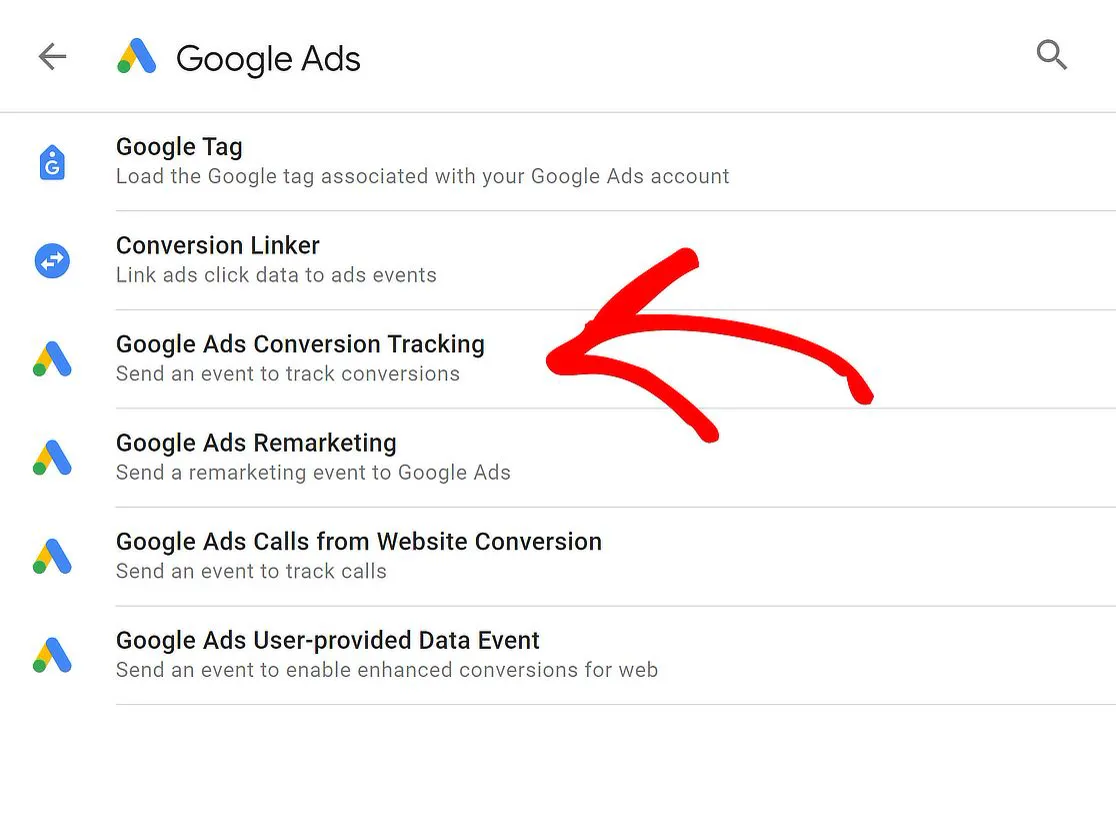
- Tracking. Calls, forms, quote requests and chats counted once each in GA4 and Google Tag Manager, with consent mode set up properly.
- Intake check. Answer rate by hour, time to first callback and quote turnaround for conveyancing.
- Build. Practice area campaigns, Google Business Profiles per office, and Meta where it fits.
- Feedback loop. Instructions go back to Google Ads as offline conversions, so bidding learns which searches become clients.
I work from India with a small team that works through your UK morning and afternoon, so changes go live while your team is on the phones. UK paid search detail is on Google Ads UK, and firms in the capital can see Google Ads London.
What should a UK law firm budget for Google Ads and SEO?
A UK firm's budget should come from the number of instructions it wants, what each is worth, and what a qualified enquiry costs in its practice areas and towns. LOCALiQ's 2025 UK benchmark report found solicitors had the highest paid search cost per click of any industry it tracked, at £2.93 in 2024, so waste hurts more here than elsewhere.
That benchmark comes from LOCALiQ's own advertisers, many of them small local businesses, so treat it as a floor rather than a forecast. Personal injury, family and crime in London or Manchester will usually cost more per click; wills in a market town will usually cost less.
What drives the cost
- Practice area. Injury, family and crime are crowded; conveyancing is cheaper per click but price-sensitive, so conversion rate matters more.
- Town and competition. National panel firms bid on conveyancing and injury terms everywhere, which pushes prices up.
- Price page quality. A clear page lifts conversion rate, which lowers cost per enquiry at the same click price.
- Intake speed. A conveyancing quote sent the next day often loses to one sent within the hour.
- Offices. Each office needs a profile, pages and enough budget to learn.
- Existing SEO. A firm in the map pack for its main towns needs less paid budget.
The working formula: monthly media budget is about target instructions, multiplied by cost per qualified enquiry, divided by the share of qualified enquiries that instruct. Compare the result with your average fee after costs for that practice area.
There is no minimum ad budget. I quote after a free call, and the budget stays in your own Google and Meta accounts, billed in GBP by the platforms directly.
How do you measure enquiries, instructions and cost per instruction?
Measure on instructions and fees, not clicks. Track every call, form and quote request to its campaign, have your team mark each enquiry as qualified, unqualified or instructed, then report cost per qualified enquiry and cost per instruction by practice area and office every week. For conveyancing, add quote-to-instruction rate.
| Metric | Formula | What good looks like |
|---|---|---|
| Cost per enquiry | Spend ÷ all calls, forms and quote requests | A trend against your own history |
| Qualified enquiry rate | Qualified enquiries ÷ all enquiries | Rising as negatives improve |
| Quote-to-instruction rate | Instructions ÷ quotes sent | Higher where quotes go out fast |
| Cost per instruction | Spend ÷ new instructions | Below your break-even |
| Break-even cost per instruction | Average fee per matter × gross margin | The ceiling for cost per instruction |
| Answer rate | Answered calls ÷ all inbound calls | As near to every call as staffing allows |
Instructions are imported back to Google Ads against the original click, so smart bidding learns which searches produce clients rather than which produce quote requests from people comparing ten firms. If your case management system records the source of each new matter, the setup is quick. My note on missing conversions in ad platforms covers the usual gaps.
Getting cited when people ask AI for a solicitor
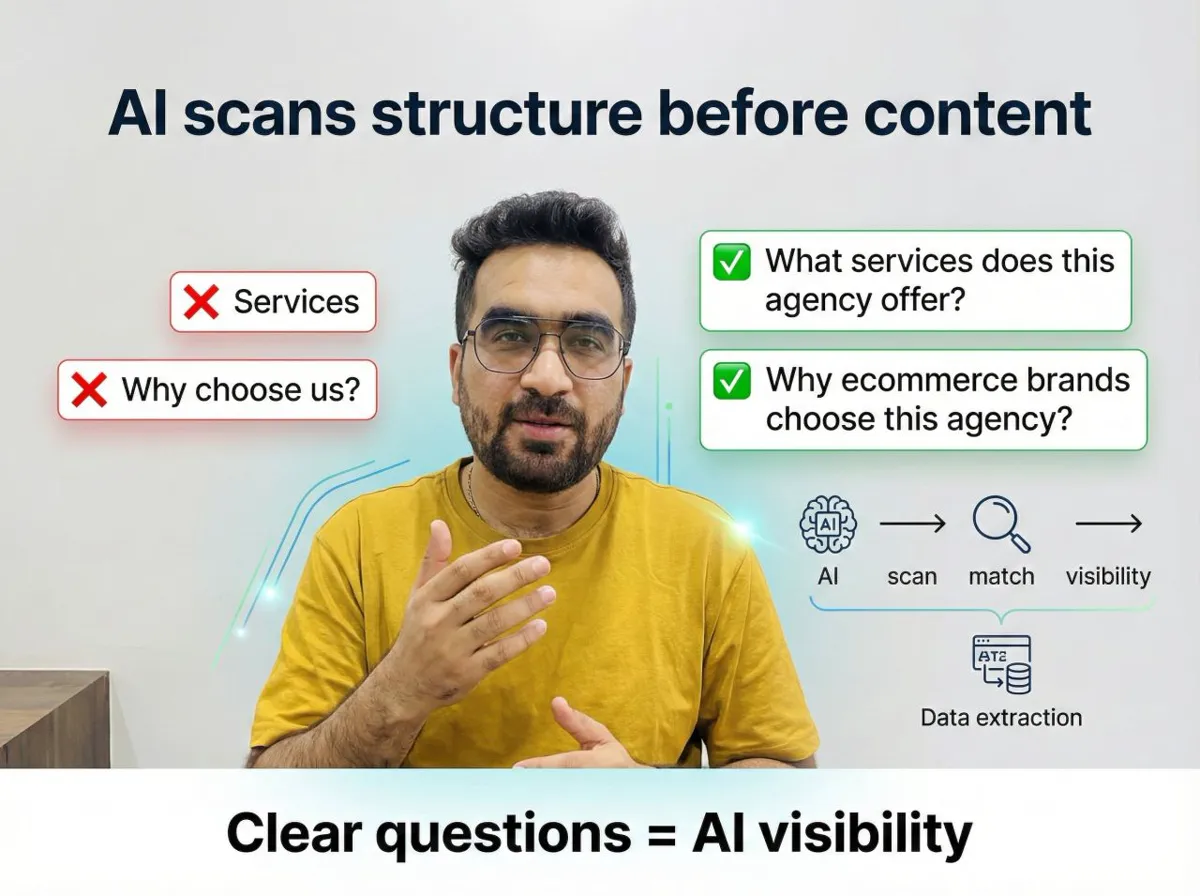
When someone asks ChatGPT or Google's AI Overviews for a conveyancing solicitor in Leeds or what probate costs, the tools cite pages that answer plainly and name firms they can describe with confidence. Transparency Rules price pages, clear process pages, accurate solicitor profiles and consistent directory details are exactly what those answers draw on.
- Price pages written to rule 1.5, with totals or ranges, disbursements and VAT stated plainly.
- Process pages for each service: the key stages and typical timescales.
- Solicitor profiles with admission year, practice areas and any accreditation, stated accurately.
- Self-contained FAQ answers with schema, because AI answers lift single paragraphs.
- Consistent name, address and phone across Google Business Profile, the Law Society's Find a Solicitor and other directories.
The content engine I run publishes 100+ articles and Google Business posts a month across 11+ sites, built with schema and AEO and GEO in mind. The UK side is on GEO UK, and the page structure is in website structure for AI search.
Mistakes I see in UK law firm marketing
The costliest mistakes are price pages hidden in the footer, the SRA badge only on the home page, one campaign for every practice area, bought leads nobody has checked, and reports that stop at enquiries. Each one wastes GBP or creates regulatory risk that a firm doesn't need to carry.
- Price information buried. Rule 1.6 wants it prominent, and buyers want it on the page they land on.
- "From £X" with no disbursements or VAT. Accurate publicity under 8.8 includes charges.
- Leads from a generator nobody has audited. The SRA's warning notice says the unsolicited approach ban follows the client back to its source.
- "No win, no fee" as a headline with the deductions in small print. The January 2026 notice is clear on that.
- Every practice area sent to the home page. Someone searching "probate solicitor Leicester" wants the probate page.
- Conveyancing quotes sent the next day. The first clear quote usually wins.
- Review requests only to happy clients. The CMA says cherry-picking may break the law.
- No weekly search-term review. With the highest CPCs in the benchmark, waste compounds fast.
What experience do I bring to a UK law firm?
I have run lead generation for multi-location law firms across Google Search, Local Services Ads and Meta, with two metro markets per firm and qualified case enquiries at a controlled cost per lead. Legal was one of the verticals in a 35+ account book across the US, UK and Australia.
The method transfers to UK firms directly: practice area campaigns, office-level tracking, intake grading and instructions fed back to bidding. Local Services Ads were one of those channels, and in the UK they only matter for a Greater London office; elsewhere that budget goes to Search, Maps and price page SEO.
That account book came from nearly three years as Head of Digital Marketing at a US marketing agency, with 30 to 40% lead growth, 20 to 30% conversion lift and 25 to 30% organic traffic growth across 35+ accounts. I have 8+ years in digital marketing, Google Ads, GA4 and Meta certifications, and I also lead marketing in-house for a multi-product AI SaaS company, where I built a 19-agent AI marketing stack for reporting and audits.
I lead the strategy and I am your contact. A small team handles delivery, remotely from India, through your UK morning and afternoon. Client names stay private.