By Vicky Lalwani · Updated 12 November 2026
How do real estate agents win more listings in Australia?
Australian agents win listings from vendors who already know their name when they decide to sell. Buyers search on realestate.com.au and Domain, so the portals carry the listing. The agency's own marketing has a different job: being found on Google for appraisal searches, reaching homeowners in your suburbs on Meta, and replying first.
A typical vendor in Penrith, Geelong or Logan starts thinking about selling months before they call anyone. They notice which boards go up on their street, which agent's just-sold post appears in their Facebook feed, and who sends a useful suburb update. When they get serious they search "real estate agents Penrith", "property appraisal Geelong" or "what is my house worth", look at the map results and the Google reviews, then ask two or three agents to appraise. The agent who replies first, explains the price clearly and looks most local usually gets the listing.
That gives an agency's marketing four jobs, in this order:
- Be found on vendor searches. Google Search ads and suburb pages for agent, appraisal and "sell my house" searches in the suburbs you list in.
- Win the comparison. A Google Business Profile for every office, with genuine reviews, recent sales and photos of the team.
- Reach owners before they search. Meta ads to homeowners nearby with recent sales, market updates and an appraisal offer.
- Answer and nurture. A reply within minutes and a CRM sequence for owners who are a year away.
Buyer campaigns still earn a place for a listing that needs more reach, a prestige home, an off-market campaign or a buyer's agent business. For most agencies, though, the portals already deliver buyers, and the agency's own budget belongs on the vendor side.
How do home builders and developers market house and land and new projects?
Builders and developers in Australia market in phases. Before release they build a register through Meta and Search on estate, suburb and "house and land" searches. At launch the register gets first access while campaigns book display-home and sales-office visits. Afterwards budget moves to the stages, lots or designs that sell slowest.
Searches here are specific and local: "house and land packages Werribee", "display homes Ipswich", "new estates Box Hill", "off the plan apartments Parramatta", or the estate name itself. Each one needs a landing page that answers the questions buyers actually decide on: lot sizes, designs and floor plans, what is included, the location and travel times, and when the display home is open. Where a price is shown, it has to be accurate and consistent with what is actually available.
What changes for a builder with several brands or estates
Builders with two or more brands, or one brand across several estates, need separate campaigns, budgets and pages for each, so a slow release gets attention without starving the one that is selling. I report enquiries, visits and contracts by brand and by estate every week, then move budget to the stock that needs buyers. That is the structure I used in past builder work: Meta for awareness, high-intent Search, Local Services Ads where Google offers the category, and local SEO, four channels per builder across more than one builder brand.
Renders, photos and accuracy
New homes are sold on renders and display homes, so the creative has to be honest about what is shown. Label artist's impressions, keep inclusions on the page consistent with the contract, and don't present upgrades as standard. The Australian Consumer Law applies to builders and developers as much as to agents.
Which marketing channels work for Australian agents and builders?
For agents, Google Search on vendor terms, a strong Google Business Profile, Meta ads to local homeowners and suburb pages do most of the work, with portals carrying the listings. For builders and developers, Search on estate and new-home terms, Meta launch campaigns, retargeting and display-home profiles lead. Email and SMS nurture sits under both.
| Channel | Job for agents | Job for builders and developers | What I measure |
|---|---|---|---|
| Google Search ads | Agent, appraisal and "sell my house" searches by suburb | Estate name, "house and land", "display homes", suburb plus new homes | Cost per booked appraisal or visit |
| Performance Max | Rarely first; useful once offline conversions are imported | Extends reach into Maps and YouTube for estates with good tracking | Cost per qualified enquiry |
| Meta (Facebook, Instagram) | Just-sold posts, suburb updates and appraisal offers to homeowners nearby | Registers of interest, launch demand, retargeting site visitors | Leads that book, not form fills |
| Google Business Profile | Every office: reviews, sales photos, calls | Every display home and sales office | Calls, directions, website clicks |
| Suburb and estate pages | Suburb guides, recent sales context, appraisal page | Estate, stage and design pages | Organic appraisal requests and registrations |
| realestate.com.au and Domain | Listings in front of active buyers; usually paid by the vendor | Project and house and land listings | Enquiries per listing |
| Email and SMS | Past clients, past appraisals, buyers who also own | Register updates, release alerts | Appointments from older leads |
Two notes on Google. First, Local Services Ads: Google lists real estate agents as a Local Services category in some countries, but I could not confirm the category for Australian agents, so I plan Australian agency accounts around Search and check eligibility inside the account. Second, Google's housing targeting restrictions apply only in markets it names, and Australia is not one of them (Google's personalised advertising policy). Suburb and radius targeting remain available. The Google Ads Australia page covers account structure in general.
On Meta, the housing special ad category declaration is required for advertisers targeting the countries Meta names, and Australia is not listed; its ban on discriminatory ads applies everywhere (Meta's discriminatory practices policy). So suburb and radius targeting are available for Australian property ads, but nothing should exclude people on protected attributes. More on creative and structure is on Meta Ads Australia.

What are the price rules for property ads in NSW, Victoria and Queensland?
Price rules for property ads are state law. From 17 November 2026, NSW sale ads must show a selling price or price range. Victoria allows a single price or a range of up to 10% with a Property Price Statement. Queensland auction listings carry a prescribed statement instead of a price guide. Every ad, post and landing page follows the listing's state.
| State | What a property ad may say about price | Other advertising points |
|---|---|---|
| New South Wales | From 17 November 2026, new residential sale ads must include a selling price or price range, never below the estimated selling price, the highest bid at a passed-in auction or a written offer rejected only for being too low | Non-compliant online ads updated or removed within 1 business day; a QR code with wording such as "click here to access the advertised price" is tolerated; Statement of Information from 8 February 2027 |
| Victoria | A single price or a range of up to 10%, not below the agent's estimate, the vendor's asking price or a rejected written offer; no "offers above", "from" or "+" | Property Price Statement shown or linked beside the price on the main online ad, QR code or link on print; online ads updated within one business day |
| Queensland | Properties going to auction or sold without a price carry the prescribed statement that a price guide cannot be provided | Seller disclosure statement and certificates before a buyer signs, for contracts from 1 August 2025 |
| All states | No false or misleading claims about price, location, size, features or zoning | Australian Consumer Law, enforced by the ACCC and state fair trading offices |
New South Wales
The Property and Stock Agents Amendment (Underquoting and Other Agent Conduct) Act 2026 brings in the price-in-ads rule from 17 November 2026 for new advertisements published on or after that date. Maximum court penalties for underquoting are $110,000 or three times the agent's commission, whichever is higher, and NSW Fair Trading says its Underquoting Guidelines are coming (NSW Fair Trading: changes to property and stock agents laws). For marketing that means three things: every NSW listing ad, social post and boosted post from that date carries a price or range; templates for Meta and Google ads get a price field; and someone owns updating online ads within a business day when the estimate changes.
Victoria
Consumer Affairs Victoria's rules stop qualifying words and cap ranges at 10%, and the Property Price Statement, which replaced the Statement of Information, must sit next to the price on the main online ad. For properties sold after 1 October 2026, agents also publish the final sale price, and the seller's reserve is published at least 7 days before an auction or fixed-date sale. Penalties exceed $50,000 (Consumer Affairs Victoria: underquoting). Social ads that mention price need the same discipline as the portal listing.
Queensland
Section 10 of the Property Occupations Regulation 2014 sets the prescribed statement for listings of properties sold by auction or without a price (Property Occupations Regulation 2014). Auction ads and landing pages in Queensland are therefore written around the home, the auction date and the agent's results, not a number. If you list in other states or territories, I check their rules before the first ad; I don't assume they match these three.
What else does Australian law say about real estate marketing?
Beyond price, Australian real estate marketing is shaped by the Australian Consumer Law on misleading claims, state rules on photo editing, the Do Not Call Register for prospecting calls, the Spam Act for SMS and email, and platform rules on reviews. Each one changes something specific in ads, pages or follow-up.
- Misleading claims. The ACCC says advertised prices should be based on a reasonable appraisal or what the seller will accept, and that agents must give truthful and complete information about features, location, zoning and history (ACCC: real estate).
- Photos. NSW Fair Trading's guidelines say agents must not digitally add or remove features or zoom in on a view to make it look closer, and nearby views shot off-site should be labelled "location shot". From 21 September 2026, tenants' written consent is needed before publishing photos that show their belongings (NSW advertising guidelines for property agents).
- Prospecting calls. Calling a number on the Do Not Call Register to sell your services is generally prohibited without consent or an exemption, so cold-call lists get washed through ACMA's service first (Do Not Call Register Act 2006).
- SMS and email. Commercial messages need consent, accurate sender details and a working unsubscribe under the Spam Act 2003. A lead form with clear consent wording covers most follow-up.
- Reviews. Google's Maps content policy bans incentives for reviews and selective requests to happy clients only. I set up review requests that go to every client after settlement.
None of this is legal advice; your principal and your state's fair trading office have the final say. My job is to make sure the campaigns, templates and pages follow what the official sources say.
How fast should an Australian agent answer an appraisal request?
Within minutes, including evenings and weekends. A vendor who fills in an appraisal form is usually asking two or three agencies at once, and the first useful reply often wins the appointment. A text with the agent's name, a call attempt within five minutes and a booking link protect every dollar spent creating the lead.
Saturday is the problem day. Agents are at opens, the office is closed, and owners who walked past three open homes go home and fill in appraisal forms. The fix is a system rather than effort: instant SMS and email acknowledgements, routing by suburb to the right agent, a callback booking link, and after-hours cover by an answering service or an AI receptionist that qualifies and books, with a person for anything sensitive. I size the cost of slow replies in speed to lead in real estate and the after-hours side in after-hours lead response.
How I run real estate marketing for an Australian agency or builder
I start with what a listing or contract is worth and which states you sell in, fix tracking and follow-up before any spend, launch Google Search on vendor or new-home searches first, then add Meta and suburb or estate pages, and move budget every week towards the suburbs, offices and estates producing appointments.
- Free strategy call in your Australian working day: your suburbs or estates, current lead sources, and what a listing or contract is worth.
- Lead source audit. Which portals, ads, referrals and organic sources turned into appraisals, visits, listings and contracts over the last year.
- State rules check. Price wording for every state you list in, photo and render labelling, consent wording on forms, and Do Not Call washing for prospecting lists.
- Follow-up first. Instant replies, CRM routing by suburb or estate, call targets and weekend cover, live before spend.
- Search and profiles. Vendor or new-home campaigns by suburb cluster, and a Google Business Profile for every office and display home.
- Meta and retargeting. Homeowner reach for agencies or launch demand for builders, tested in small creative sets.
- Suburb and estate pages written for Google and AI answers, built with the GEO Australia approach.
- Weekly reporting in AUD. Leads, appraisals or visits, listings or contracts, and the cost of each, by channel and area.
I lead the strategy and I am your contact. A small team handles delivery, remotely from India, through your Australian working day.
What does real estate marketing cost in Australia, and what should you budget?
Cost depends on what a listing or contract is worth to you, how competitive your suburbs are, how many offices, brands or estates you cover, and how many leads your team can call back. There is no minimum ad budget. I build the budget from your numbers and quote my own work after a free call.
It helps to separate two pots of money. In most Australian sales campaigns the listing's own advertising, the portal package, photos and signboard, is paid by the vendor. The agency's brand and vendor-lead marketing, the work on this page, is the agency's own cost. Builders and developers pay for everything, so their budgets are set per estate or release.
Budget backwards from the deal: the listings or contracts you want, divided by your appraisal-to-listing or visit-to-contract rate, divided again by the share of leads that book, gives the leads you need. The first four to six weeks of data then tell you what a lead costs in your suburbs. The main drivers are search competition (inner Sydney and Melbourne suburbs cost more per click than regional towns), the number of suburb clusters and estates that each need enough budget to learn, creative production for renders and video, and sales capacity, because budget beyond what the team can answer is wasted. Ad spend stays in your own Google and Meta accounts, billed in AUD by the platforms.
Which KPIs should an Australian agency or builder track?
Track the numbers closest to money: cost per booked appraisal for agencies, cost per display-home or site visit for builders, then cost per listing or contract. Cost per lead is only an early signal. A weekly report in AUD should show each one by channel, suburb and office or estate.
| KPI | Formula | What good looks like |
|---|---|---|
| Cost per appraisal request | Ad spend ÷ appraisal requests | Steady while the booking rate holds |
| Appraisal booking rate | Booked appraisals ÷ appraisal requests | The first number to fix; follow-up drives it |
| Cost per booked appraisal | Ad spend ÷ booked appraisals | The main weekly number for agencies |
| Cost per listing won | Ad spend ÷ listings won from paid sources | Comfortably below the commission a listing earns |
| Cost per site or display-home visit | Ad spend ÷ booked visits | The main weekly number for builders |
| Cost per contract | Ad spend ÷ contracts signed | Below the margin a home or lot carries |
| Speed to lead | Median minutes from form to first call | Minutes, including Saturdays |
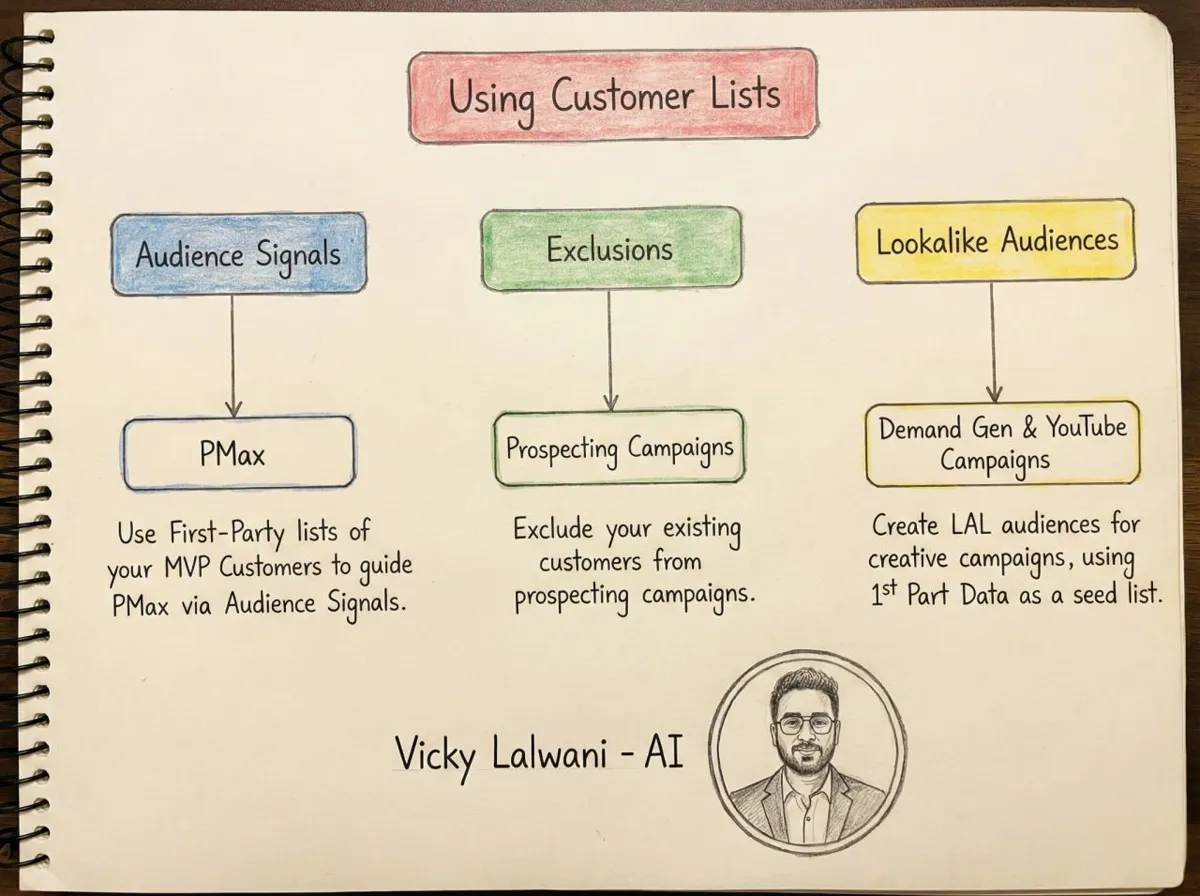
Two things make these numbers honest. The CRM records the source and stage of every lead, so a listing in May traces back to the ad in January. And booked appraisals and contracts go back into Google and Meta as offline conversions, so bidding learns from deals rather than form fills. The Customer Match and offline data guide covers the Google side.
What mistakes do I see in Australian real estate accounts?
The mistakes I see most are paying for buyer clicks the portals already capture, ignoring the state a listing is in when writing price copy, judging Meta on form fills, leaving weekend appraisal requests until Monday, and one generic appraisal page for every suburb and office.
- Buying "houses for sale" clicks. Expensive, and most of those searchers end up on realestate.com.au or Domain anyway.
- One price template for every state. "Offers over" copy is not allowed in Victoria, and from 17 November 2026 a NSW ad without a price or range is non-compliant.
- Edited photos. Removing power lines or zooming in on a water view breaks NSW guidelines and the ACL.
- Unwashed cold-call lists. Calling registered numbers without consent creates a Do Not Call problem.
- Gated reviews. Asking only happy vendors for Google reviews breaks Google's policy.
- Builders spreading budget evenly. Every estate gets the same spend regardless of which stages are slow.
- No offline conversions. Google and Meta optimise for form fills because nobody tells them which leads listed or signed.
What real estate and home builder work have I done?
I have run full-funnel campaigns for home builders and real estate groups: Meta awareness with high-intent Search and Local Services Ads, plus local SEO, four channels per builder across more than one builder brand, owned from first impression to signed deal. That sat inside a 35+ account book across the US, UK and Australia.
For nearly three years I was Head of Digital Marketing at a marketing agency, running performance marketing and SEO across 35+ accounts and leading a 17-person team. It was a multi-vertical book, and across it restructured campaigns, targeting and tracking delivered 30 to 40% lead growth, 20 to 30% conversion lift and 25 to 30% organic traffic growth. I also built always-on Local Services Ads and Performance Max lead engines for plumbing, construction and gutter businesses, and a content engine of 100+ articles and Google Business posts a month across 11+ sites, which is how suburb and estate pages stay fresh. A 19-agent AI marketing stack handles reporting and audits, so weekly numbers by suburb and estate are routine.
Client names stay private, and I don't publish real estate cost per lead figures. I'll walk you through how past builder accounts were structured on a call.