By Vicky Lalwani · Updated 12 November 2026
How do US companies choose B2B software?
US companies usually choose B2B software through a buying group: a user searches the problem on Google, reads G2 and Capterra, asks a peer or an AI tool for alternatives, and then a manager, finance and often a security reviewer narrow the list. Most of the evaluation happens before anyone books a demo, so your marketing has to work without a salesperson in the room.
The searches are specific and commercial. An HR manager in Columbus types "hr software for small business", a CTO in Austin types "SOC 2 compliance automation", a project lead in Denver types "construction project management software", a RevOps lead in Boston types "[competitor] alternative". Each search carries a stage: problem, category, comparison or replacement. A good plan matches each to its own ad and page.
The buying group keeps growing. G2's 2026 Buyer Behavior Report found finance involvement in software decisions jumped from 31% to 46% in a single year, that evaluation is now the longest stage of the journey, and that review sites (38%) and AI chatbots (37%) are the top two sources shaping vendor shortlists. Security reviews, procurement and finance all need content of their own: a trust center, a security overview and ROI in dollars.
Should a US SaaS company be product-led or sales-led?
A US SaaS company should be product-led when buyers can sign up, reach value and pay without talking to anyone, usually on self-serve plans. It should be sales-led when contracts are large, onboarding is complex or procurement and security reviews are involved. Many US SaaS companies run a hybrid: self-serve for small teams, sales-assisted above a seat or revenue threshold.
The motion decides what your ad platforms should optimize toward. Product-led companies should send activated trials and paid upgrades back as conversions. Sales-led companies should send SQLs and opportunities from the CRM through Google's offline conversion imports and LinkedIn's conversion tracking. A hybrid needs both, split by company size captured on the form.
It also decides the pages that matter. Product-led: pricing, sign-up, onboarding, templates and integrations. Sales-led: use cases by industry, a trust center with SOC 2 and security details, ROI content and case studies with named customers where they allow it. Many product-led companies add a product-qualified lead (PQL) stage, where usage signals such as invited teammates or connected integrations route a self-serve account to sales.
Which channels work for B2B SaaS in the US?
The channels that most often build B2B SaaS pipeline in the US are Google Search on problem, category, competitor and integration terms; LinkedIn Ads for the buying group; founder-led LinkedIn; SEO comparison and alternatives pages; G2 and Capterra; and AI answers. Each fits a different buying stage and needs its own measure of success.
| Channel | Best for in the US | What I measure |
|---|---|---|
| Google Search | Problem, category, "[tool] alternative" and integration searches | Cost per SQL, pipeline created |
| Microsoft Ads | Office buyers on Bing and Edge, often cheaper clicks on the same terms | Cost per SQL against Google |
| LinkedIn Ads | Job function, seniority, company size, industry and account lists | Target-account engagement, then pipeline |
| Founder-led LinkedIn | Trust before the first call | Inbound conversations that mention a post |
| SEO pages | Comparison, alternatives, integration and pricing pages | Organic sign-ups and demo requests |
| G2 and Capterra | Shortlisting, category grids and peer proof | Review count, profile traffic, influenced deals |
| Retargeting | Pricing and comparison page visitors | Return visits and demo requests |
Google Search
Search usually earns back fastest because demand already exists. I split campaigns by intent, exclude "jobs", "salary", "free", "login", "tutorial" and "certification" searches from day one, and send CRM stages back so smart bidding learns from SQLs rather than any form fill. Competitor campaigns land on honest comparison pages, and location and ad schedule follow the time zones you actually sell in.
LinkedIn Ads
LinkedIn reaches the buying group by job function, seniority, company size, industry or an uploaded account list, with a 300-member minimum audience. I use document ads and Thought Leader Ads to build attention with target accounts, then lead gen forms or demo pages to convert, and I judge it on target-account engagement first and pipeline second, because much of its effect shows up later as branded search.
Founder-led LinkedIn
US buyers follow operators who explain the problem well. I have built this channel: a founder's LinkedIn grew from 550 to about 9,000 followers and became an inbound pipeline channel. It needs a weekly rhythm, in the founder's voice, with someone tracking the conversations each post starts.
G2 and Capterra
G2's category grids and Capterra's listings sit inside most US software evaluations. Ask every customer for a review the same way, after a success moment, and follow G2's community guidelines: incentives must be disclosed, can't be conditioned on a positive review, and G2 removes reviews when a vendor solicits only happy customers.
How do you get a SaaS product cited by ChatGPT and AI Overviews?
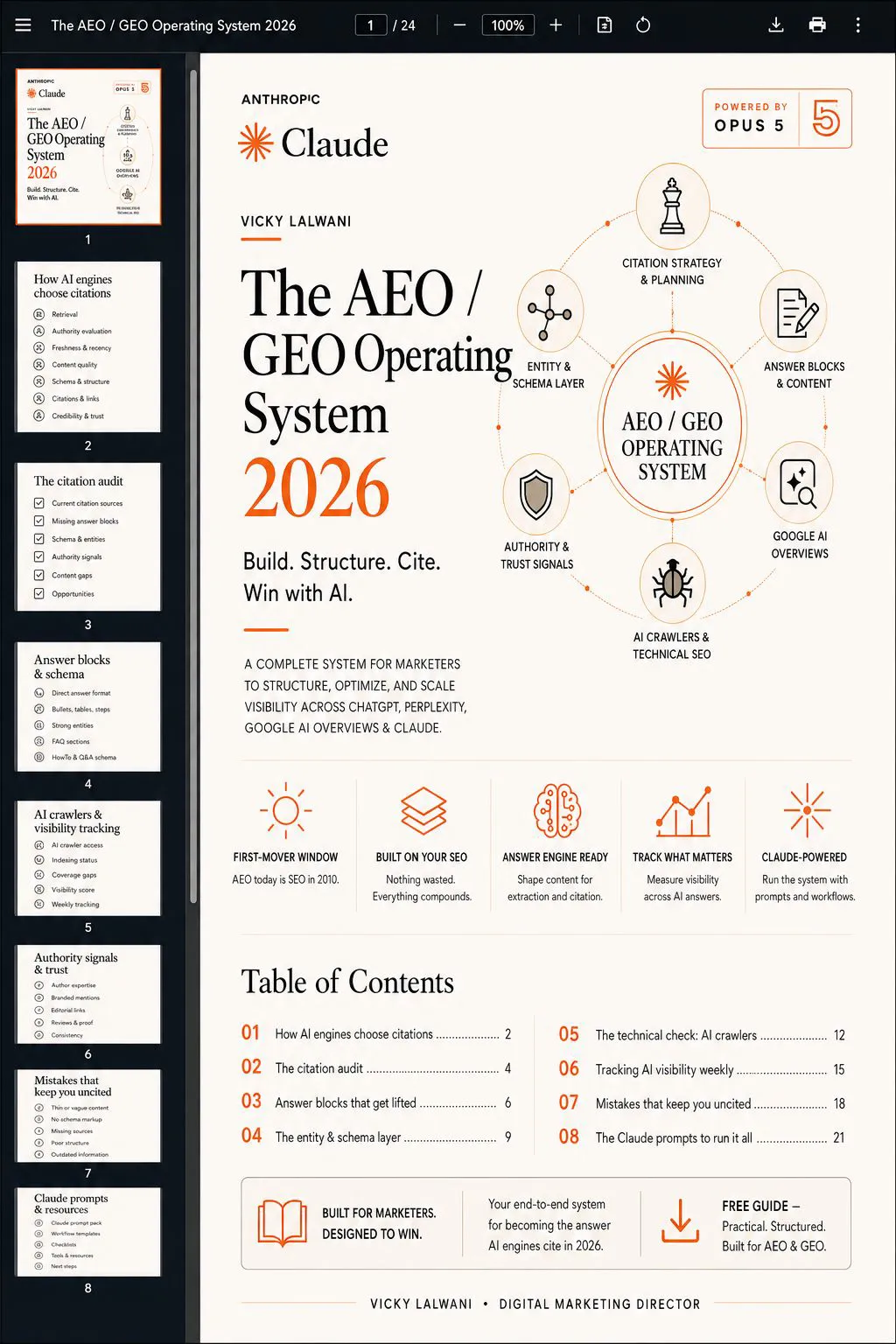
To get a SaaS product cited in AI answers, publish pages that state plainly what it does, who it suits, what it costs and what it integrates with, keep the same facts on G2, Capterra and partner marketplaces, and earn mentions in the lists and articles AI tools draw on. Then track a fixed set of buyer prompts every month.
US buyers now start here. In G2's April 2026 survey of 1,076 B2B software buyers, 51% said they start research with an AI chatbot more often than with Google, 69% said they had chosen a different vendor than planned because of a chatbot recommendation, and 85% said they think more highly of a vendor an AI answer includes. The GEO work, covered on GEO USA:
- Prompt tracking across ChatGPT, Perplexity, Gemini, Claude and Google's AI Overviews and AI Mode, recording who is named and which URLs are cited.
- Entity clarity: one consistent description of your category, buyer and what you replace, everywhere you appear.
- Citable pages: comparison, pricing, integration, security and use-case pages with plain answers near the top, tables and schema.
- Third-party proof: review volume, partner directories, analyst and trade coverage, and genuine expert commentary.
See how to get recommended by ChatGPT and the AI citation audit.

What do CAN-SPAM and state privacy laws mean for B2B SaaS?
CAN-SPAM applies to B2B email with no exception: every commercial email needs accurate headers, an honest subject line, your valid postal address and a working opt-out honored within 10 business days. State privacy laws add more. California's CCPA covers business contacts, while most other state laws exclude people acting in a commercial context.
The FTC's CAN-SPAM compliance guide says plainly that the law makes no exception for business-to-business email. The opt-out must keep working for at least 30 days after you send, you can't sell or transfer an opted-out address, and you can't contract away responsibility by hiring an agency or a sending platform. The FTC lists penalties of up to $53,088 for each email in violation.
| Rule | What it requires | What I check in a SaaS program |
|---|---|---|
| CAN-SPAM headers and subject | Accurate "From" and routing, subject lines that aren't misleading | Sender names match the company; no fake "Re:" threads |
| CAN-SPAM address and opt-out | Valid postal address; opt-out honored within 10 business days | Footer on every template; suppression synced across tools |
| CCPA (California) | B2B and employee data covered since January 1, 2023; honor opt-outs and Global Privacy Control | Privacy notice, "Do Not Sell or Share" link, GPC respected by tags |
| Other state laws (e.g. Virginia) | "Consumer" excludes people acting in a commercial or employment context | Which states you sell into, and whether any consumer data is involved |
| FTC Endorsement Guides | Disclose material connections; don't condition incentives on positive reviews | Affiliate, partner and customer advocacy posts disclosed |
On California: the California Attorney General's CCPA page confirms the B2B and employee exemptions expired on December 31, 2022, and that covered businesses must honor the Global Privacy Control as a valid opt-out of sale or sharing. "Sharing" covers cross-context behavioral advertising, which includes many retargeting and LinkedIn or Google audience setups. Most other comprehensive state laws follow Virginia's definition, which excludes a person acting in a commercial or employment context, but they can still apply to self-serve SaaS products sold to individuals.
For reviews and partner content, the FTC's Endorsement Guides FAQ says material connections must be disclosed clearly and that an incentive can't be conditioned on a positive review. This is not legal advice; I build these checks into the program and work with your counsel when a question needs one.
How I run B2B SaaS marketing for US companies
I start with your CRM data and positioning, fix tracking before spending more, then add channels in the order your US buyers use them, judging each one on SQLs, pipeline and CAC payback in USD. Reporting is weekly from the first month, with budget moving monthly toward what produces pipeline.
- Free strategy call in your US working day: product, motion, segments and the revenue plan.
- Funnel audit. Twelve months of leads, opportunities and closed-won deals by source, with stage definitions agreed with sales.
- Positioning check against how customers describe you in sales call recordings, G2 reviews and support tickets.
- Tracking fixes. GA4, Google Tag Manager, CRM stages sent back to Google Ads and LinkedIn, GPC respected. See analytics and tracking.
- Email compliance pass. Postal address, opt-out, suppression sync and sender accuracy on every sequence.
- Search first. Problem, category, competitor and integration campaigns via Google Ads USA.
- Shortlist presence. Comparison pages, G2 and Capterra profiles, GEO prompt tracking.
- Demand creation. LinkedIn Ads for target accounts and a weekly founder-led content system.
- Monthly reallocation toward the channels with the best cost per opportunity and payback.
I lead the strategy and I am your contact. A small team handles delivery, remotely from India, through your US working day.
Which SaaS metrics should a US company track?
A US SaaS company should track the metrics that tie spend in USD to revenue: MQL to SQL rate, cost per SQL, pipeline created per channel, win rate, CAC, CAC payback and net revenue retention. Report each by channel and segment, because SMB and enterprise buyers behave very differently and a blended number hides the losers.
| Metric | Formula | Why it matters |
|---|---|---|
| MQL to SQL rate | SQLs ÷ MQLs | Whether leads are worth sales time |
| Cost per SQL (USD) | Channel spend ÷ SQLs from that channel | A fair comparison across channels |
| Pipeline per channel | Sum of opportunity value first sourced by the channel | Where next quarter's revenue starts |
| Pipeline ROI | Pipeline created ÷ channel spend | Efficiency before deals close |
| Win rate | Closed-won ÷ opportunities closed | Quality of each source |
| CAC (USD) | Sales and marketing cost ÷ new customers | What a customer costs to win |
| CAC payback (months) | CAC ÷ (new MRR per customer × gross margin) | How long cash is tied up |
| PQL to paid | Paid accounts ÷ product-qualified leads | Whether usage signals predict revenue |
| Net revenue retention | (Starting MRR + expansion − contraction − churn) ÷ starting MRR | Whether customers grow |
I don't set targets from published SaaS benchmarks, because MQL to SQL and payback figures vary widely between sources. Good is your own trend: payback shortening, cost per SQL holding as spend rises, and each channel's win rate close to your average. A channel with cheap MQLs and a poor win rate costs more than it looks.
What does B2B SaaS marketing cost in the US, and what should you budget for?
B2B SaaS marketing costs in the US depend on your annual contract value in USD, how many opportunities you need each quarter, how competitive your category's search terms are and how narrow your LinkedIn audience is. There is no minimum ad budget. I quote after a free call, and ad spend stays in your own accounts.
- Contract value and margin. Higher ACVs can carry a higher cost per opportunity and longer payback.
- Search competition. Crowded US categories with funded rivals push click costs up; niche categories are cheaper.
- Audience size. Narrow buying groups on LinkedIn cost more per person reached.
- Sales cycle. Longer cycles mean funding pipeline months before revenue lands.
- Content builds. Comparison, integration, security and case-study pages.
- Tools. CRM, review-site plans, intent data and AI visibility tracking.
The first question is how many qualified opportunities you need per quarter and what you can afford to pay for each. The budget follows from that, not from what a competitor is rumored to spend.
Common B2B SaaS marketing mistakes in the US
The most common mistakes in US B2B SaaS marketing are bidding on form fills instead of SQLs, cold sequences without a postal address or working opt-out, retargeting that ignores Global Privacy Control, hidden pricing, gated content as the only offer and ignoring AI answers and review sites.
- Optimizing for any form fill. Smart bidding then finds students, job seekers and competitors.
- Cold email without CAN-SPAM basics. No postal address, no opt-out, or opt-outs that don't sync across tools.
- Ignoring GPC. California visitors' opt-out signals must reach your ad tags.
- Hidden pricing. Buyers and AI tools both look for price ranges and plan limits.
- Gating everything. Many buyers will read but won't fill a form; save the form for the demo.
- Incentivized reviews tied to stars. Against G2's rules and the FTC's guidance.
- No comparison pages. Competitors and review sites then tell your story for you.
- Founder content that stops after six weeks. The audience compounds only if the posting does.
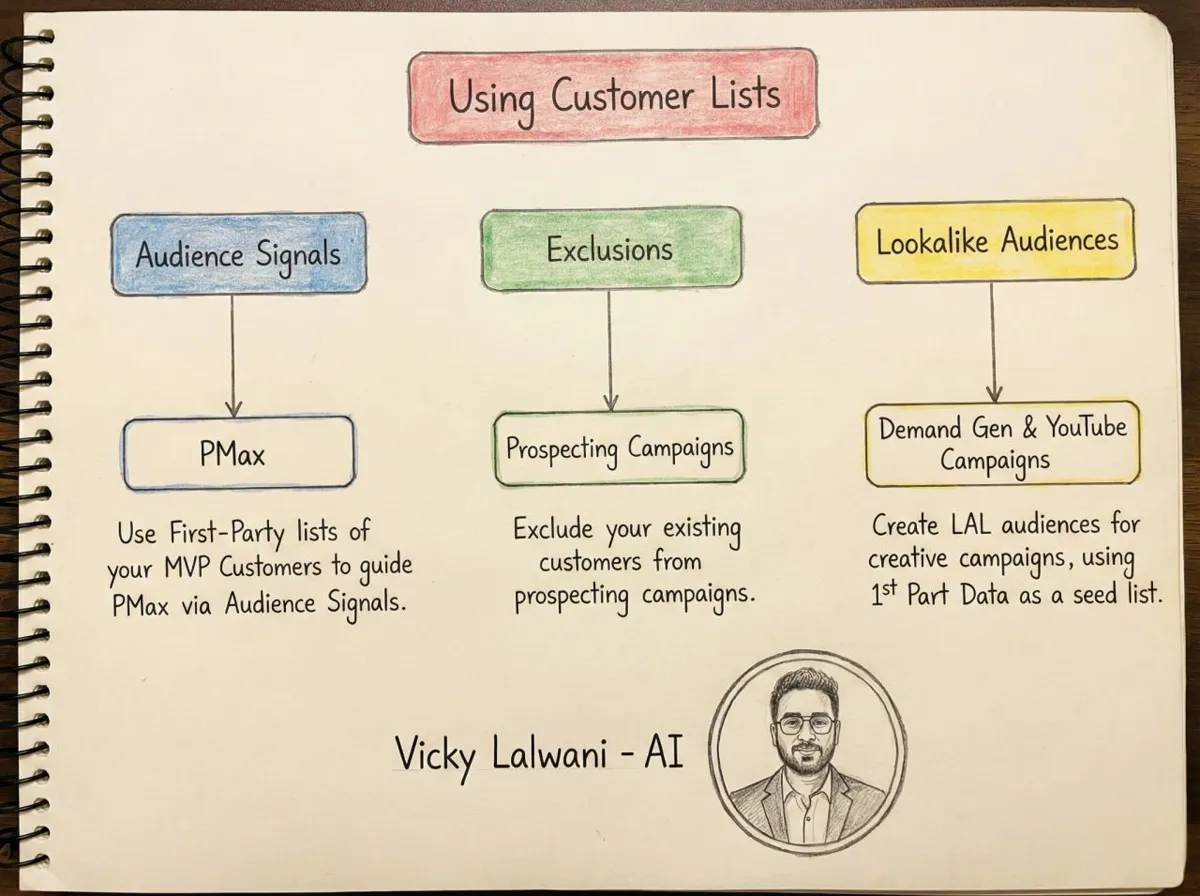
See the wasted spend guide and Customer Match guide.
What SaaS experience do I bring?
I lead marketing in-house for four AI and SaaS products today. Since February 2026 I have been Director of Digital Marketing at a multi-product AI SaaS company, running full-funnel marketing across the portfolio: strategy, PPC, SEO, GEO, social, content and automation.
I work with the CEO, the Head of AI/ML and a team of 15+ engineers on positioning, go-to-market and launches, and I built a Claude and MCP stack for reporting and optimization. I also run a 19-agent AI marketing stack with three people, roughly a 15-person agency's output on the repetitive work, and a content engine publishing 100+ articles and Google Business posts a month across 11+ sites.
I grew a founder's LinkedIn from 550 to about 9,000 followers into an inbound pipeline channel. Before the in-house role I was Head of Digital Marketing at a US agency for nearly three years, on a 35+ account book across the US, UK and Australia, managing $50K to $80K a month in budgets, with $1.3M+ a year in ad spend managed across the portfolio and 8+ years in digital marketing overall. I don't publish revenue or pipeline figures for the products I lead, and client and employer names stay private.