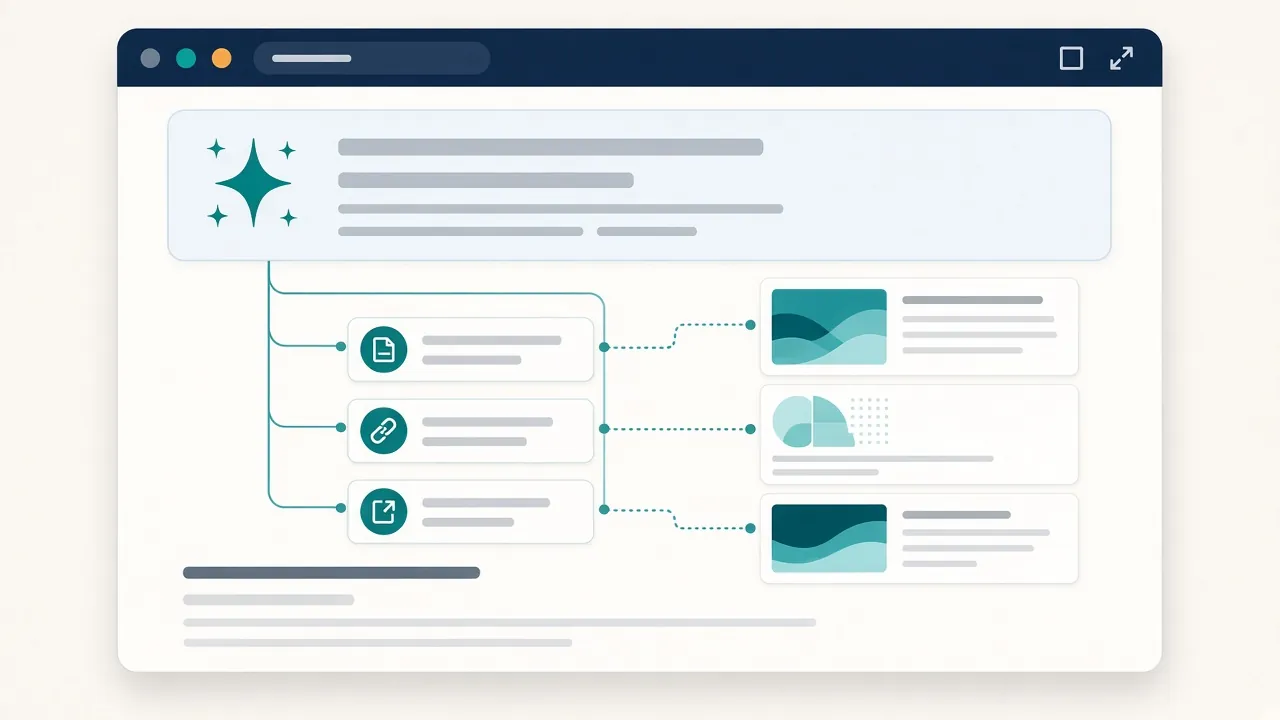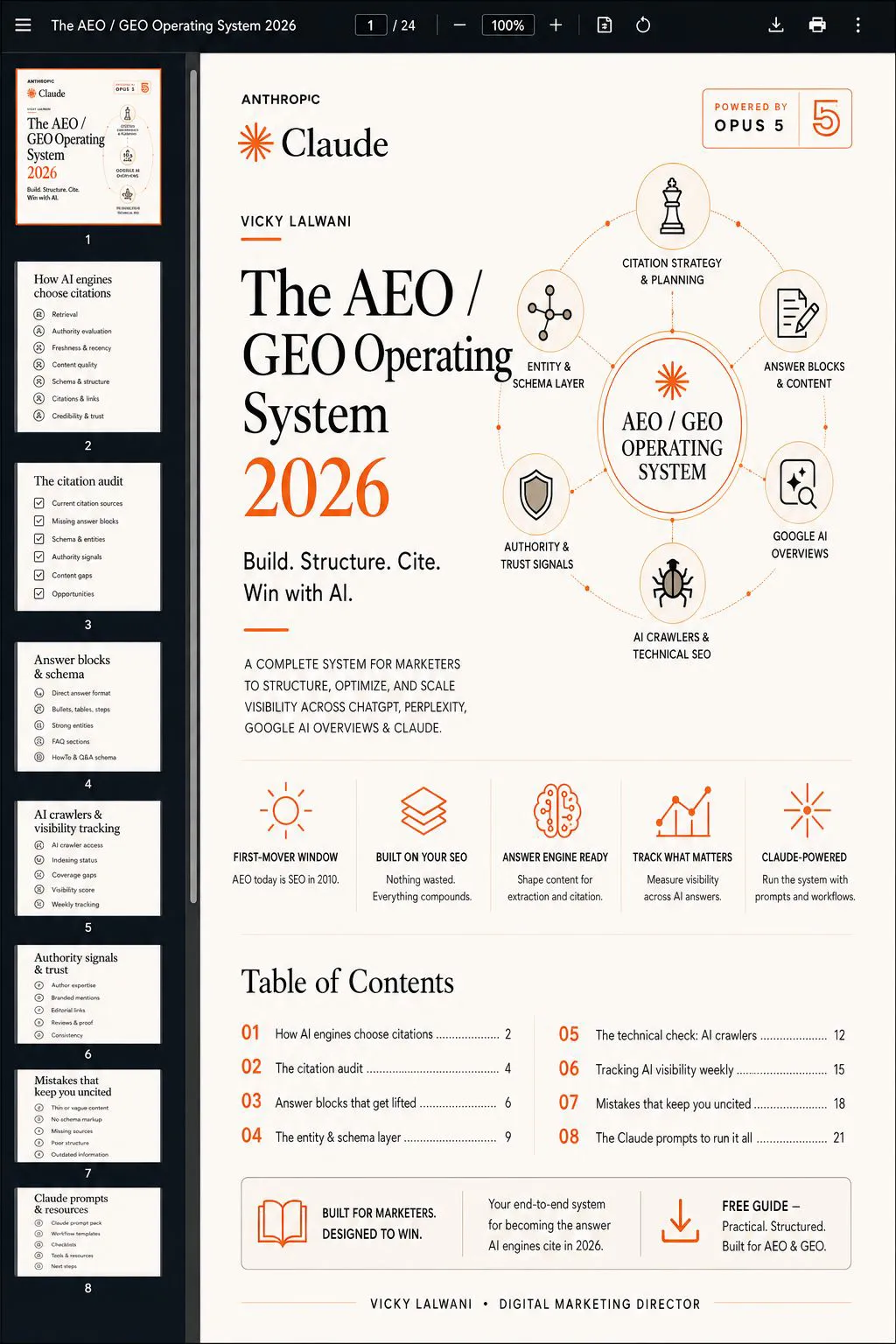
An AI citation audit tests the 10 highest-value buyer questions across ChatGPT, Perplexity and Google AI Overviews, then scores each result as cited, mentioned or absent. The gaps become a fix list, with the most valuable ones first, and the same question list is repeated weekly so results stay comparable.
An AI citation audit shows whether AI engines name you when buyers ask about your category. Take your 10 highest-value buyer questions, run each one on ChatGPT, Perplexity and Google AI Overviews, and score every result as cited, mentioned or absent. That score sheet becomes your baseline, and the gaps ranked by business value become your fix list.
Why rankings will not tell you this
A page can sit high in the organic results and still be missing from the answer above them. Rankings reward keywords, backlinks and domain authority. Citations tend to reward something narrower: a clear answer that can be lifted cleanly, named entities a machine can parse, schema that says what the page is, access for AI crawlers, and signals that the source is safe to cite.
So being rankable and being citable are separate jobs. You can do well at one and poorly at the other, and your normal rank tracker will not show the difference. That is why I run this audit before any rewriting. Without a baseline you have no way to show whether later changes helped.
How to run the audit
- List the questions. Use the 10 questions someone actually asks before buying, in their words. Pull them from sales calls, support tickets and search data, and skip the generic top-of-funnel ones.
- Run each on all three engines. Screenshot every result, because answers change and you will want a record.
- Read what won. For each question, note whether you appear, who does, and what the cited page did that yours did not.
- Score it. Cited, mentioned or absent. Laid out per question and per engine, this is your visibility map.
- Rank the gaps by business value. An absence on a question that leads to a sale matters more than three absences on curiosity questions. Fix the expensive ones first.
The third step is the one people rush, and it is where most of the value sits. Perplexity is especially useful here because its inline citations make it easy to see which pages it chose. Over 10 questions, you usually start to see a pattern: the same competitor pages, built the same way.
What the gaps usually mean
When I read an audit, I sort each absence into one of three causes, because each has a different fix.
The page cannot be reached or read
Check this first. An old robots.txt rule or a stray noindex tag can make good content invisible, and no amount of rewriting will help. Check named crawlers such as OAI-SearchBot, PerplexityBot and Googlebot. Then confirm that the content is present in the HTML and not dependent on JavaScript that bots may not execute, and that your key pages are within 2 to 3 clicks of the homepage. I have seen these problems on live sites, so I do this before writing a word.
The answer cannot be lifted
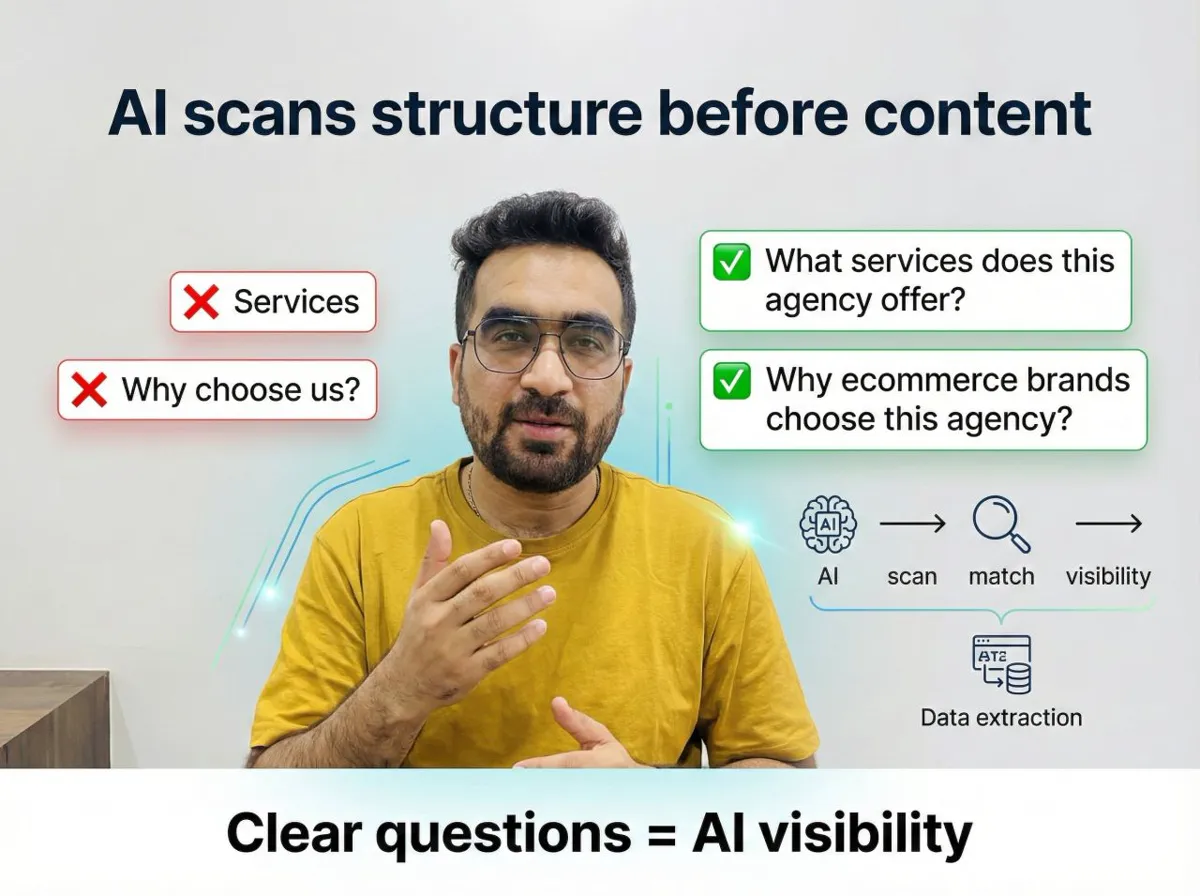
If the page opens with four paragraphs of context, the model has a reason to go elsewhere. The fix is an answer block: the question as a heading in the buyer's words, the direct answer in the next 2 to 3 sentences, then the evidence and nuance. My test is to read it out loud as if someone had asked me face to face. If it sounds like an introduction to an answer, it needs another pass.
The source does not look safe to cite
This covers entities, schema and authority. Name your brand, product and category explicitly, state how they relate, and use the same names across the site. Add FAQ, Organization and Author markup as a minimum, with Article or HowTo where they fit. Source your claims and show who wrote the page. Unsourced statistics and anonymous pages are a risk an engine has little reason to take.
If you would like a second opinion on which cause applies, this diagnosis is the first step of my GEO and AEO consulting.
Turn the audit into a weekly read
A one-off audit goes out of date quickly. AI answers shift, so keep the same prompt list and rerun it each week. For each prompt, log four things:
- Your status per engine: cited, mentioned or absent.
- Which competitors are named instead of you.
- Whether you are gaining or losing visibility week over week.
- Which of your own pages is being cited and which is being skipped.
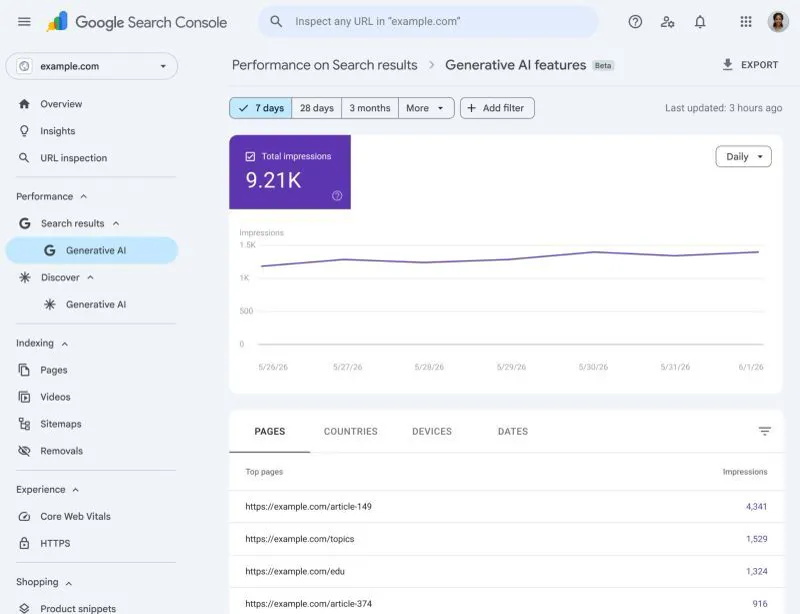
This takes about 15 minutes once the list exists. AI citation reporting is still immature compared with what we have for classic search, so for now I trust this manual read over any single dashboard. Its main benefit is speed: a team doing it weekly finds a drop within days, while a team checking quarterly finds out far later and has less idea what changed.
What not to expect
An audit is a diagnosis. It will not guarantee a citation, and nobody can honestly promise one, because engines change what they show and answers vary between runs. Treat a single result as a signal and look for patterns across several weeks.
Also keep your SEO work going. AEO is built on top of it, and the same clean structure and real authority help in both places. Start with your 10 questions this week, before you change anything on the site. The playbook has the prompts for each stage, including the answer-block rewrite and the page-level scoring, once you know where your gaps are.
Keep reading: What Is Generative Engine Optimization and How to Appear in Google AI Overview.
This article expands on my post on LinkedIn ↗.
FAQ
How many questions should an AI citation audit cover?
I start with the 10 highest-value questions buyers ask before they purchase. That is enough to show a pattern and small enough to repeat every week without a dedicated tool.
Which AI engines should I check?
At minimum, run the audit on ChatGPT, Perplexity and Google AI Overviews. Add other engines if your buyers use them, but keep the same question list so results stay comparable.
Can good content still fail to get cited?
Yes. A page can say the right things and still be skipped if the answer is buried, the page has no clear structure, nothing marks it up for machines, or a robots.txt or noindex setting keeps crawlers out.
Does an AI citation audit replace SEO?
No. AEO sits on top of SEO. Clean structure and real authority help in both traditional search and AI answers, so run the two together. Neither guarantees a citation or a ranking.