Google AI Mode SEO means optimizing for a search box that invites longer, conversational queries and links AI Overviews to deeper AI answers. Focus on pages that answer detailed questions, use accurate structured data, and build brand demand, because short generic queries increasingly resolve without a click.
Google has been changing how its search box works, and the direction matters more than any single feature. The box invites longer prompts, supports text, images, files and more, and offers a smoother path from AI Overviews into AI Mode. Feature details and rollout vary by country and device, so check Google's current announcements. The substance is what counts: the query box is becoming less of a question router and more of a conversation opener. For anyone planning Google AI Mode SEO in 2027, that deserves a calm, practical response rather than panic.
New: position steady but clicks down? How to tell lost rankings from clicks lost to AI answers.
New: for the paid side, see ads in Google AI Mode in Australia: what qualifies, the missing opt out and what to change in your account.
What changed in AI Mode and AI Overviews in November 2026
A lot moved in the two weeks after this article first went up. Each change below is dated, marked as announced or only observed, and linked to its source. Checked on 16 November 2026.
| Date | Change | Status | Source |
|---|---|---|---|
| 2 Nov 2026 | For many brand searches, AI Overviews moved into the right column on desktop, where knowledge panels usually sit. | Observed with US examples. No Google announcement. | PPC Land, 3 Nov |
| 10 Nov 2026 | The November 2026 core update started. It is a ranking update, not an AI feature, but it lands in the same weeks. | Confirmed by Google. | Google Search Status Dashboard |
| 12 Nov 2026 | Gemini 4 Hydrogen rolled out in Google Search for all users globally. Google calls it "the biggest model upgrade to Search yet" and says better query fan-out connects people to a broader range of links. Google's VP of Product for Search added on launch day that it is now the default model in AI Mode and is used for harder questions in AI Overviews. | Announced by Google. | Google blog, 12 Nov; PPC Land |
| 13 Nov 2026 | Some searchers saw no AI Mode tab in the search bar and no "Ask anything" follow-up box in AI Overviews. | Test only. No Google statement, and the reporter could not replicate it. | Search Engine Roundtable, 13 Nov |
| 14 Nov 2026 | A "start temporary thread" option appeared at the top of AI Mode for some users. | Test or early rollout. No Google statement. | Search Engine Roundtable, 16 Nov |
| 16 Nov 2026 | The AI Mode header no longer names the Gemini model in use. Gemini 4 Carbon, previously for Ultra subscribers, is now in AI Mode for Google AI Pro subscribers. | Google said the label change was intended and that it is working out how to bring back a model indicator. | Search Engine Roundtable, 16 Nov |
What to do about it
Nothing on your pages needs to change because of a new model. Google's AI features and your website page says there are no additional requirements to appear in AI Overviews or AI Mode, and no special schema.org structured data to add. The five shifts below still apply.
Reading your traffic is harder this month, because a core update and a new AI model arrived within two days of each other. r/SEO threads on 15 and 16 November asked whether anyone was seeing AI Overview or traffic changes since Hydrogen. Three habits help:
- Annotate 10 and 12 November in your reporting so later comparisons start from the right dates.
- Wait for the core update to finish. Google recommends waiting at least a full week after a core update completes before analyzing your site in Search Console (Google Search Central).
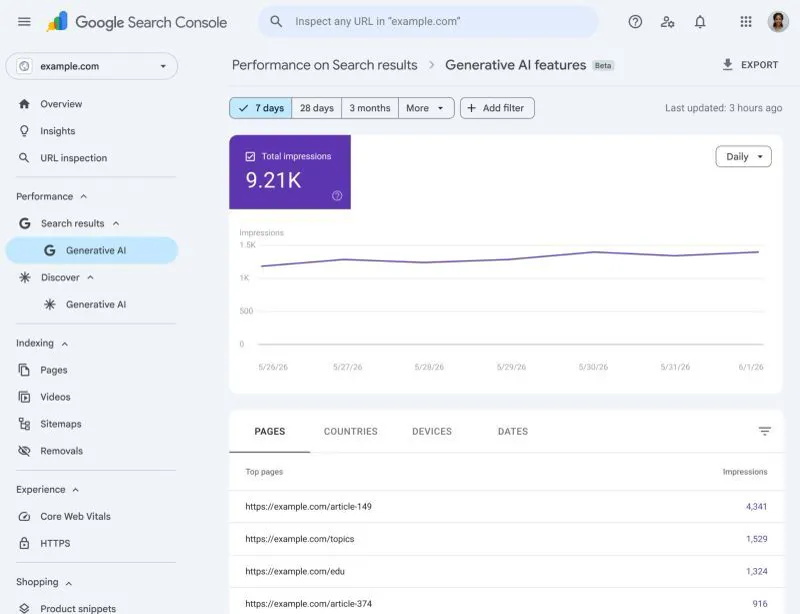
- Do not look for an AI Mode filter in Search Console. Google says traffic from AI features is included in the Performance report under the Web search type, not shown separately. To tell lost rankings from clicks lost to AI answers, use the method in website traffic dropped suddenly.
What Google AI Mode SEO means in plain terms
When people get used to typing longer, more contextual queries, a few things follow. Single-keyword searching may decline for some topics. Users may reach an AI answer without visiting a page. And those who do click through may arrive with more specific needs. This is not the end of SEO. It is the end of lazy SEO. Pages that only repeat a keyword and offer nothing new will struggle, while pages with real expertise, clear structure and specific answers have more ways to be useful, whether the visitor arrives from a classic result or from a conversational answer.
Five practical shifts for your SEO plan
1. Short-tail rankings matter, but convert differently
Someone typing a broad phrase like "best CRM" may get an AI-generated answer and never click. Keep tracking your core terms for visibility, but do not assume the same traffic value as before.
2. Long-tail traffic gets richer
People who type a long, detailed prompt usually know what they need. When they click, they are often closer to a decision. Measure conversion rate by query length in your analytics and Search Console data, rather than relying on assumptions.
3. Answer the deeper question, not the keyword
Instead of a thin page for "best CRM", write the page that answers a specific situation: the best CRM for a small B2B software team that dislikes aggressive upsells, for example. Build pages around real scenarios, constraints and trade-offs your buyers describe.
4. Use structured data accurately
Schema helps search systems understand who you are, what a page covers and how its parts relate. Use accurate markup for organization, articles, products, FAQs where appropriate and authorship. I would not claim that schema alone gets you into AI answers, but pages that are clear to machines are easier to use as sources.
5. Treat brand search as your moat
When results turn conversational, branded queries remain among the most reliable ways to get direct visits. Invest in being known: consistent entity information, genuine reviews, expert content and mentions on trusted sites.
A 90 day plan you can start with
- Collect the long questions. Pull them from sales calls, support emails, community threads and Search Console. Group them by topic.
- Audit your top pages. Check each one for a clear answer near the top, specific examples and honest limits.
- Write or rewrite five pages around detailed scenarios, with descriptive headings that mirror how people phrase the question.
- Fix structured data on key templates and validate it with Google's testing tools.
- Track results by query length, branded versus non-branded demand and AI feature impressions where Search Console reports them.
What not to do
Do not chase every new feature, rewrite your whole site overnight, or stuff pages with artificial long phrases. Google rewards usefulness, and readers can tell when a page was built for a bot. Also avoid trusting any guarantee about AI visibility. Nobody outside the platforms can promise it.
If you want help applying this to your own site, my generative engine optimization service covers content, schema and measurement. You can also find planning templates in my free guides.
This article expands on my post on LinkedIn ↗.
FAQ
Is short-tail SEO dead?
No. Short-tail rankings still matter for visibility, but they may convert worse if users are routed into AI answers. Balance them with content that answers detailed, longer questions.
Does schema markup guarantee inclusion in AI answers?
No. Structured data helps machines understand your pages, but nobody can guarantee inclusion. Use accurate markup as part of a wider quality and relevance strategy.
How do I find the long questions my buyers ask?
Use sales calls, support tickets, community threads and Search Console queries. Ask AI assistants the same questions and note which sources they cite.
What changed in Google AI Mode in November 2026?
Gemini 4 Hydrogen rolled out in Search for all users on 12 November 2026, and Google said it is the default model in AI Mode and handles harder questions in AI Overviews. Google also stopped naming the Gemini model in the AI Mode header, and tested removing the AI Mode tab for some users. The November 2026 core update started on 10 November.
Do I need to change my SEO for Gemini 4 Hydrogen?
Not specifically. Google says there are no additional requirements or special structured data to appear in AI Overviews or AI Mode. Keep writing pages that answer detailed questions well, and wait for the core update to finish before judging any traffic change.
Can I see AI Mode traffic separately in Search Console?
No. Google says traffic from AI features is included in the Performance report under the Web search type, together with other search traffic.