By Vicky Lalwani · Updated 12 November 2026
How do UK patients choose a private clinic?
Most UK patients who go private search the treatment and the town, such as "private physio Leeds", "private ADHD assessment adult" or "knee MRI Manchester", then shortlist from the Google map results, the ads and the first pages they see.
Before booking they check the clinician's registration, reviews, price, how soon they can be seen, and whether their insurer covers it.
There are two kinds of private patient, and the page has to serve both. Self-pay patients want the price, what it includes, and the first available appointment; they are often comparing you with two or three others on the same afternoon. Insured patients, with cover from providers such as Bupa, AXA Health, Aviva or Vitality, want to know whether you are recognised by their insurer, whether they need a GP referral, and whether there is an excess. If the page answers neither, they ring, and if the phone rings out, they book someone else.
Specialty changes the patient, too:
- Mental health and psychology. Patients often prefer to book online without a phone call, want to know whether video sessions are offered, and read clinician profiles closely.
- Musculoskeletal, spine and physiotherapy. Pain-led, local and urgent. Same-week availability and a clear self-referral route win.
- Paediatric services. Parents search on a phone in the evening and want to know about waiting times, assessments and school reports.
- Hearing. Often researched by an adult son or daughter; home visits, Saturday clinics and a phone that is answered still matter.
- Diagnostics and consultant clinics. Price, scan type, referral rules and location, and whether results go back to the patient's GP.
Directories such as Doctify and Top Doctors also send patients, and AI answers increasingly name clinics directly when someone asks "best private dermatologist in Bristol". I plan for all of these sources, but the core is the same: a page per treatment, a profile per site, and Search ads on the treatments that matter most to the clinic. Dental has its own page, dental marketing UK, so this page covers other private healthcare.
What rules apply to private clinic advertising in the UK?
UK clinic ads follow the CAP Code, which the ASA applies to ads, social posts and your own website: health claims need evidence, prescription-only medicines can't be advertised to the public, and cosmetic intervention ads can't be aimed at under-18s.
On top of that, clinics in England register with the CQC, and doctors, nurses and HCPC professionals follow their own regulator's advertising standards.
Section 12 of the CAP Code carries most of the health rules:
- Rule 12.1: objective claims need documentary evidence, and for health claims that usually means trials on people.
- Rule 12.2: ads must not discourage essential treatment for conditions that need medical supervision.
- Rule 12.12: prescription-only medicines and prescription-only treatments may not be advertised to the public.
- Rule 12.25: ads for cosmetic interventions must not be directed at under-18s, which the ASA applies to media where under-18s are 25% or more of the audience.
| Topic | The rule | Source |
|---|---|---|
| Prescription-only medicines | Not advertised to the public, including ads likely to lead to their use | Human Medicines Regulations 2012 reg 284; CAP 12.12 |
| Health claims | Objective claims need evidence, if relevant from trials on people | CAP 12.1 |
| Testimonials | Genuine and on file, and never the evidence for a claim | CAP 3.45, ASA guidance |
| Serious conditions | Don't discourage essential treatment that needs medical supervision | CAP 12.2 |
| Cosmetic interventions | Not directed at under-18s, or where they are 25% or more of the audience | CAP 12.25 |
| CQC rating | Latest rating shown on every website run by or for the provider | CQC Regulation 20A |
| Online pharmacies on Google | Registered with the GPhC and certified by Google; no prescription drugs in ads or landing pages | Google healthcare and medicines policy |
CQC registration and your rating
In England, providers carrying out regulated activities, such as treatment of disease, disorder or injury, surgical procedures, and diagnostic and screening procedures, register with the CQC. Wales, Scotland and Northern Ireland have their own regulators: Healthcare Inspectorate Wales, Healthcare Improvement Scotland and RQIA. Once the CQC has rated you, Regulation 20A requires your latest rating, and where to find the report, on every website maintained by you or for you, which I read as including landing pages built for ads. The CQC's own widget meets the requirement and updates itself, so I add it to every page template rather than only the homepage.
Professional regulators
Doctors offering cosmetic interventions follow the GMC's guidance, which asks them to be honest about their skills and qualifications, not to minimise risks or claim a treatment is risk free, and not to target children. Nurses follow paragraph 21.4 of the NMC Code: advertising must be accurate, responsible, ethical and not misleading, and must not exploit vulnerabilities. Physiotherapists, practitioner psychologists, speech and language therapists, hearing aid dispensers and other HCPC registrants follow the HCPC standards of conduct, performance and ethics, which require promotional activity to be accurate and not likely to mislead. Counsellors and psychotherapists aren't regulated by law; many belong to a register accredited by the Professional Standards Authority, such as BACP or UKCP, and follow its code. I write team and treatment pages that state each clinician's registration accurately, because patients check it.
Can a UK clinic advertise Botox, weight-loss injections or other prescription treatments?
Not the medicine itself. Regulation 284 of the Human Medicines Regulations 2012 and CAP rule 12.12 ban advertising prescription-only medicines to the public, including ads likely to lead to their use. A clinic can advertise a consultation, for lines and wrinkles or weight management, if the ad doesn't name the medicine or refer to it indirectly.
Regulation 284 is the law the MHRA enforces, and it reaches further than many clinics expect: a page titled "Botox Leeds" or an ad for "weight-loss jabs" is advertising a prescription-only medicine, even if the word "prescription" never appears. The ASA's guidance on advertising Botox says clinics can advertise consultations but must not mention the product or make indirect references to it, and that the homepage should advertise the consultation rather than the treatment.
That shapes keywords as well as copy. People still search "Botox near me" and brand names of weight-loss medicines, and you can't follow them with a landing page that names the product. I build campaigns around the consultation ("anti-wrinkle consultation", "medical weight management clinic"), keep product names off landing pages, and let the clinician discuss treatment options in the consultation, where it belongs.
Google adds its own layer for the UK. Its healthcare and medicines policy lets online pharmacies advertise only if they are registered with the General Pharmaceutical Council and certified by Google, requires telemedicine providers to be certified by LegitScript, and says advertisers can't promote prescription drugs in their ads and landing pages. The government's October 2026 proposals on higher-risk cosmetic procedures are out for consultation until 13 January 2027 and are not yet law; I watch them, but I don't write copy to rules that don't exist yet.
Can UK clinics use patient testimonials and reviews?
Yes, with limits. Testimonials must be genuine and you must hold documentary evidence of that under CAP rule 3.45. The ASA says testimonials alone don't substantiate a claim, so a patient can't say a treatment works where you couldn't say it yourself. Reviews must be collected fairly: asking only satisfied patients for reviews can break consumer law and Google's policy.
In practice I treat testimonials as experience, not evidence. "The clinician explained everything and I was seen within a week" is fine. "This cured my back pain" is a health claim, and if you couldn't substantiate it in your own words, you can't use it through a patient's. GMC guidance on cosmetic interventions also asks doctors for patients' explicit consent before publishing their photos, and before-and-after images must be genuine and representative.
Reviews have their own rules. The CMA's guidance on fake reviews, issued under the Digital Markets, Competition and Consumers Act, says suppressing genuine negative reviews, or cherry-picking by encouraging only satisfied customers to leave them, may infringe the law. Google's review policy separately bans incentives and selective requests. So the review request goes to every patient after their appointment, in the same words, with no clinical detail and no gate that sends unhappy patients somewhere else.

What do UK GDPR and PECR mean for clinic tracking?
They mean advertising pixels on a clinic website need consent first, and health information inferred from browsing can be special category data. The ICO says tracking pixels used for advertising are storage and access technologies that need consent, and that where advertising involves special category data, such as health, explicit consent is needed.
Many clinic sites are not set up this way.
The ICO's guidance on special category data explains that inferring health information, for example from someone browsing pages about a condition, can bring the data into the special category. For a clinic, a page address like /private-adhd-assessment sent to Meta alongside a cookie ID is exactly that. Google's personalised advertising policy also treats health as a sensitive category, so health advertisers can't use their own remarketing or customer lists for those ads. The practical brief I work to:
- Consent before advertising tags. A consent banner that genuinely blocks Google Ads and Meta tags until the visitor agrees, with "reject" as easy as "accept".
- No pixels on condition pages by default. Or, at minimum, no page paths or titles that reveal a condition passed to the platforms.
- One neutral conversion. "booking_confirmed" on the confirmation, with no treatment, condition or form answers attached.
- No patient lists uploaded. Customer Match and custom audiences built from patient records are off the table for health ads in any case.
- Consent Mode set up properly. So tags respect each visitor's choice and Google can model the conversions it can't observe.
- The rest measured in your own systems. Show rate, revenue and insurer mix come from the practice management system and are joined in a report.
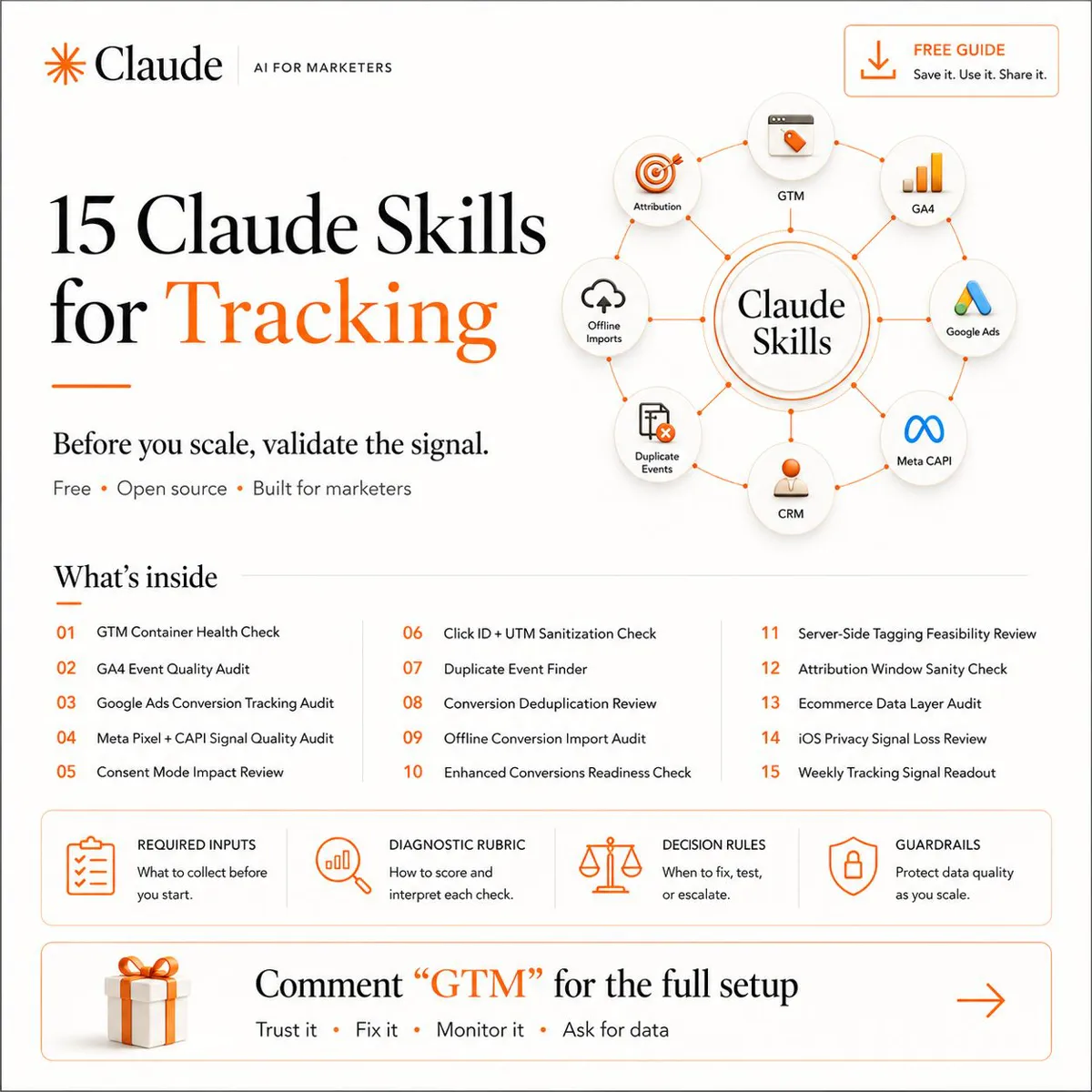
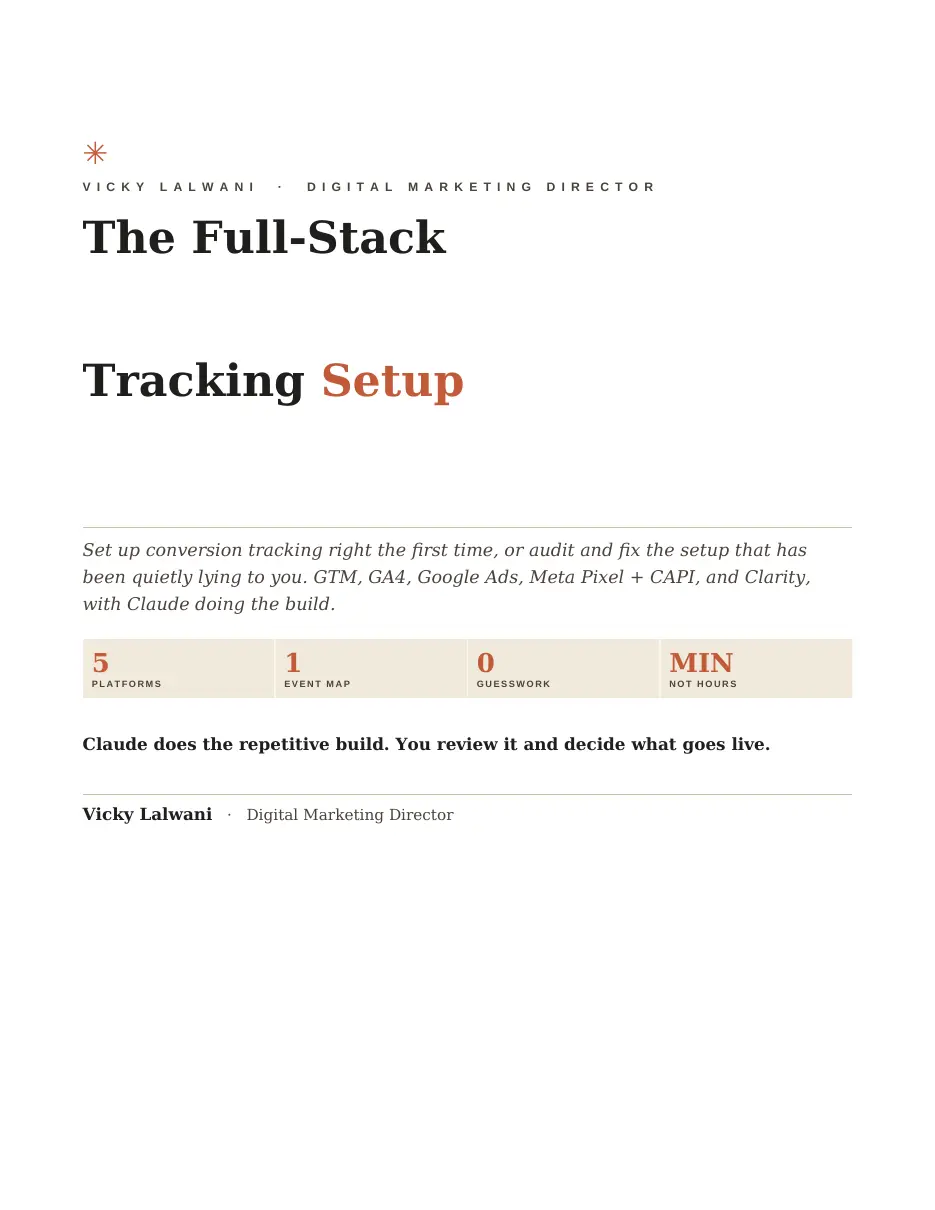
The method is on analytics and tracking and in the full-stack tracking setup guide. This is a marketing standard, not legal advice; for your own data protection position, speak to your DPO or adviser.
Which channels work best for UK private clinics?
For most UK private clinics, Google Search ads and Google Business Profile bring the first booked patients, because they meet people searching a treatment and a town. Treatment pages and AI answers lower the cost over time, Performance Max adds reach once tracking is clean, and Meta, email and SMS suit awareness and reactivation.
Google Search ads
One campaign per treatment line, each with its own landing page and its own budget, so you can see that private ADHD assessments cost one thing and follow-up therapy another. Location targeting follows your real catchment: a clinic in Harrogate doesn't need clicks from Bradford. Negatives go in on day one: NHS, free, jobs, salary, course, training, and "near me" variants for towns you don't serve. Ad copy names the treatment, the clinician type, the price or "from" with what it includes, and the next available slot.
Google Business Profile and Maps
One profile per site, with the right primary category, every treatment listed, real photos, accurate hours including evenings and Saturdays, and a booking link to that site's booking page. Most "near me" patients book from the map, and reviews there drive both ranking and clicks.
SEO treatment and clinician pages
One page per treatment, condition you treat, clinician and site. Each page says who it is for, what happens at the appointment, the self-pay price and insurer position, the clinician's registration, the CQC rating, and how to book. That structure is what ranks for "private" searches, and it is what ChatGPT and Google's AI Overviews quote when someone asks which clinic to use. The method is on GEO UK.
Performance Max
Useful for extra reach across Maps, YouTube and Display once bookings are tracked properly, with brand terms excluded so it doesn't take credit for patients already searching your name. It optimises to whatever you count, so it comes after the tracking fix.
Meta, directories, email and SMS
Meta suits awareness for a new site or clinician, open evenings and reactivation, inside the CAP Code and the consent limits above, and never aimed at under-18s for cosmetic interventions. Directories such as Doctify and Top Doctors should be tracked as their own source. Email and SMS recalls bring past patients back, with PECR consent and no clinical detail in the message.
What should a UK clinic measure?
Measure cost per booked new patient by treatment and site, in GBP, then show rate and the value of a new patient. Those three tell you whether to spend more. Clicks and enquiries are early signals only; good means a cost per booked patient below your break-even that holds steady as budget rises.
| KPI | Formula | What good looks like |
|---|---|---|
| Cost per booked patient | Ad spend ÷ booked new patients | Below break-even and stable as budget grows |
| Cost per attended patient | Ad spend ÷ new patients who attended | Close to cost per booked; a gap means no-shows |
| Booking rate | Booked new patients ÷ new-patient enquiries | Rising after page and phone fixes |
| Show rate | Attended first appointments ÷ booked first appointments | Steady; dips point to reminders or long lead times |
| Break-even cost per patient | Average revenue per new patient over a set period × margin | The ceiling you bid against, agreed with the owner |
| Self-pay vs insured mix | Insured new patients ÷ all new patients | Matches the mix the clinic wants; insured patients often need a different page |
| Missed-call rate | Unanswered calls ÷ calls in opening hours | Low; every missed call from an ad is paid for |
| Consent rate | Visitors who accept advertising cookies ÷ all visitors | Tracked, so you know how much of the data is modelled |
A worked example with round numbers: a private physiotherapy line spends £2,000 in a month and books 50 new patients, so cost per booked patient is £40. If 45 attend, cost per attended patient is about £44. If a new patient brings £300 over a course of treatment and the clinic keeps 40%, break-even is £120, so there is room to spend more on that line while the cost per patient holds. These are illustrative numbers, not results.
I report weekly, by treatment and site. Weekly matters in private healthcare: a clinician on leave, a bank holiday or a full diary changes the right budget within days, and a monthly report finds it too late.
What does healthcare marketing cost in the UK, and what should you budget?
Set the budget by what a new patient is worth and the demand in your towns, not a fixed figure. The main cost drivers are click prices for your treatments in your area, page conversion, the number of sites and treatment lines, clinician capacity, and how quickly someone answers calls and forms.
- Competition. A London clinic competes with hospital groups, national chains and directories; a clinic in a market town may compete with a handful of others.
- Page conversion. Showing the price, what it includes, the insurer position and the next available slot usually does more than any bid change.
- Response time. Paid enquiries that wait until tomorrow often book elsewhere, which is why I wrote about after-hours lead response.
- Treatment lines and sites. Each needs enough budget to gather data; ten thin campaigns learn less than three well-funded ones.
- Capacity. The budget should follow the diary, up when a new clinician starts and down when the books are full.
- Consent rates. Lower consent means more modelled data and slower learning, which affects how fast campaigns settle.
- Set-up work. Tracking, consent, landing pages and profiles are the up-front effort; ad spend is what scales after.
There is no minimum ad budget. Ad spend is paid in GBP directly to Google or Meta from your own account, and I quote for management after a free call. I usually start with the one to three treatment lines with capacity and the highest value per patient, prove the cost per booked patient there, then widen.
How I run a healthcare engagement for a UK clinic
I map the rules, fix consent and tracking, build treatment-line campaigns and pages, then report weekly in GBP on cost per booked patient. I lead the strategy and I am your contact; a small team handles delivery, remotely from India, through your UK morning and afternoon.
The order matters because every decision after week one depends on trusting the booking data.
- Free call. Treatments, sites, clinician capacity, self-pay and insured mix, and what a new patient is worth.
- Rules map. CQC status and rating, each clinician's regulator, any prescription-only treatments, and Google's certification needs.
- Audit. Ads, search terms, Google Business Profiles, landing pages, booking flow, consent banner and tracking, with a written fix list.
- Consent and tracking rebuild. Advertising tags behind consent, one neutral booking event, nothing that reveals a condition sent to the platforms.
- Pages and profiles. A page per treatment with price, insurer position, clinician registration and CQC rating; a complete profile per site; copy checked against the CAP Code.
- Launch. Search campaigns by treatment and catchment, negatives in place, budgets set against the diary.
- Weekly optimisation. Search terms, budgets between treatments, ads and the booking rate on each page.
- Monthly growth. New treatment pages, GEO, review requests to every patient, recalls and reactivation.
Common mistakes in UK private clinic marketing
The most common are naming a prescription-only medicine in ads or page titles, using testimonials as proof that a treatment works, loading Meta and Google tags before consent, and counting every call and form as a patient. Each one either wastes budget or creates a compliance problem, and all of them can be fixed before the budget goes up.
- Product names in ads and URLs. "Botox Manchester" pages and "weight-loss jab" ads break regulation 284 and CAP 12.12.
- Testimonials doing the claiming. Patient quotes that say a treatment cures something you couldn't claim yourself.
- CQC rating only on the homepage. Regulation 20A covers every website run by or for you, including ad landing pages.
- Tags before consent. Pixels firing on page load, with condition pages and form answers passed to Meta.
- No NHS negatives. Private clinics paying for searches from people looking for NHS services.
- Ads to the homepage. An insured patient looking for a private knee consultation should land on that page.
- Review gating. Sending only happy patients to Google, which the CMA's guidance and Google's policy both rule out.
- Monthly reporting only. A month of spend on a clinician who was on leave.
More on the paid side in finding wasted Google Ads spend.
What healthcare work have I done?
Healthcare is a core vertical for me. I have run patient acquisition for mental health, spine, therapy, paediatric and hearing practices, more than eight practices in all, on Google Ads, Performance Max and Google Business Profile, with tighter targeting, conversion tracking and landing-page work, always measured in booked patients.
At one mental-health practice, 206 patients booked in a single month, week by week 46, 57, 43 and 60, and across the clinic accounts more than 200 patients a month were booking. The lowest week's cost per booked patient is on the proof card below. I also rebuilt a dental practice's acquisition engine with paid search, AI-powered booking and lifecycle automation: revenue up 57% in 90 days, no-shows down 59%, and 143 appointments booked by AI in the first 90 days.
That sits inside 8+ years in digital marketing, including nearly three years as Head of Digital Marketing for a US agency running a 35+ account book across the US, UK and Australia, where healthcare and dental clinics were among the verticals. Client names stay private.
What I haven't done: I don't list private GP, hospital, online pharmacy or telemedicine accounts in my past work, and aesthetics clinics offering injectables are not in my list either; the closest is skincare studios and salons. I know the CAP Code, MHRA and Google rules for those services and will tell you on the call where my experience stops.