ChatGPT vs Claude vs Gemini vs Grok came out almost level on basic marketing tasks in my test. All four sorted search terms and did the maths correctly. The real differences were invented claims, source quality and character limits, so check facts and limits whichever you use.
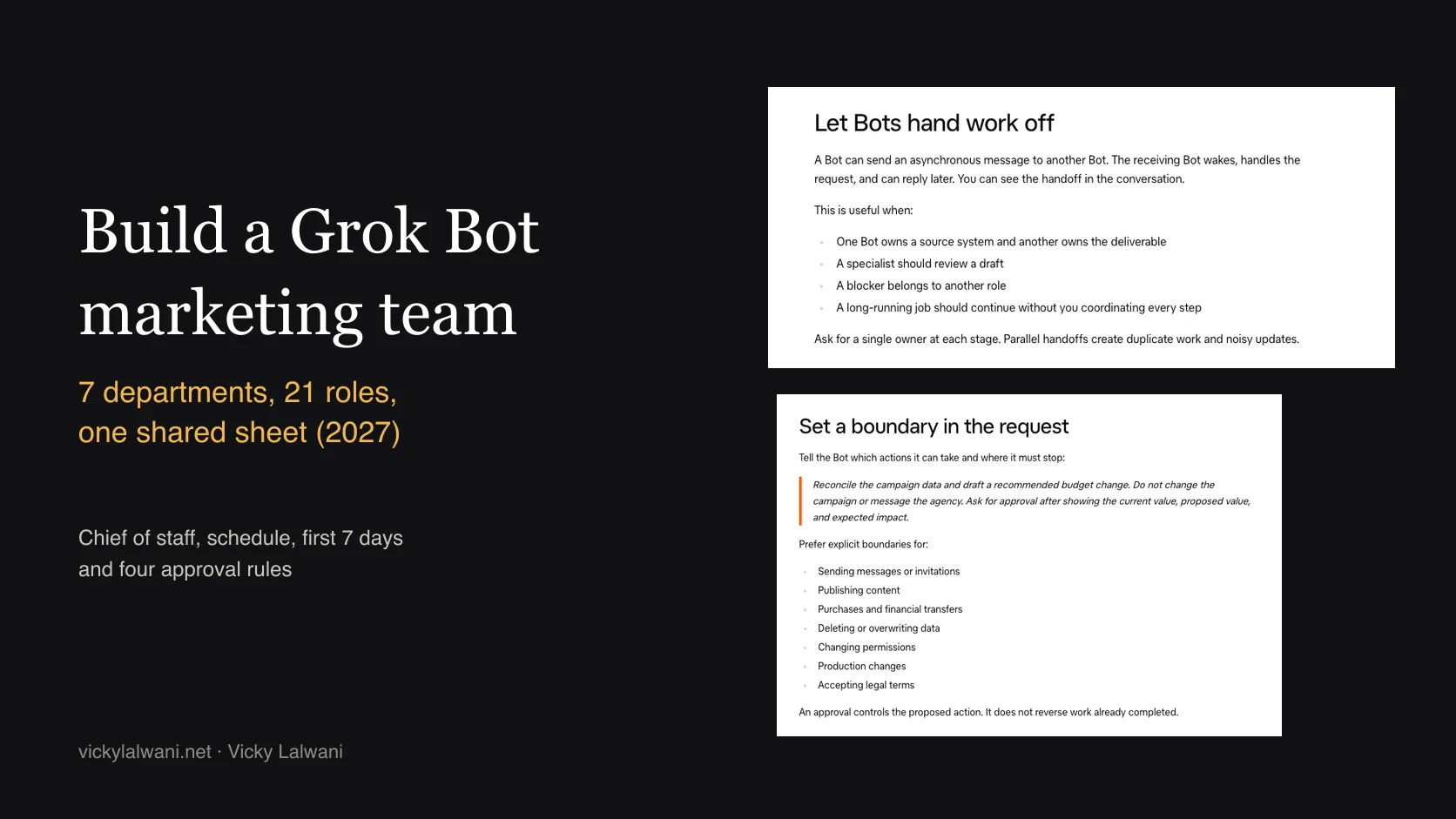
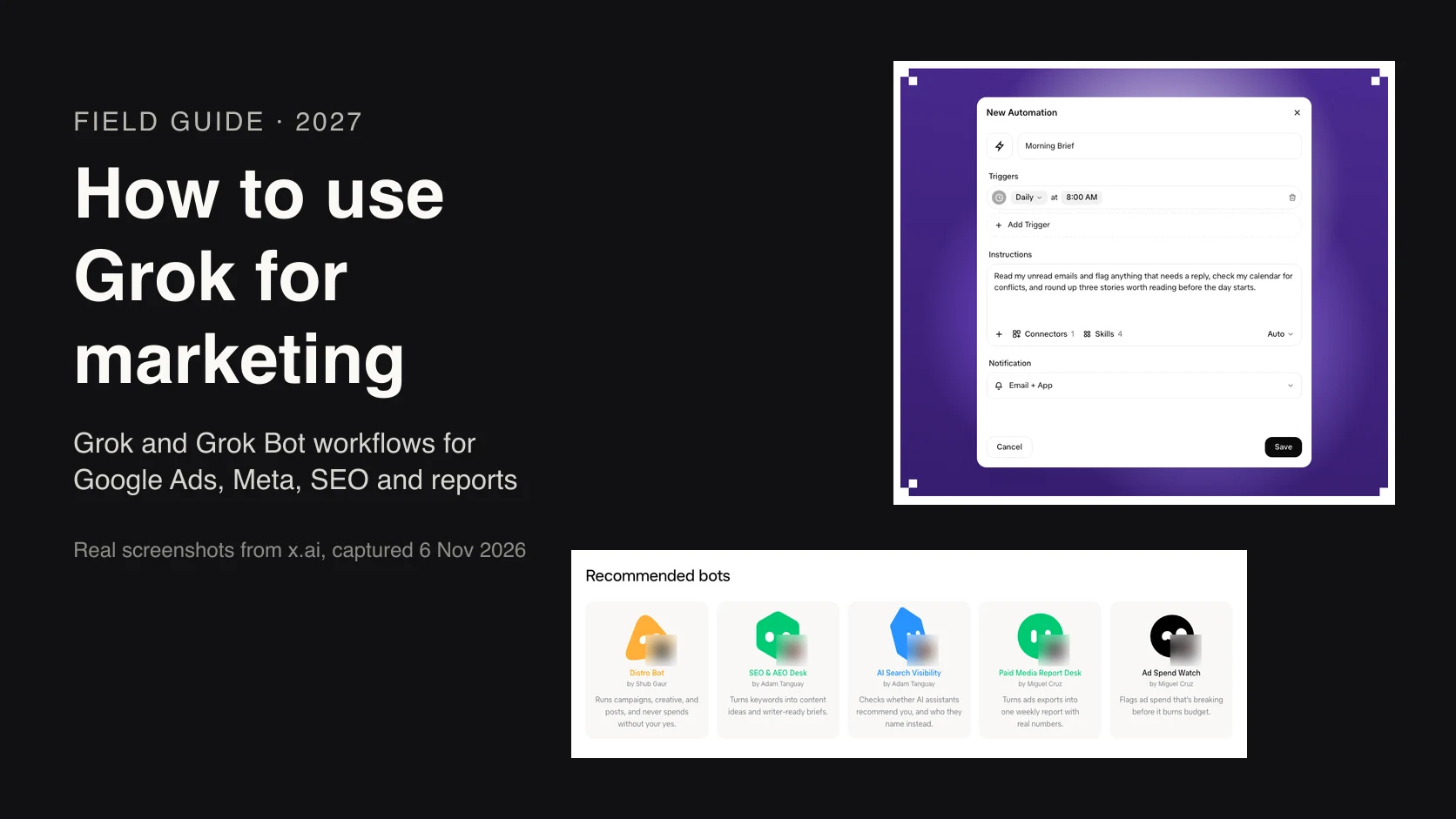
New: for Grok on its own, with workflows and prompts, see how to use Grok for marketing.
Short answer: ChatGPT vs Claude vs Gemini vs Grok was closer than most comparison posts suggest. All four handled search terms and campaign maths correctly. They differed on invented claims, source quality and character limits, so choose by the job and keep a human check on anything that goes live.
TL;DR: the scorecard
| Check | ChatGPT | Claude | Gemini | Grok |
|---|---|---|---|---|
| Ad and meta text within limits (9 items) | 9/9 | 9/9 | 9/9 | 7/9 |
| Search terms labelled correctly (12) | 12/12 | 12/12 | 12/12 | 12/12 |
| Responsive search ad limits correct, with official link | Yes | Yes | Yes | Yes |
| Cost per conversion and scaling choice correct | Yes | Yes | Yes | Yes |
| Business claims it added that nobody supplied | 1 | 4 | 7 | 2 |
| Recent article links that loaded (5) | 5/5 | 5/5 | 5/5 | 5/5 |
| Links from Google itself (5) | 0 | 3 | 0 | 0 |
Want this applied to your own accounts? See how I use these tools in ChatGPT marketing and Claude consulting.
Why I ran my own test
Most comparisons of these tools are opinions, and many come from companies selling something built on one of them. Their rankings often disagree, and they rarely show the prompt. So on 3 November 2026 I gave all four the same tasks and checked the answers against things I could measure: character counts, a fixed answer key, Google's own help page and the live links.
How the test worked
Each tool got the same two prompts in a new chat. The first covered ad copy, meta tags, search terms, a Google Ads fact and campaign maths. The second asked for five articles about Google Ads changes from the last 30 days, with exact links.
| Tool | What I tested |
|---|---|
| ChatGPT | Plus plan, Medium thinking |
| Claude | Max plan, Opus 5.5, High effort |
| Gemini | Pro plan, 4 Argon |
| Grok | Free version on X, Fast mode |
Read this before you quote the result: it's one run per tool on one day, and the plans weren't equal. Grok was on a free version and the others were paid. Claude also helped me run and write up this test, so I have an obvious reason to be careful. That's why the scores come from counts you can check, not my taste. Answers can change between runs.
Round 1: ad copy, SEO and PPC tasks
Character limits
Google's responsive search ad rules allow 30 characters per headline and 90 per description. I also set 60 characters for the meta title and 155 for the meta description.
ChatGPT, Claude and Gemini stayed inside every limit. Grok's headlines and meta tags were fine, but its descriptions came to 93 and 94 characters, so Google Ads wouldn't accept them as written. Claude was the only one whose answer said it had measured its own counts.
The claims they made up
This was the most useful result. My brief said only "emergency plumber in Sydney". It gave no opening hours, prices, licences or response times. Here's what each tool added anyway:
| Tool | Claims nobody supplied |
|---|---|
| ChatGPT | 24/7 |
| Grok | 24/7, free consultation |
| Claude | 24/7, licensed, insured, upfront pricing |
| Gemini | 24/7, 60-minute response, $0 callout, licensed, upfront pricing, same-day service, certified experts |
I counted factual promises, not general words like "fast" or "trusted". A "$0 callout" or "60-minute response" reads well, but if it isn't true, you've just published a false promise under your brand. Give the tool your real facts, and tell it to use nothing else.
Search terms and maths
All four scored 12 out of 12 on sorting search terms. They kept "24 hour plumber parramatta", which needs knowing Parramatta is in Sydney, and rejected "plumber melbourne" and the job-seeker terms. All four also worked out costs of $40, $20 and $60 per conversion, and picked Campaign B to scale first.
ChatGPT was the only one that added a caution about assuming similar lead quality and conversion value. It's a small note, but it's what a good PPC manager would say, because the cheapest conversion isn't always the most valuable one.
Round 2: can they find recent, real sources?
I opened all 20 links. Every one loaded, and every one matched the requested 30 days. That's better than I expected. The difference was where the links came from:
| Tool | Where its five links came from | Exact date match |
|---|---|---|
| ChatGPT | Search Engine Land (5) | 5/5 |
| Claude | Google's blog (3), PPC Land (1), an agency blog (1) | 4/5, with one page showing only the month |
| Gemini | Search Engine Land (4), Keyword Ninja (1) | 4/5, one a day off |
| Grok | Smaller agency and marketing blogs (5) | 4/5, one a day off |
If you're checking a policy or product change, go to the source: Google's own announcement beats a summary of it. Claude was the only one that gave Google's own posts. Grok's answer was the most varied but leaned on small sites I'd want to verify before quoting.
Which AI should you use for each marketing job?
| Job | Start with | Why, from this test |
|---|---|---|
| Ad copy from a thin brief | ChatGPT | Fewest added claims |
| Ad copy with strict limits | Claude, ChatGPT or Gemini | All stayed inside every limit |
| Checking a Google Ads change | Claude | Most links to Google itself |
| Trade news roundup | ChatGPT or Gemini | Leaned on an established PPC publication |
| Search term triage | Any of the four | All scored 12/12 |
| Campaign maths | Any, then check | All correct on simple numbers |
I haven't scored Grok on live X data, or Gemini on Google Workspace, because this test didn't cover them. Those are the reasons many people choose those tools, so test them on your own work.
What marketers are saying on X
I looked for opinions from people doing this work. Most were vendors or consultants with something to sell, so read these as signals rather than proof.
- Usage is shifting. Similarweb's traffic tracker, posted on 7 September 2026, showed ChatGPT falling from 73.3% to 55.5% of generative AI website traffic in a year. Gemini rose from 12.9% to 25.6%, Claude from 1.9% to 9.3%, and Grok moved from 2.6% to 2.4%. That measures website visits only, not quality or app use.
- Don't check just one engine. SEO marketer Alex Groberman shared figures suggesting most cited websites appeared in only one of ChatGPT, Claude, Gemini and Perplexity. The takeaway is fair even if you treat the exact numbers with caution, as he sells related services.
- Each engine may remember differently. Cody Schneider described a test where Grok and Perplexity picked up pages fast and dropped them fast, while ChatGPT and Claude were slower but held on for weeks. It's one second-hand experiment using self-promotional pages, which I wouldn't copy, but it's a useful idea to test.
Run this test on your own business
A ranking from someone else's account tells you less than 30 minutes with your own work. Here's the simple version:
- Use a real brief. Give each tool a brief for one of your services, with your true facts and limits.
- Build an answer key first. Label 20 of your real search terms yourself before you run the prompt.
- Measure the output. Count characters, mark added claims, and open every link.
- Repeat it. Run each prompt three times, because one good answer can be luck.
- Add one rule. Tell each tool: "Use only the facts I provide. If something is missing, ask." Then rerun and compare the claims.
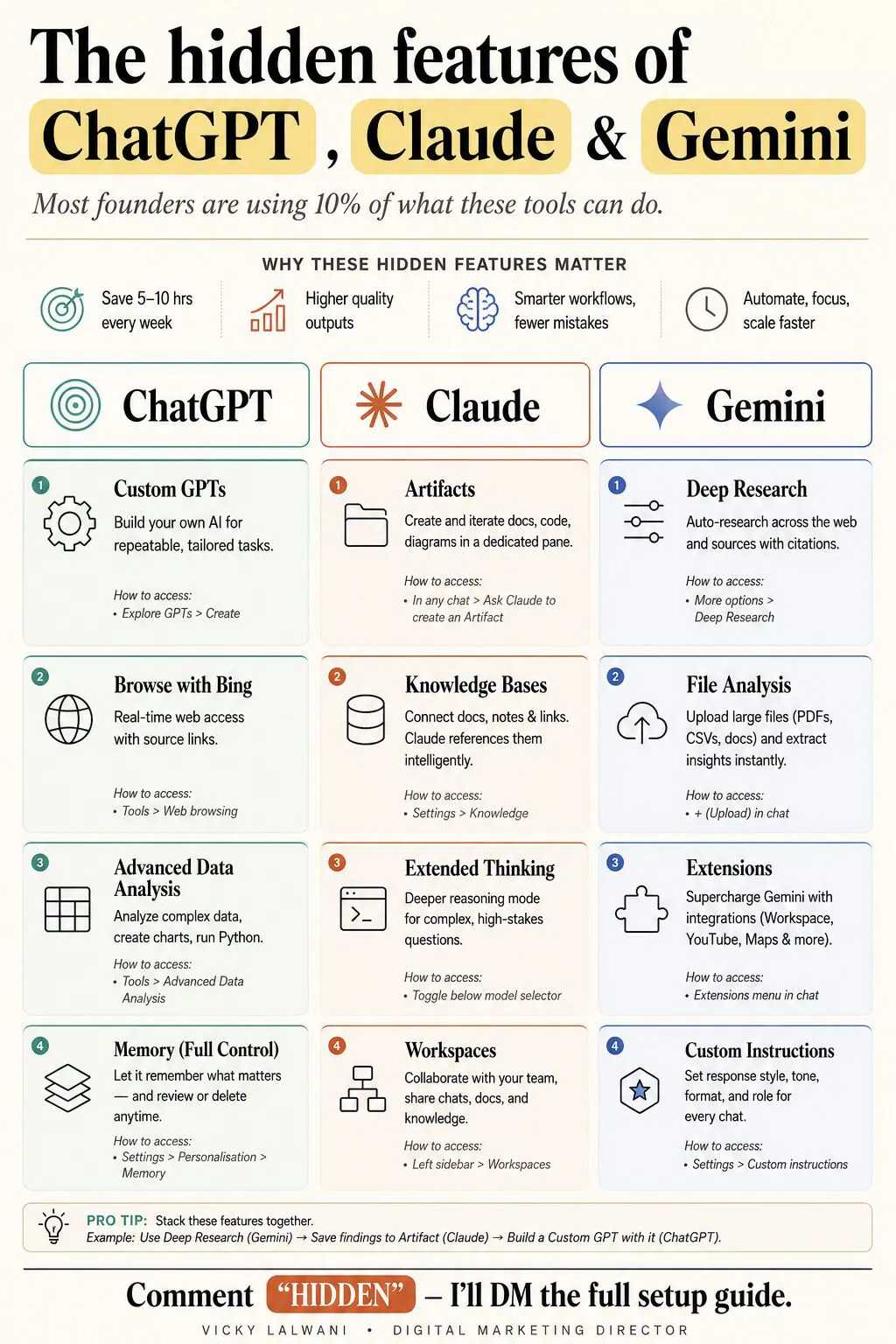
Prefer to have this built into how your team works? I set up AI marketing agents with review steps, or you can start with the hidden features in Claude, ChatGPT and Gemini and the guide to the best AI model for marketing tasks.
Book a free 30-minute strategy call and we'll look at where AI could save time in your marketing, and where it still needs a person.
Keep reading: PPC Audit With Claude and How to Get Recommended by ChatGPT.
FAQ
Which AI is best for marketing?
No tool won everything in this test. ChatGPT invented the fewest business facts in the ad copy, while Claude used the most official sources in the research round. Pick by the job, and have a person check facts before anything goes live.
Which AI is best for SEO?
All four wrote a meta title and description within the limits I set. That only tests the basics. For SEO decisions, connect a tool to real Search Console or crawl data, because a chat answer alone can't see your site's performance.
Which AI is best for Google Ads?
All four sorted the 12 search terms correctly and calculated cost per conversion correctly. Grok's two descriptions ran over the 90-character limit, and Gemini added the most unverified claims, so the review step matters more than the brand.
Is Grok good for marketing?
It handled the search terms, maths and recent articles well on the free version I tested, but both of its ad descriptions were over the limit. I tested the free Fast mode on X, so a paid plan may perform differently.
Is Claude better than ChatGPT for marketing?
It depends on the task. In this test, ChatGPT added fewer unverified claims to its ad copy, while Claude cited more primary sources and checked its own character counts. Neither result proves one is better overall, because this was one run per tool.
Can AI write Google Ads copy without checking?
No. Every tool in this test added at least one business claim nobody supplied, such as 24/7 service. An untrue claim in an ad is your responsibility, so check every claim against what the business actually offers.
Are these tools reliable for marketing research?
They did better than I expected. All 20 links I checked were live and fell within the requested 30 days, but source quality varied a lot, and two dates were a day off. Always open the source before you repeat a claim.
How often should I retest AI tools?
Retest whenever you change plans or a tool ships a major model. Keep one fixed prompt and scorecard, so you compare like with like rather than relying on memory or someone else's ranking.