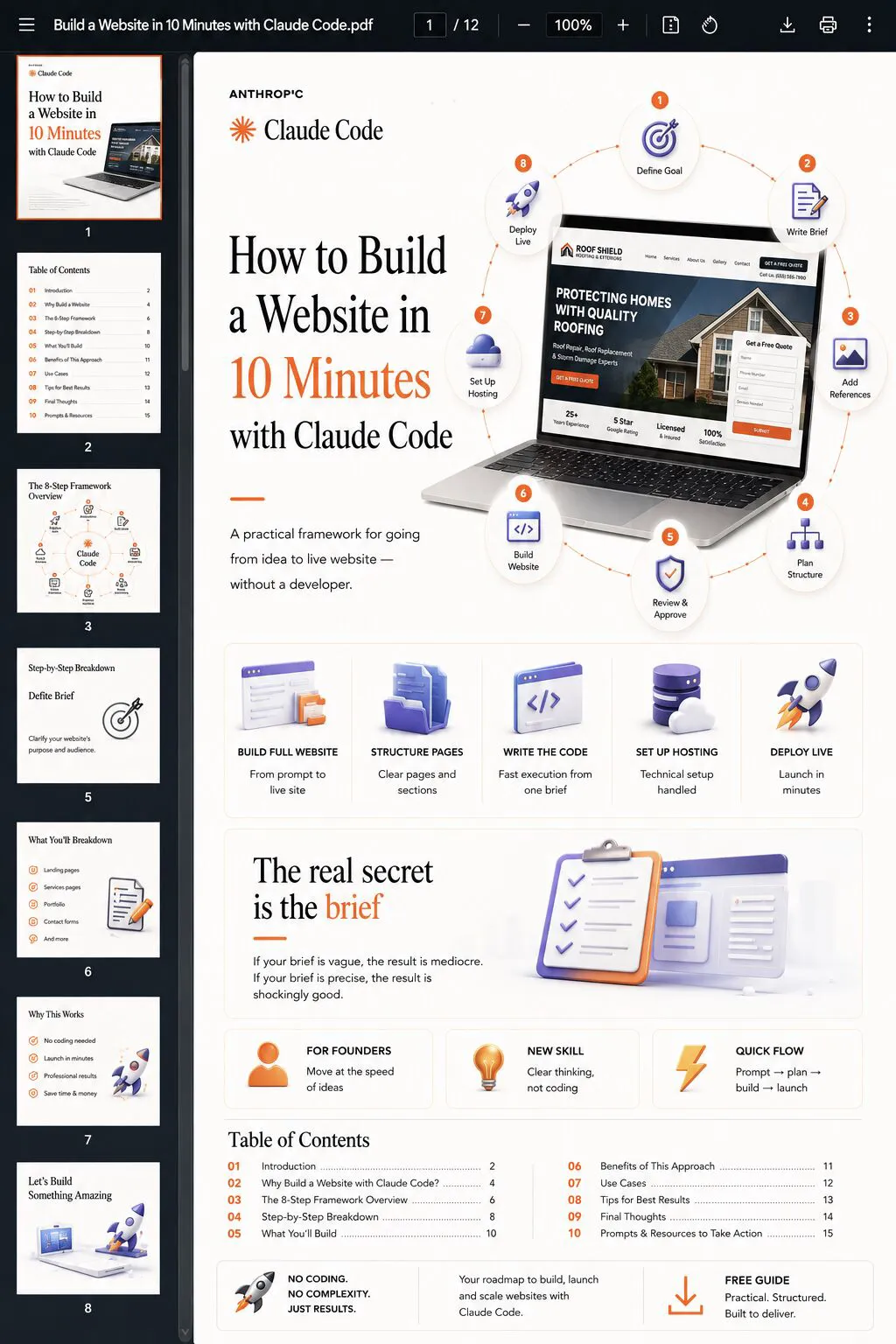
Yes. Claude Code can build a complete business website: you write a brief, approve its plan, and it writes the code (usually Next.js), which you save to GitHub and publish through a host such as Vercel. You need a paid Claude plan (Pro is $20 a month), a free GitHub account, a domain and hosting. The brief, the review, the form test and the SEO checks are still your job.
TL;DR
Yes, Claude Code can build a website. You describe the site in plain English, approve a plan, and it writes the code, usually a Next.js project. You save it to GitHub and connect a host such as Vercel, and every push becomes the live site.
What it costs: a paid Claude plan (Pro is $20 a month, or $17 a month billed yearly), a free GitHub account, a domain and hosting. Vercel's free Hobby plan is for personal, non-commercial use, so a business site belongs on Pro at $20 per seat a month or another host.
What it does not do for you: decide what the site is for, check facts, test the form, or make Google index it. The brief, the review and the SEO checks are still your job.
Jump to: Can it? · Claude Code vs chat vs Claude Design · What you need · Step by step · Design · Editing a live site · My own site · SEO checks · X and Reddit
A website used to be a project: weeks of back and forth with a developer and a designer, then revisions and invoices. For a simple business site, that has changed. I had Claude Code build a complete roofing company website, with a hero section, services, gallery, about page, trust badges, a mobile layout and a quote form that captures leads. I wrote none of the code.
The site you are reading is also built and edited with Claude Code, on Next.js, GitHub and Vercel: the pages, the tracking, the lead forms and the articles. So this guide covers the parts the quick tutorials skip: what happens after the first build, when a deploy fails, a form stops emailing or Google cannot see a page. Product facts were checked against Anthropic, Vercel, Next.js and Google documentation on 17 November 2026. If you would rather have it set up for you, that is what my Claude consultant service covers.
Can Claude Code build a website?
Short answer: yes, a complete one, from an empty folder to a deployable project. It writes the pages, styles, forms and configuration, runs the site locally and commits the work to Git. It cannot judge whether your offer is clear or your facts are right.
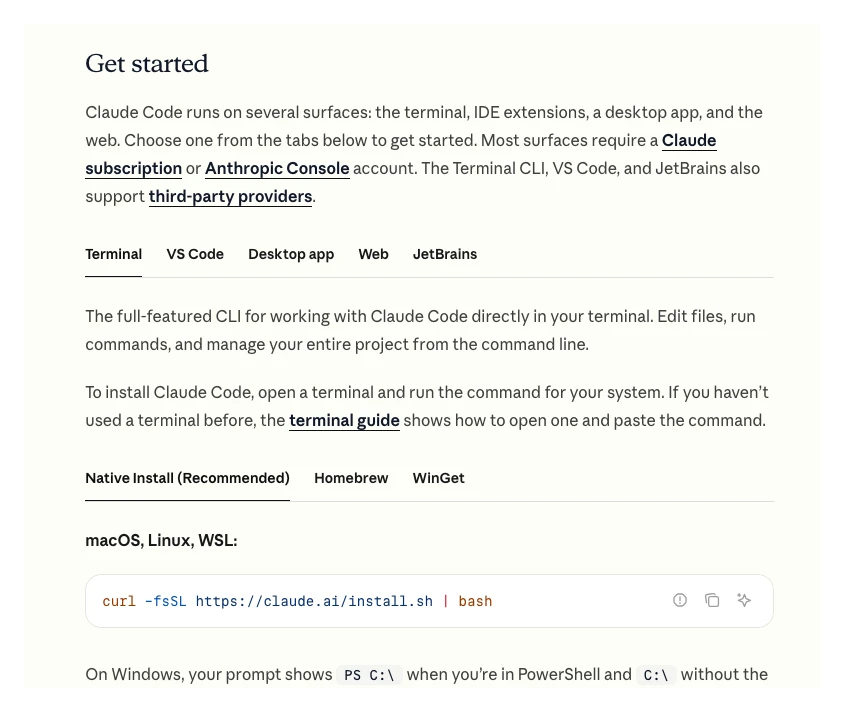
Claude Code is Anthropic's coding agent. Anthropic's overview describes it as a tool that "reads your codebase, edits files, runs commands", and it runs in the terminal, in VS Code and JetBrains, in the Claude desktop app and in the browser at claude.ai/code. For a website, that means it can create the project, install packages, write every page, start a preview server, fix its own errors and push the result to GitHub.
Building sites is also what people mostly use it for. In Anthropic's own study of coding conversations, JavaScript, TypeScript, HTML and CSS made up 59% of the languages, and user interface work was the single largest task.
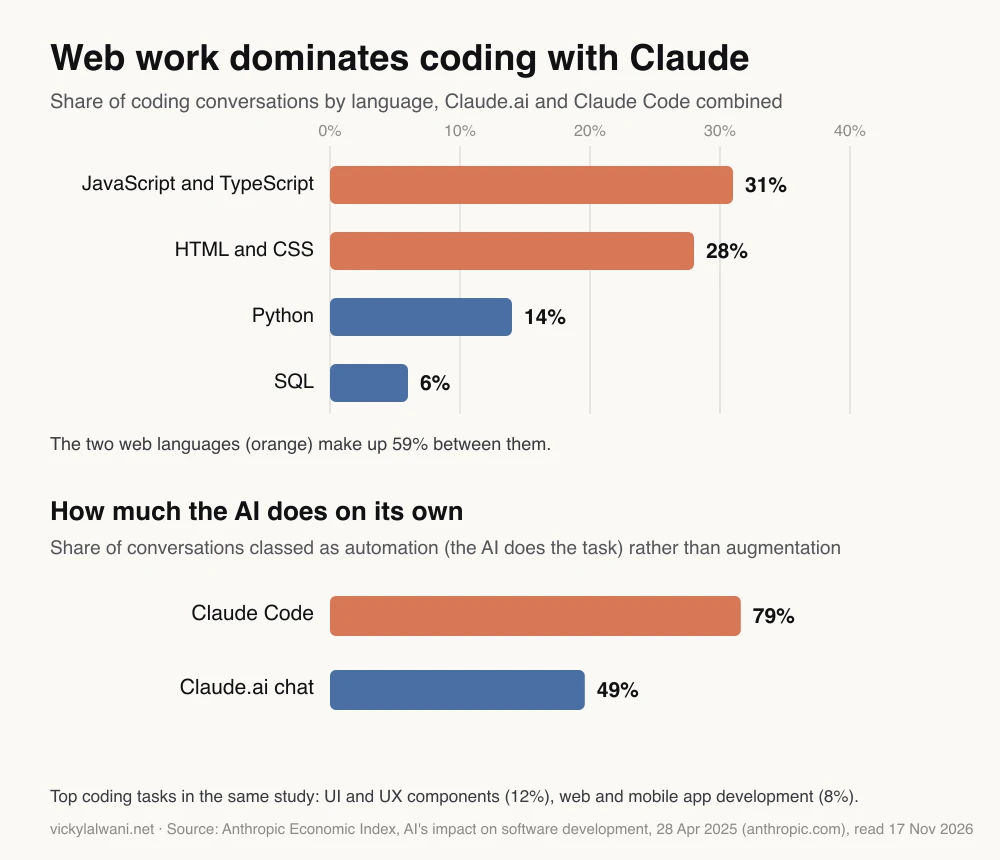
The second half of that chart is the important part for a non-developer. In Claude Code, 79% of conversations were automation: the agent does the task rather than helping you do it. That is why the quality of your instructions decides the result.
Do you need Claude Code, or can you build a website with Claude chat?
Short answer: for one page you want to show someone, Claude chat or Claude Design is enough. For a business site with several pages, a lead form, your own domain and search visibility, use Claude Code.
| Tool | Best for | Output | Limit |
|---|---|---|---|
| Claude chat | A quick one-page mock-up | A preview inside the chat | No real hosting, forms or SEO set-up |
| Claude Design | Layouts, prototypes, look and feel | Designs, HTML export, a handoff to Claude Code | Designs the site; Claude Code builds it |
| Claude Code | A real multi-page site | A code project in GitHub, ready to host | You still own brief, review and hosting |
Claude Design launched on 17 April 2026 as an Anthropic Labs research preview for Pro, Max, Team and Enterprise plans. Anthropic says that when a design is ready, Claude bundles it into a "handoff bundle that you can pass to Claude Code with a single instruction". A June 2026 update added syncing in both directions, and a September note on the same page says Claude Design now works inside any Claude conversation, including Claude Code, in beta on paid plans.
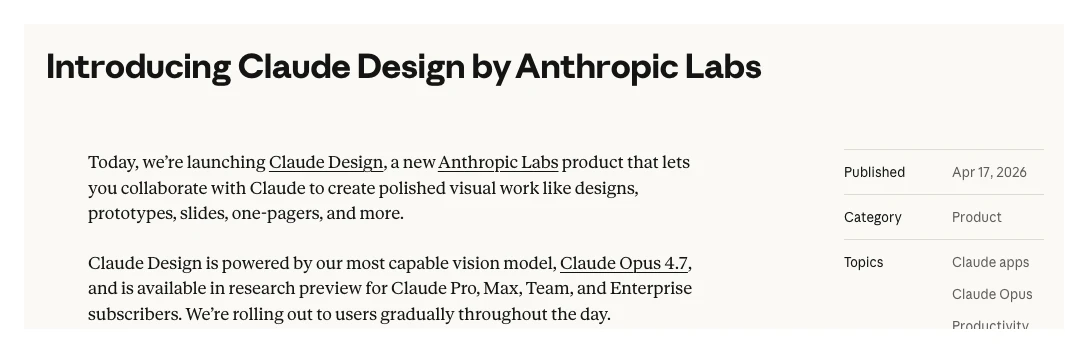
So if you searched for how to make a website with Claude Design: design it there, then hand it to Claude Code to build and publish. Claude Design does not host the site for you. I compare the two in more depth in Claude Design for marketers.
Introducing Claude Design by Anthropic Labs, from Anthropic's official Claude channel, 17 April 2026. A product launch video, so it shows the best case.
What do you need before you start?
Short answer: a paid Claude plan, a GitHub account, a domain, a host, and an hour to write the brief. You do not need to know how to code, but you do need to read what it tells you.
| What | Cost (Nov 2026) | Why you need it |
|---|---|---|
| Claude Pro or Max | Pro $20 a month ($17 billed yearly); Max from $100 | The free plan does not include Claude Code |
| GitHub | Free | Stores the code; hosts build from it |
| Vercel Hobby | Free | Personal or non-commercial sites only |
| Vercel Pro | $20 per seat a month | Business sites and team access |
| Domain | Varies by name and registrar | Your own address instead of a vercel.app link |
| Node.js 20.9 or later | Free | Only if you build on your own computer |
Prices come from Claude's pricing page and Vercel's plan docs. Vercel's terms say Hobby is "for your personal or non-commercial use", which is easy to miss in tutorials that deploy a client site on the free tier. Netlify, Cloudflare Pages or ordinary web hosting work too.
One cost tutorials skip is usage. A Pro-plan user on r/ClaudeCode was surprised by how much a single portfolio site used. The practical fix from the replies matches mine: one fresh session per task instead of one endless thread. More in reducing Claude token costs.
How to build a website with Claude Code, step by step
Short answer: goal, brief, references, plan, build, check, GitHub, host and domain, then forms, tracking and Search Console. The first four steps happen before any code exists, and they decide most of the quality.
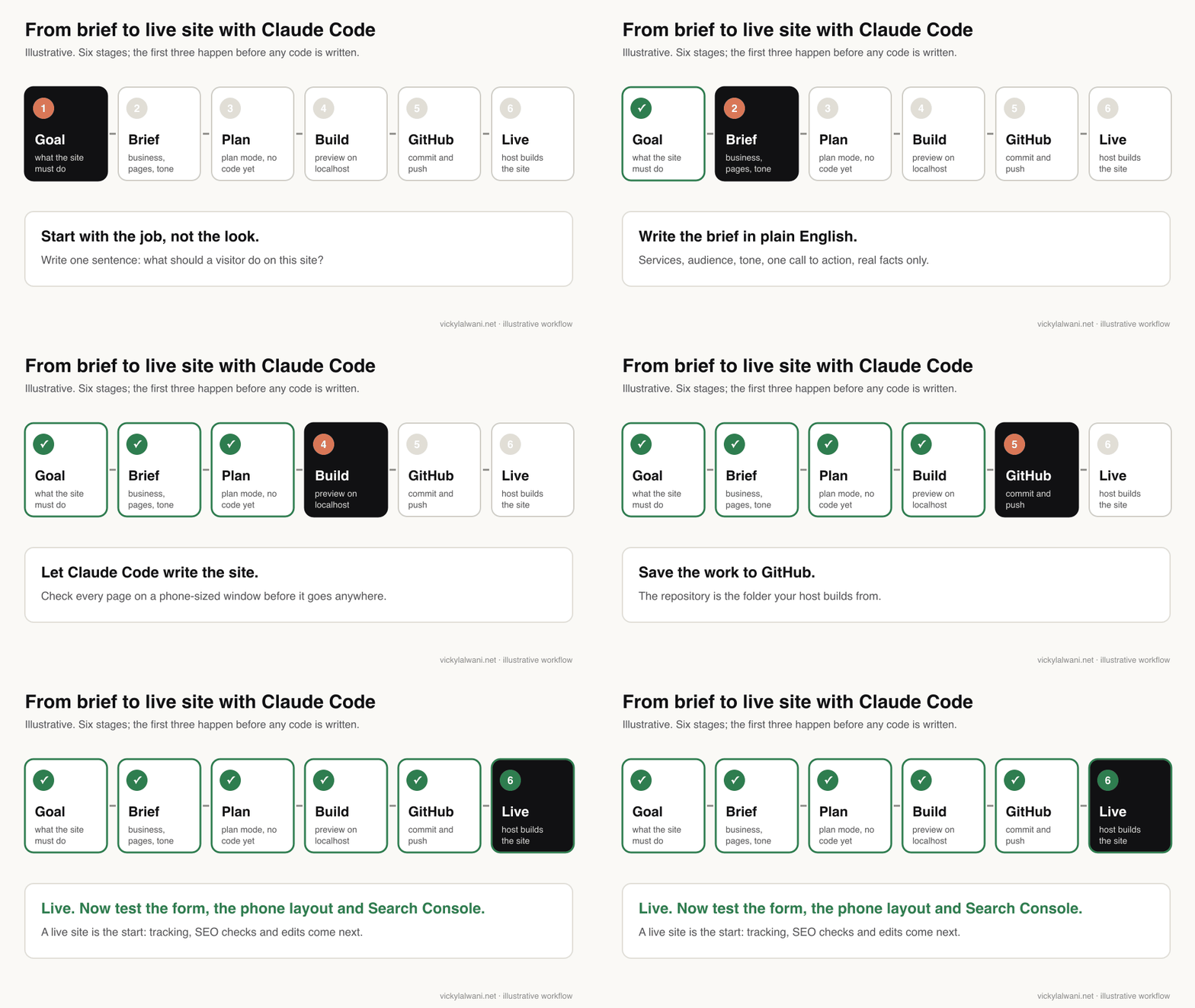
1. Define what the site must do
Write the job, not the look: "get quote requests from homeowners in two suburbs" is a goal; "modern and clean" is not. Everything else is judged against that sentence.
2. Write the brief
The build is fast. The brief is the skill. A vague brief gives a mediocre site and a precise brief gives something surprisingly good. Cover the business, each service and who it is for, the customer's problem when they arrive, the tone, the one action you want, and the facts: hours, service areas, licences, guarantees and review quotes you are allowed to use. End with what to avoid: stock phrases, claims you cannot support, colours you dislike.
Read this brief. Before you plan or build anything, repeat it back to me in your own words: who the site is for, what they should do, the pages you think it needs, and anything in the brief that is unclear or missing. Do not write code yet.

[paste your brief]
If its summary is wrong, your brief is unclear. That one check saves most of the revision time later.
3. Add references
Share two or three sites whose feel you like and say what you like about each: the spacing, the way services are listed, the photo style. Use them for structure only. Never copy someone else's design or words.
4. Plan in plan mode
In plan mode, Claude reads and proposes but makes no edits until you approve. Press Shift+Tab until the status bar shows plan mode, or start with claude --permission-mode plan. Ask for the page list, each page's sections, the stack and how the form will send leads. Fix problems here, in words.
5. Build
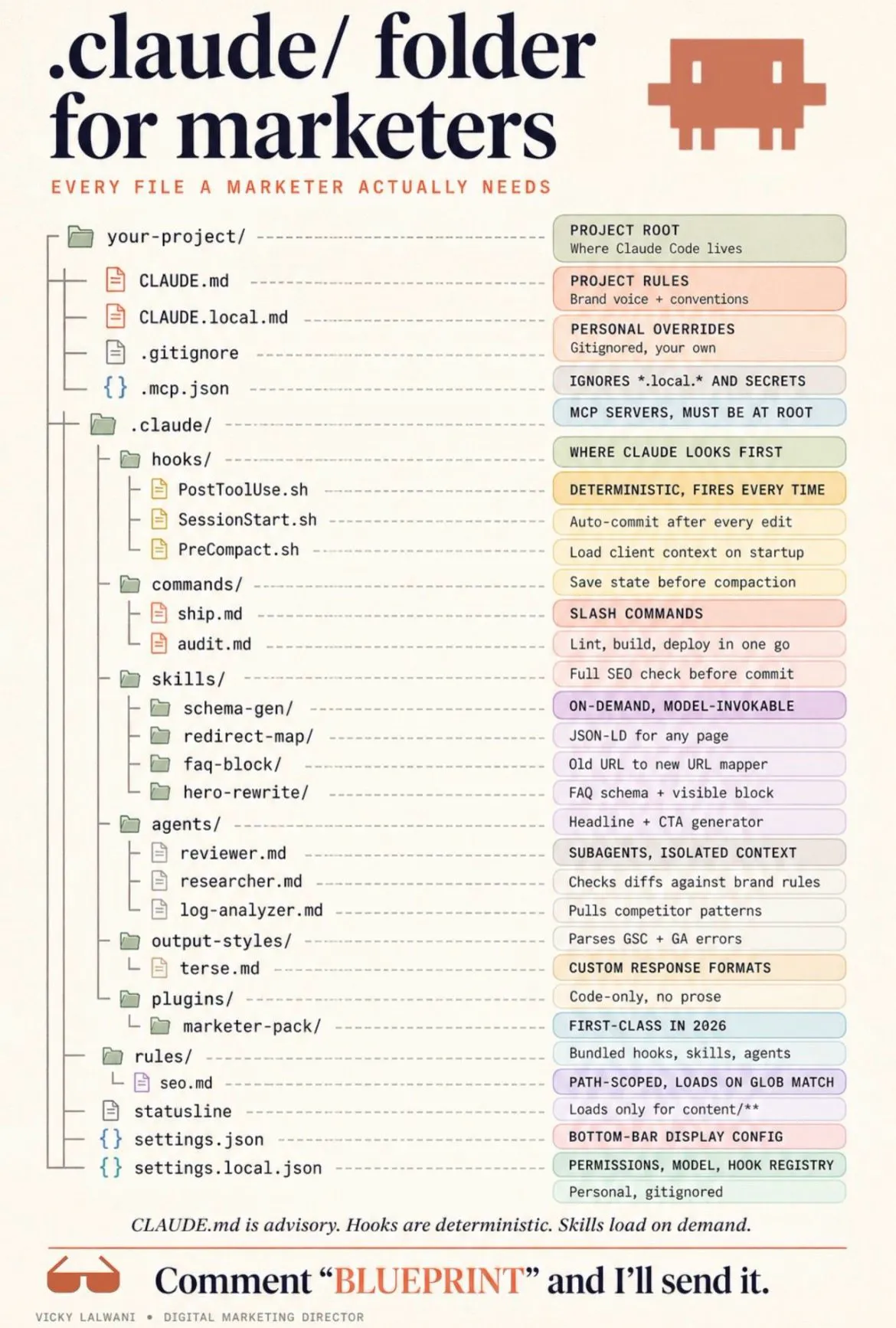
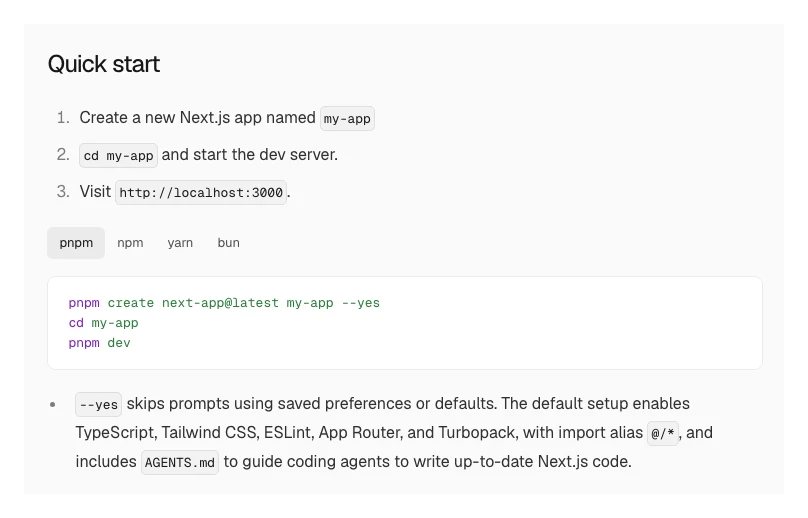
For a business site that should rank, I ask for Next.js. Its installer now sets up TypeScript, Tailwind CSS and an AGENTS.md file "to guide coding agents to write up-to-date Next.js code", and it renders pages on the server, which matters for SEO later. Run /init once so Claude writes a CLAUDE.md with your project rules, and add your own lines to it: the brand colours, "no invented reviews", "ask before deleting files".
Build the site we planned, as a Next.js project with server-rendered pages. One page at a time. After each page, start the dev server, take a screenshot at phone width and at desktop width, and tell me what you would change before moving on. Use only the facts in the brief. If something is missing, leave a clearly marked placeholder and list it for me.
6. Check it like a visitor
Open every page on a phone-sized window. Click every button. Read every sentence, because AI copy drifts into claims you never gave it. Ask Claude to check its own work too: it can open pages and look at screenshots, and Anthropic's Chrome integration lets it test in a real browser.
7. Save it to GitHub
Ask Claude to create a private repository and push. GitHub is the folder your host builds from, and it keeps every version, so a bad change can be undone.
8. Connect the host and your domain
On Vercel, import the repository. From then on, every push to a branch gets a preview link, and a merge into the main branch becomes the live site. Add the domain in the project settings and follow the DNS steps exactly.
9. Forms, tracking and Search Console
Submit a real enquiry and confirm it arrives. Set up analytics and a lead event before you send any traffic, then verify the site in Google Search Console and submit the sitemap. The checks are in the table further down.
How do you make a Claude Code website look good?
Short answer: give it a direction, not adjectives. Install Anthropic's frontend-design plugin, show real references, and fix the look in a design before the build.
Ask for "a modern website" and you get the look everyone now recognises: a purple gradient, the same font, three cards in a row. Three things fix most of it:
- The frontend-design plugin. Anthropic's frontend-design plugin makes Claude choose a clear aesthetic direction before writing code. Install it with
/plugin install frontend-design@claude-plugins-official(plugin docs). - Your own material. Logo, brand colours, real photos of your work and the fonts you are licensed to use. Tell it to use only those.
- A design pass first. Mock up the home page in Claude Design or as a single page, agree it, then build the rest to match.
Watch fonts. The top reply on a popular r/ClaudeCode thread, from someone who says they have been a web developer for over ten years, warns that bots scan sites for unlicensed fonts and that legal letters follow. Open-source fonts avoid the problem.
The EASY way to build a beautiful website with Claude Code, from the web design channel Create a Pro Website, 2 July 2026. A clear full workflow; the description opens with a hosting affiliate link, so weigh the hosting advice accordingly.
How do you edit a live website in plain English?
Short answer: connect Claude Code to the site's GitHub repository, describe the change with a screenshot, check the preview, then say "commit, merge and push it, and make it live". One editor at a time, and batch your changes.
Building the site is the easy half. The question I get more often is how a business owner or agency changes it later without waiting for a developer. If you have never used GitHub, start with what a repository is. A simple way to picture it: GitHub is like a shared drive for a website, and the repository is its folder.
In Claude Code, switch the session from local to cloud, pick the site's repository, and type the first change yourself, such as a new headline. Claude makes it in its own cloud workspace, not on the live site, and you can ask for a screenshot before anything is published. When you are happy with it, type: "commit, merge and push it, and make it live". The change appears on the live site once the host finishes the rebuild.
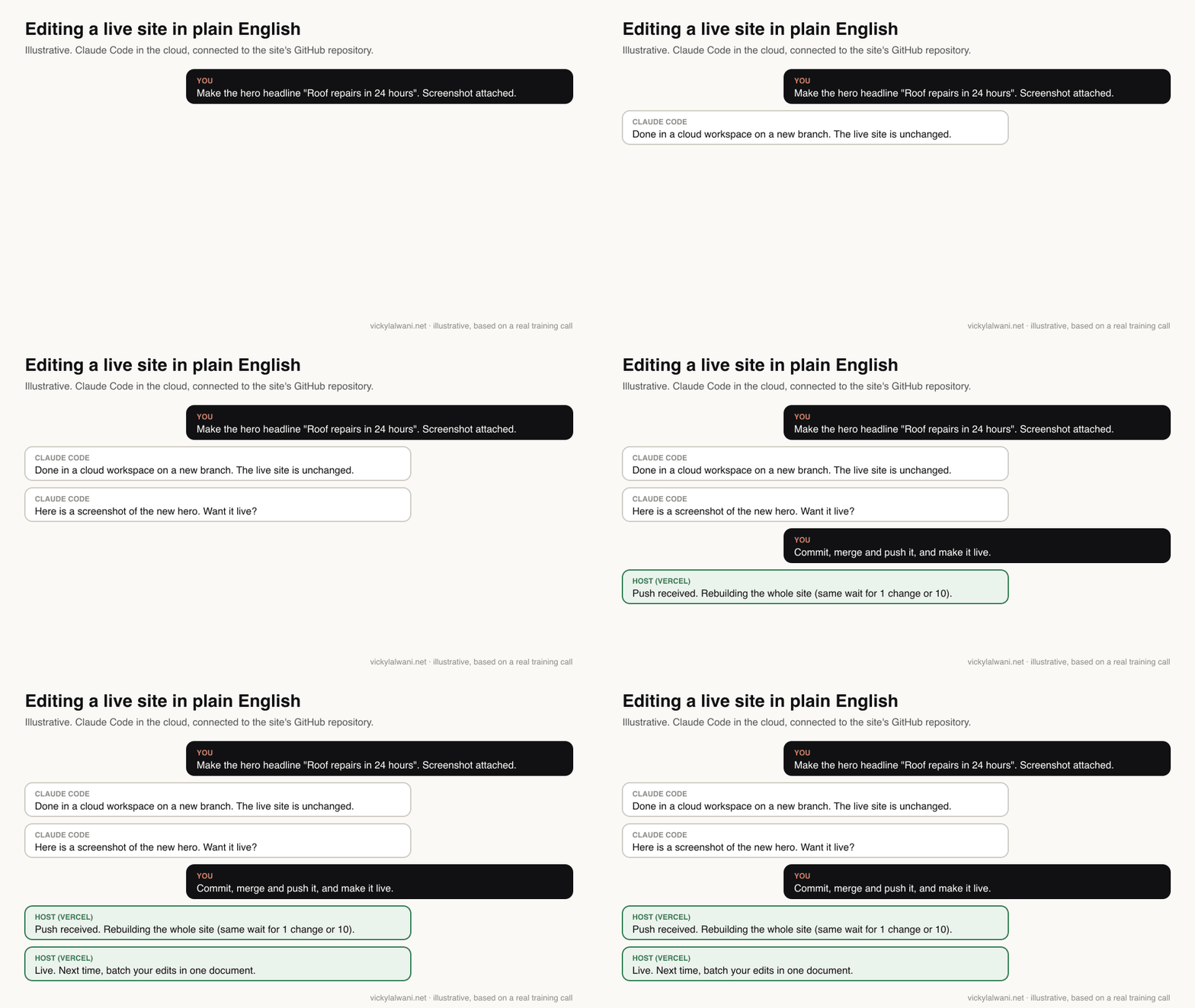
Two rules make this work:
- One editor at a time. Two people, or two sessions, changing the same site at once leads to clashing changes.
- Batch your edits. Every push rebuilds the whole site, so one small change waits as long as ten. Put the changes in one document, a screenshot and an instruction for each, and hand over the whole list.
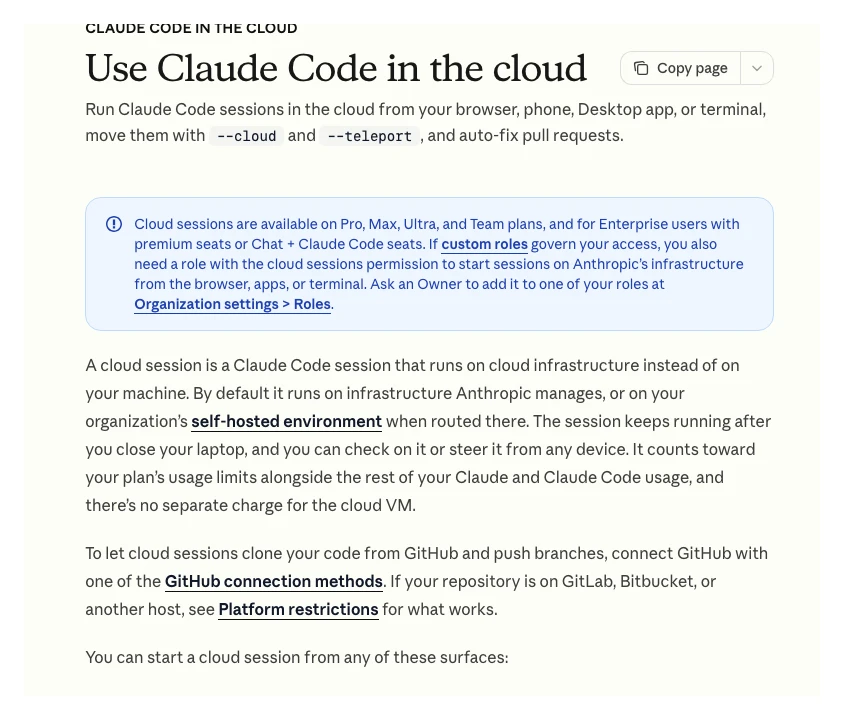
Cloud sessions are available on Pro, Max, Ultra and Team plans, and the session keeps running after you close your laptop. They connect to GitHub through the Claude GitHub App.
Here are five changes to the website, each with a screenshot. Make all of them on one branch. Do not publish. When you are done, send me a screenshot of every changed section at phone and desktop width, and list anything you were unsure about. I will reply "make it live" when I have checked them.
What I learned running vickylalwani.net on Claude Code
Short answer: the build was the quick part. The time went on hosting details, deploys, forms and tracking, and each one taught me a rule I still follow.
| What happened | Cause | Rule now |
|---|---|---|
| New domain would not go live | The registrar's own nameservers were still set | Point nameservers or DNS records exactly as the host says, then wait |
| First version was hard to maintain | A home-made static site generator | Use a standard framework; a developer friend reviewed the code and the site moved to Next.js |
| A production deploy failed its build | A build error in the new version | The host kept serving the old site; check the new version is really live, not just that the URL loads |
| Deploys hung at "Building" | The commit author email did not match the account owner | Set the Git email to the one on your host account |
| Form emails stopped arriving | The email service silently stopped sending | Save every lead before emailing it, and test the form each week |
| Two sessions changed the same files | Parallel agents in one folder | Check what changed and commit only your own files |
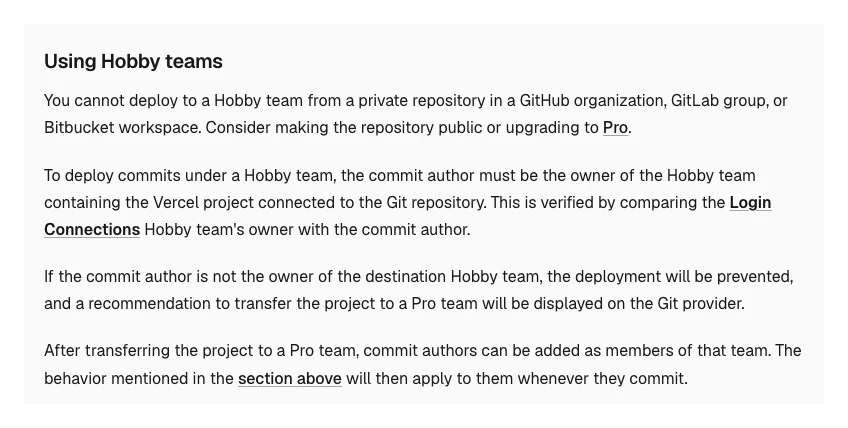
The deploy rule is documented. Vercel says that on a single-owner Hobby team, "the commit author must be the owner of the Hobby team", otherwise "the deployment will be prevented". When Claude Code commits from a computer whose Git email is a default system address, that is exactly what happens.
Two habits from my own sessions: I ask for a dry run before installing anything from a GitHub link, and when an installer stops at a computer password prompt, I type that part myself. Claude does the building; passwords, payments and anything that touches a live client account stay with a person.
What to check before you go live
Short answer: make sure Google can read the pages without JavaScript, give every page its own title and description, submit a sitemap, and prove that a test enquiry arrives and is counted.
AI site builders that render everything in the browser have a known SEO weakness. An SEO consultant on X who tried building client websites with a client-side builder summed it up bluntly as "DON'T DO IT". Google is more measured: its JavaScript SEO guide says it can render JavaScript, but that server-side or pre-rendering "is still a great idea".

| Check | Why | How |
|---|---|---|
| Text visible without JavaScript | Not every crawler runs scripts | Server-rendered or static pages; view the page source |
| Unique title and description | They form your search listing | One pair per page, written for the search |
| One H1 per page | Tells Google the topic | Ask Claude to audit every page |
| Sitemap submitted | Faster discovery | sitemap.ts in Next.js, then Search Console |
| Test enquiry arrives | A broken form costs leads | Submit a real one before launch |
| Lead event in analytics | No data, no decisions | Fire it on the thank-you page |
| Facts reviewed by a person | AI drafts can be wrong | Read every claim, price and review |
| Business details consistent | Local search depends on them | Same name, address and phone everywhere |
The review row is Google's own advice. Its guidance on AI-generated content says to "manually factcheck and review all AI-generated content" before publishing, including titles, descriptions and image alt text.
Measure carefully after a rebuild, too. A software company documented moving more than 1,000 pages off Webflow with Claude Code and then watching analytics show an 80% drop. Most of it turned out to be a cookie consent change in how visits were counted, not lost visitors. Compare Search Console clicks with analytics before you panic. For the tracking side, see my conversion tracking event map and the analytics and tracking service.
Where does Claude Code stop?
Short answer: at judgement and at complexity. It builds a simple business site well; payments, logins, customer data and custom systems still need an experienced developer reviewing the work.
To be fair to developers, this is about the simple business site, the kind that was always mostly template. The honest framing is that the simple end of the market has changed, not the whole profession. A non-developer who built and runs a busy site with Claude Code wrote on r/ClaudeCode that they still had to step in on numbers, wording and taste. That matches my experience. Use a developer for:
- Taking payments, user accounts or anything storing personal data.
- Migrating a large site with existing rankings, where redirects decide whether you keep your traffic.
- A second opinion on code before a site carries real business, as I had on mine.
Videos worth watching
What is Claude Code?, from Anthropic's official Claude channel, 5 May 2026. The shortest official explanation; no sales links.
| Video | Channel | Date | What it covers |
|---|---|---|---|
| What is Claude Code? | Claude (official) | 5 May 2026 | What the tool is |
| Introducing Claude Design | Claude (official) | 17 Apr 2026 | Designing before building |
| How we Claude Code | Claude (official) | 22 May 2026 | How Anthropic's team uses it |
| Build a beautiful website with Claude Code | Create a Pro Website | 2 Jul 2026 | Full design workflow; hosting affiliate |
| Build and host a website with Claude Code | A no-code tutorial channel | 14 Aug 2026 | Hosting walkthrough; hosting coupon |
| Mastering Claude Code in 30 minutes | Anthropic (official) | 22 May 2025 | Core habits; older, still useful |
What people say on X and Reddit
Short answer: builders agree it works, and that design direction, SEO rendering and human review are where it goes wrong. Several posters sell something, so I have labelled each one.
| Where | Date | What they say | Type |
|---|---|---|---|
| A Claude Code team member on X | 13 Nov 2025 | Announces the frontend-design plugin | Vendor |
| An AI builder on X | 16 Sep 2026 | Claude Design inside Claude Code: mock up and refine in one chat | Opinion |
| An AI news account on X | 16 Jul 2026 | The frontend-design skill fixes the same-looking AI site | Opinion |
| A UX writer on X | 27 Mar 2026 | Six design skills worth installing | Opinion |
| An SEO consultant on X | 26 Mar 2026 | Client-side rendered AI sites struggled in Google | First-hand |
| r/ClaudeCode | 6 Oct 2026 | Plan before code; make it screenshot its own work | First-hand |
| r/ClaudeCode | 4 Nov 2026 | Use open-source fonts to avoid licence letters | First-hand reply |
| r/ClaudeCode | 2 Oct 2026 | Heavy usage on one portfolio site | First-hand |
| r/SEO | 7 Aug 2026 | AI copy is average unless you supply intent and facts | Practitioners |
| r/ClaudeCode | 17 Oct 2026 | Feeding old designs as references; replies call it promotion | Vendor |
The r/SEO thread makes the point I would make to any business owner: one reply says AI can draft solid website copy "but it can't decide what each page should target". That decision is the difference between a site that looks good and a site that brings enquiries.
Make the site earn its keep
A live site is the starting point. Plan how people will find it, through local search, Google Ads or referrals, and how enquiries will be followed up. Spend the first hour on the goal and the brief; that hour decides how good the result is.
If you want this set up properly, my Claude consultant service covers the build workflow and plain-English editing for your team, and my SEO consultant service makes sure the finished site gets found. Rates are on the pricing page. For the tools behind this workflow, see the best GitHub repos for running a business with AI and the Claude Code commands cheat sheet.
Sources
| Source | What it supports | Checked |
|---|---|---|
| Claude Code overview | Surfaces, install | 17 Nov 2026 |
| Claude Code cloud sessions | Plans, GitHub connection | 17 Nov 2026 |
| Permission modes | Plan mode, Shift+Tab | 17 Nov 2026 |
| CLAUDE.md and /init | Project rules file | 17 Nov 2026 |
| Plugin docs | Plugin install command | 17 Nov 2026 |
| frontend-design plugin | Design plugin | 17 Nov 2026 |
| Claude pricing | Pro and Max prices | 17 Nov 2026 |
| Claude Design launch | Date, plans, handoff | 17 Nov 2026 |
| Claude Design update | Claude Code sync | 17 Nov 2026 |
| Anthropic Economic Index | Chart data (Apr 2025) | 17 Nov 2026 |
| Next.js installation | Installer, Node 20.9 | 17 Nov 2026 |
| Vercel Git docs | Previews, commit author rule | 17 Nov 2026 |
| Vercel Hobby plan | Free tier, Pro seat price | 17 Nov 2026 |
| Vercel terms | Hobby is non-commercial | 17 Nov 2026 |
| Google JavaScript SEO | Server-side rendering | 17 Nov 2026 |
| Google on AI content | Human review | 17 Nov 2026 |
| Hopsworks migration post | Tracking after a rebuild | 17 Nov 2026 |
| X and Reddit posts above | Practitioner views | 17 Nov 2026 |
This article expands on my post on LinkedIn ↗.
FAQ
Can Claude Code build a website?
Yes. Claude Code can create a complete multi-page website from a written brief, including pages, styles, a contact form and the project configuration. You still review the plan, check the facts and test the result before it goes live.
How do I build a website with Claude?
For a quick one-page mock-up, ask Claude chat or use Claude Design. For a real business site, use Claude Code: write a brief, approve a plan in plan mode, let it build a Next.js project, push it to GitHub and connect a host such as Vercel.
Do I need Claude Code to build a website?
Not for a single page you only want to show someone; Claude chat or Claude Design can do that. For a site with several pages, a working lead form, your own domain and search visibility, Claude Code is the right tool.
How much does it cost to build a website with Claude Code?
Claude Code needs a paid plan: Pro is $20 a month, or $17 a month billed yearly. GitHub is free, and hosting ranges from free personal tiers to about $20 a month for Vercel Pro, plus the cost of a domain.
Can I host a business website on the Vercel free plan?
Vercel's terms say the Hobby plan is for personal or non-commercial use. A business site should run on Vercel Pro, which costs $20 per seat a month, or on another host whose terms allow commercial use.
How do I make a Claude Code website look less generic?
Install Anthropic's frontend-design plugin, give Claude your own logo, colours, photos and licensed fonts, and show it two or three reference sites with what you like about each. Agree the home page design before building the rest.
Can I edit my website in plain English after it is built?
Yes. Connect Claude Code to the site's GitHub repository, describe the change with a screenshot, check the preview, then ask it to commit, merge and push. Let only one person edit at a time and batch changes, because every push rebuilds the site.
Is a website built with Claude Code good for SEO?
It can be, if the pages are rendered on the server, each page has its own title, description and H1, and a sitemap is submitted in Search Console. Google also asks you to review AI-written content, titles and alt text for accuracy before publishing.
Does Claude Code replace a web developer?
Not for payments, user accounts, personal data, large migrations or custom systems. It changes how simple business sites get made, and a developer review is still worth it before a site carries real business.